President Ferdinand Marcos Jr has reaffirmed his trust in the Armed Forces of the Philippines, even as the National Bureau of Investigation identified active uniformed military personnel as persons of interest in connection with an alleged plot against his life. The disclosure emerged during Vice President Sara Duterte's ongoing impeachment proceedings, where NBI Director Melvin Matibag revealed the existence of the investigation into the suspected conspiracy during testimony on Wednesday.
The revelation has raised significant questions about institutional stability within the country's security apparatus at a particularly sensitive moment. The involvement of serving military officials in such an allegation strikes at the heart of civil-military relations in the Philippines, a nation with a complex history of military intervention in politics. Matibag's statement also identified another person of interest connected to the Vice President's security detail, suggesting the plot may involve multiple branches of the state security system and raising concerns about potential factionalism within institutions meant to protect national leaders.
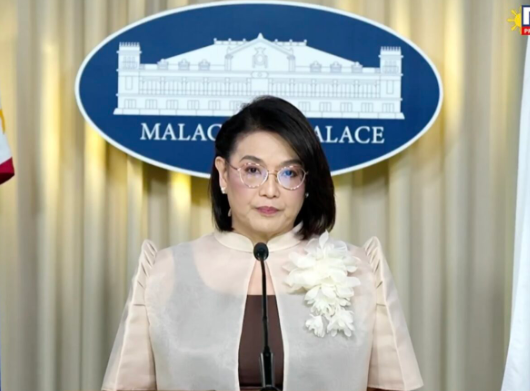
In response to these developments, Palace Press Officer Claire Castro sought to reassure the public that presidential confidence in the military hierarchy remained unshaken. Speaking during a media briefing, Castro emphasised that Marcos Jr continues to maintain complete trust in the institution, framing any individual actors who might deviate from their constitutional duties as exceptions rather than systemic problems. This messaging reflects an attempt by the administration to prevent the allegations from undermining broader institutional credibility or sparking wider paranoia about security force reliability.
Castro's statements indicated that the Palace views the matter as one requiring careful institutional management rather than sweeping organisational reform. She noted that identifying and removing those who might stray from their mandate represented the appropriate response, positioning accountability mechanisms as protective measures rather than signs of institutional failure. This nuanced approach suggests the administration seeks to balance the gravity of the allegations against concerns about destabilising already-tense civil-military dynamics.
The Palace spokesperson explicitly distinguished between institutional loyalty and individual misconduct, clarifying that the President is not initiating loyalty audits or security clearance reviews across the armed forces. This clarification carries particular weight given the Philippines' historical experience with military purges and suspicion campaigns that have sometimes destabilised security institutions. By ruling out broad institutional reviews, Castro attempted to prevent the assassination allegations from cascading into a crisis of confidence that could paralyse security operations.
Castro further suggested that those who might exploit their positions to protect factional interests or advance individual agendas should face identification and accountability. Her comments implied awareness that the alleged plot may be rooted in political divisions rather than direct institutional problems, a distinction with significant implications for how the administration manages the crisis. The framing suggests elements within the security forces may be exploiting their positions for partisan purposes, a concern that has haunted Philippine security institutions for decades.
Meanwhile, Vice President Duterte made startling statements during the impeachment trial, claiming she had previously warned associates that if she were killed, they should target the President, his daughter Liza Araneta, and House Speaker Martin Romualdez. Speaking in Filipino, Duterte emphasised the seriousness of her instructions, stating she had left written directives about her intentions. These dramatic remarks, delivered in the formal setting of an impeachment proceeding, underscored the escalating political tensions gripping the Philippines and suggested deep concerns about her personal security.
Duterte's statements carry particular significance given her position as the nation's second-highest elected official and her substantial political support base, particularly in Mindanao. Her explicit invocation of potential retaliation against the President and senior administration figures represents an extraordinary public declaration of political conflict within the executive branch. Such rhetoric, articulated during an official proceeding, signals the severity of the rupture between the Marcos and Duterte camps and may presage further institutional instability.
The NBI subsequently attempted to compel Duterte's cooperation by issuing a subpoena, seeking to obtain formal statements or evidence related to the alleged assassination plot. However, the Vice President declined to comply with the summons, citing reasons not immediately disclosed. This refusal to engage with the investigation represents a direct challenge to the NBI's authority and may reflect Duterte's assessment that cooperation could expose her to legal vulnerability or further antagonise the administration.
For Malaysian and Southeast Asian observers, the unfolding crisis in the Philippines offers sobering lessons about institutional resilience under political stress. The allegations involving active military personnel underscore vulnerabilities in security sector governance that extend across the region, where military establishments sometimes become factionalised along political lines. The apparent divisions within Philippine security institutions raise questions about civilian control mechanisms and the potential for security forces to become vehicles for political competition rather than neutral guardians of national stability.
The handling of these allegations will significantly shape regional perceptions of Philippine institutional stability and the robustness of democratic safeguards against security sector capture. The administration's approach—maintaining public confidence while allowing security agencies operational independence in investigations—reflects a delicate balancing act. How effectively these institutions manage the crisis will reverberate beyond Manila's political circles, influencing regional assessments of institutional reliability in a crucial Southeast Asian democracy.

