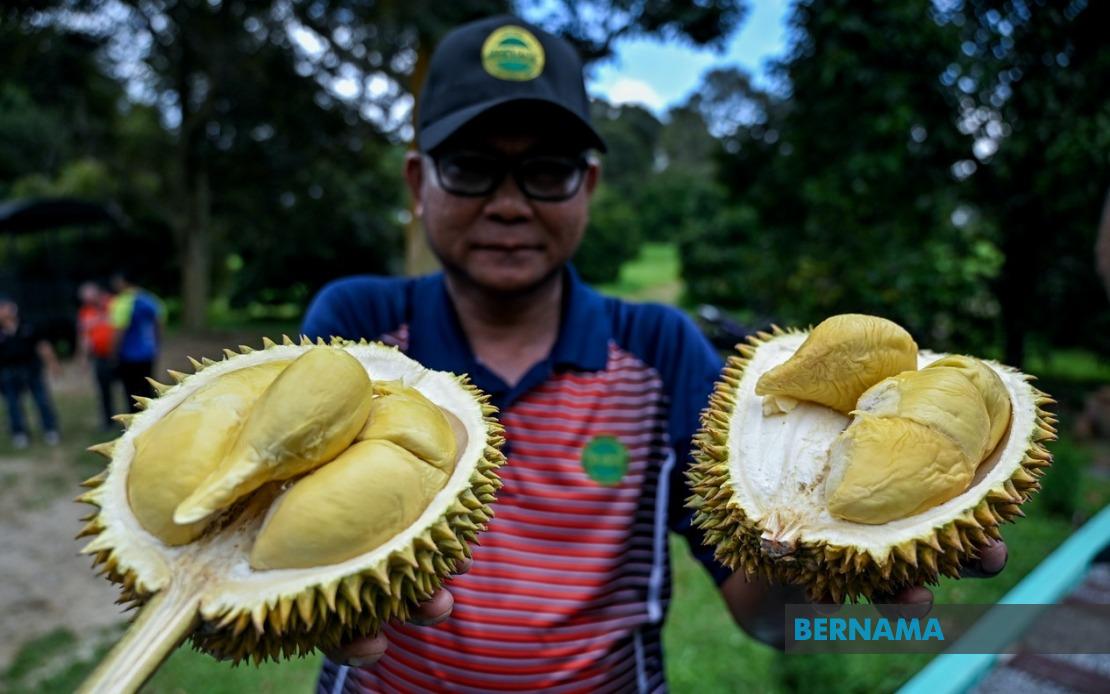
Malaysia's agricultural research sector has achieved a significant milestone in its durian breeding programme, with the Malaysian Agricultural Research and Development Institute (MARDI) reporting the successful cultivation of roughly 25,000 MS88 hybrid durian trees across the country. The expansion, which encompasses approximately 242 hectares of plantation area, represents a substantial commitment to strengthening the nation's position in the high-value tropical fruit market. According to Datuk Dr Mohamad Zabawi Abdul Ghani, the institute's director-general, the geographical distribution of these plantings concentrates predominantly in Selangor and throughout the east coast states, regions strategically selected for their suitable growing conditions and proximity to established durian farming communities.
The MS88 represents one strand of MARDI's multi-pronged approach to durian variety development, which commenced in the early 2000s and has generated a portfolio of three distinct premium cultivars. Alongside the MS88, the institute has successfully popularised the MDUR78 and MDUR79 varieties, both of which have developed dedicated followings among durian aficionados and commercial cultivators. These breeding achievements underscore MARDI's role as a driving force in elevating domestic durian production standards and addressing evolving market preferences within both local and regional consumer bases. The institution's sustained investment in horticultural innovation reflects broader Malaysian agricultural policy objectives aimed at enhancing crop competitiveness and sustainability.
Beyond its established successes, MARDI is actively engaged in an advanced developmental pipeline involving three newly identified hybrid durian varieties that carry considerable commercial potential. These experimental cultivars are currently undergoing rigorous evaluation protocols designed to assess critical parameters including fruit quality characteristics, consumer preferences, and agronomic suitability for widespread farmer adoption. The screening process represents a methodical approach to variety release, ensuring that only those hybrids demonstrating robust performance across multiple evaluation criteria proceed toward commercialisation. This quality-assurance framework reflects international best practices in horticultural research and mitigates risks associated with introducing new varieties to market prematurely or without adequate farmer preparation.
The deliberate withholding of nomenclature for these emerging varieties stems from strategic marketing considerations linked to seasonal production cycles and public engagement initiatives. MARDI has elected to coordinate the formal introduction of these new durian lines with the upcoming durian harvesting season, a timing strategy that will enable prospective growers and consumers to simultaneously evaluate the fruits under optimal conditions. This synchronisation between product release and seasonal availability maximises publicity impact and allows for comprehensive sensory assessment, as consumers can examine and taste the varieties firsthand rather than relying upon descriptive information alone. Such orchestrated launch strategies are increasingly common among agricultural research institutions seeking to generate commercial momentum and establish market differentiation for new crop varieties.
The expansion of MS88 cultivation carries broader significance for Malaysia's agricultural economy, particularly given the durian sector's expanding prominence in rural development and export revenue generation. The east coast distribution of plantings reflects growing recognition of these regions' agricultural potential beyond traditional commodities, while simultaneously supporting rural income diversification objectives. For smallholder farmers in Selangor and coastal peninsular states, access to MARDI-developed hybrid varieties offers pathways toward premium market positioning, as consumers increasingly distinguish between conventionally cultivated durians and those derived from scientifically improved breeding programmes. The documented popularity of existing MDUR varieties validates market receptiveness to MARDI-branded durian products, creating favourable conditions for successive variety introductions.
The research methodology underpinning these variety development efforts encompasses multiple evaluation dimensions that extend beyond simple agronomic performance. Consumer acceptance testing represents a particularly critical component, as market success ultimately depends upon whether new varieties satisfy taste preferences, textural qualities, and aroma characteristics valued by purchasing demographics. The institute's emphasis on farmer suitability assessment reflects an equally important consideration, acknowledging that superior fruit characteristics prove commercially meaningless if cultivation techniques exceed the technical capabilities or economic thresholds of target producer communities. By prioritising dual evaluation of consumer and farmer perspectives, MARDI adopts a supply-chain-inclusive approach that addresses both demand-side and production-side requirements.
The competitive landscape for premium durian varieties extends well beyond Malaysian borders, encompassing regional producers in Thailand, Indonesia, and Vietnam who have similarly invested in hybrid development programmes. MARDI's systematic advancement of its cultivar portfolio positions Malaysia to maintain technological parity and market leadership within this increasingly sophisticated segment. The institute's track record of developing three successful premium varieties demonstrates organisational capacity and scientific competence that international competitors recognise. As global demand for durian expands beyond traditional Southeast Asian consumer bases toward emerging markets in China and beyond, the availability of reliable, premium-quality varieties becomes an increasingly valuable competitive asset.
The 242-hectare spatial footprint currently occupied by MS88 plantings provides substantial production capacity while remaining proportional to the nascent commercial stage of this particular variety. The concentration in Selangor and east coast locations reflects both environmental appropriateness and existing agricultural infrastructure that facilitates efficient cultivation management and market linkage development. Future expansion trajectories will likely respond to demonstrated market demand and farmer uptake rates, with MARDI potentially extending geographical distribution should consumer reception of MS88 fruits strengthen. The institute's ability to monitor these dynamics through distributed cultivation networks enables adaptive management and provides valuable market intelligence for shaping subsequent variety release strategies.
Looking forward, the emergence of three additional premium varieties represents an opportunity to rejuvenate market interest and address specific consumer segments or cultivation contexts that existing varieties may not fully satisfy. Horticultural diversity strategies of this nature strengthen agricultural resilience by reducing overdependence upon single varieties and distributing cultivation-related risks across multiple genetic backgrounds. The phased, evidence-based approach to new variety introduction that MARDI has adopted minimises the risk of failed releases whilst maximising the probability that commercialised varieties will achieve sustainable market penetration. As Malaysia continues positioning itself as a provider of premium agricultural products within increasingly quality-conscious regional and global markets, the work undertaken by MARDI's durian breeding programme represents a significant and ongoing contribution to national agricultural competitiveness and value-added production objectives.

