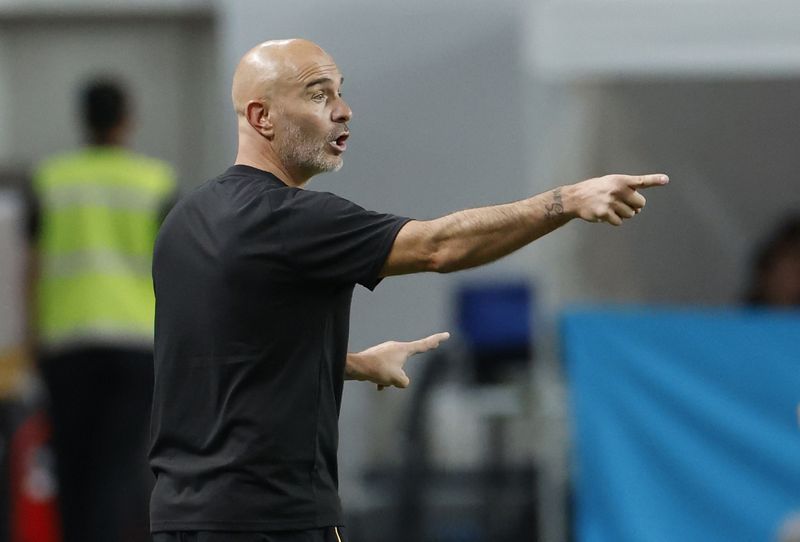
Manchester City enters uncharted waters this season with Enzo Maresca at the helm, marking the first time in a decade the club will begin a campaign without Pep Guardiola directing operations from the technical area. The transition represents a significant shift for an institution that has been moulded entirely by the Spanish coach's philosophy and approach, making this one of the most closely watched managerial changes in English football.
Guardiola's tenure fundamentally reshaped Manchester City's trajectory and competitive standing. During his decade in charge, he delivered six Premier League titles, captured the prestigious Champions League trophy, and established the club as the undisputed force in English football. His methods and innovations influenced not just City but rippled throughout global football, with countless clubs attempting to replicate his possession-based, positional-play approach. The departure closes a chapter that transformed City from a wealthy but occasionally inconsistent club into a relentless winning machine with unparalleled dominance.
Maresca inherits a squad that remains among Europe's most talented, anchored by Norwegian striker Erling Haaland, whose prolific finishing has made him the Premier League's leading scorer in three of the past four seasons. The midfield retains Rodri, whose intelligent passing, positioning, and defensive contributions formed the spine of City's success, though Barcelona's persistent interest creates a potential vulnerability. The club has also reinforced its options by securing England midfielder Elliot Anderson from Nottingham Forest for a reported £116 million, addressing concerns about depth and energy in central midfield while bringing ball-winning capabilities that may prove valuable in transitional moments.
What distinguishes Maresca's appointment is the emphasis on continuity rather than revolution. The 46-year-old Italian is not an outsider to City's ecosystem. He served as part of Guardiola's coaching staff during the club's historic treble-winning campaign, providing him with intimate knowledge of the tactical systems, training methodologies, and cultural expectations that define the organisation. This insider status was clearly attractive to City's decision-makers, who appear determined to maintain the philosophical foundation that generated sustained success rather than risk destabilisation through radical change.
Maresca's managerial credentials extend beyond his role as Guardiola's assistant. He successfully guided Leicester City back to the Premier League after their championship-winning squad had descended into the lower divisions, demonstrating his ability to navigate challenging circumstances and deliver results under pressure. His spell at Chelsea added trophy-winning experience to his resume, suggesting he can operate effectively at the highest level and manage the complexities of clubs with significant expectations and resources.
The challenge facing Maresca, however, transcends tactical knowledge or previous success. Guardiola's influence at Manchester City extended far deeper than match-day decisions or training-ground instructions. The Spanish coach fundamentally shaped the club's culture, established standards that became non-negotiable, and created an environment where continuous improvement and relentless pursuit of excellence became institutional values. Transitioning from being Guardiola's trusted lieutenant to becoming the voice that shapes these elements presents a qualitatively different demand.
Recent departures have created unexpected voids in the squad's composition. The exits of long-serving figures like Bernardo Silva and John Stones represent the loss of significant experience and established leadership within the dressing room. These are players who understood Guardiola's expectations implicitly and helped enforce standards through their behaviour and commitment. Their absence means the squad contains less accumulated institutional memory, potentially creating a window where previously rock-solid cohesion becomes temporarily fragile. The emergence of younger talents like Rayan Cherki and Nico O'Reilly offers fresh energy and long-term potential, but immediate integration into a title-challenging squad carries inherent risks.
Last season's finale underscores the reality of Maresca's assignment. While City's domestic cup double would have constituted a successful campaign for virtually any other English club, finishing second to Arsenal in the Premier League represented a relative disappointment by the standards Guardiola established. This context reveals the severity of expectations: Maresca cannot simply maintain the previous season's accomplishments and expect to be judged favourably. The City hierarchy and fanbase anticipate an immediate return to the summit, understanding that the infrastructure, talent pool, and financial resources remain positioned for title contention.
The transition period may involve a brief adjustment phase as players readjust to a different managerial voice and approach, particularly with many returning from extended World Cup involvement. Despite this potential transition turbulence, City's competitive standing remains formidable, and the club remains among the foremost contenders across all competitions in which it participates. The squad's quality is sufficiently deep and versatile that any dip in performance would likely prove temporary.
Maresca's path to success appears to depend fundamentally on his capacity to balance preservation with innovation. The club requires enough continuity to maintain the tactical and cultural systems that generated sustained dominance, yet sufficient fresh perspective and autonomy to establish his own imprint and prevent the squad from experiencing staleness after years under a singular managerial voice. Should he navigate this balance effectively, City possesses the personnel and infrastructure to return promptly to English football's apex. The campaign opens with a visit to Bournemouth on August 23, providing the first concrete examination of how successfully Maresca can channel Guardiola's legacy whilst establishing his distinct vision.

