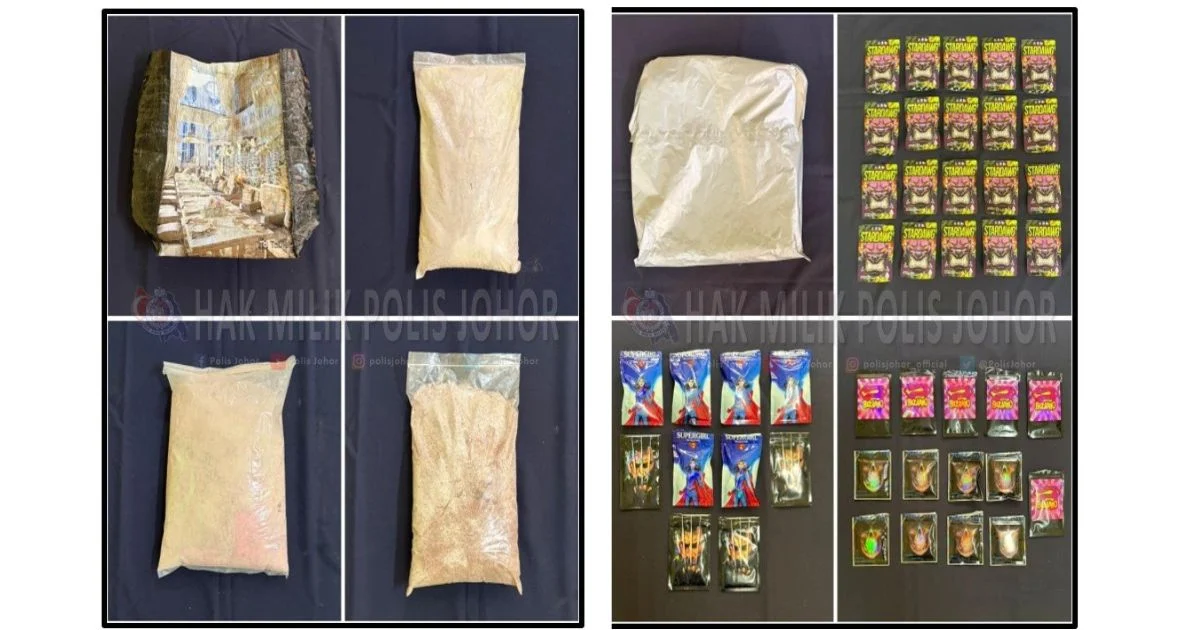
Law enforcement authorities in Johor Baru have successfully cracked a substantial drug trafficking operation in Kulai, culminating in the arrest of a husband-and-wife team and the confiscation of a substantial cache of illegal narcotics valued at approximately RM3.59 million. The operation represents another significant blow against organized drug syndicates that have been operating across the state, adding to the mounting pressure on criminal networks that have long exploited Johor's strategic location near Singapore and major transportation corridors.
The dismantling of this particular syndicate highlights the persistent challenge of drug trafficking in Johor, which continues to serve as both a production hub and transit point for narcotics destined for markets throughout Southeast Asia and beyond. The arrest of the married couple suggests a degree of sophistication in the network's operations, with family members often playing key roles in drug distribution structures that can evade detection through the appearance of legitimate domestic activity. Such arrangements have proven particularly effective in remaining beneath the radar of law enforcement agencies until coordinated operations can establish sufficient evidence for intervention.
The seizure of narcotics worth RM3.59 million demonstrates the significant scale at which this particular outfit was operating. These types of busts typically involve multiple categories of controlled substances, and the high street value indicates the syndicate was likely serving a substantial customer base across Johor and potentially extending into neighbouring states. The confiscation represents a substantial disruption to the flow of drugs through the region and the elimination of considerable profit that would have funded further criminal activities and expansion of the network.
Kulai, located strategically in the northern part of Johor, has historically been identified as an area where drug-related activities have concentrated. The location's proximity to major transport networks and its relative proximity to Kuala Lumpur make it an attractive operational base for traffickers seeking to distribute supplies across Peninsular Malaysia. The successful operation in this town reflects police commitment to targeting these known hotspots with dedicated resources and intelligence-led enforcement actions.
The involvement of a married couple in the operation raises questions about recruitment patterns and the methods through which organized drug networks maintain internal security and operational continuity. Family-based arrangements can foster loyalty and reduce the risk of informants, though such structures are not immune to law enforcement penetration. The capture of both members of the couple simultaneously suggests authorities had developed comprehensive intelligence regarding their roles within the broader operation before executing the arrests.
Police operations targeting major drug syndicates have intensified across Malaysia in recent years, reflecting both public pressure and government directives to combat trafficking at all levels. These enforcement initiatives often require substantial investigative groundwork, surveillance operations, and coordination between multiple law enforcement agencies at federal and state levels. The resource commitment necessary to build viable cases against organized trafficking networks explains why successful major busts, while significant, may appear sporadic to the general public despite continuous police activity.
The psychological and practical impact of such seizures extends beyond the immediate arrests and confiscation. Large hauls of narcotics removed from circulation create supply pressures that can temporarily disrupt street-level markets, though competing syndicates typically move quickly to fill supply gaps. For the authorities, successful operations generate intelligence about broader network structures, supplier relationships, and customer bases that can inform subsequent enforcement actions targeting other elements of trafficking organizations.
For Malaysian communities, particularly those in Johor where drug-related crime remains a persistent concern, this operation offers modest reassurance that law enforcement remains engaged in combating trafficking at organized levels. However, the continued emergence of similar syndicates underscores the structural demand for illicit drugs and the substantial profits that drive persistent criminal enterprise. Sustainable reduction in drug availability requires addressing not merely supply-side enforcement but also demand factors through public health and rehabilitation approaches.
The arrest and charges against the couple will proceed through Malaysia's criminal justice system, where trafficking convictions involving large quantities of controlled substances carry severe penalties including lengthy imprisonment. The legal proceedings will likely generate further intelligence regarding other network participants and connections that could inform future enforcement actions, as accused individuals sometimes cooperate with authorities in exchange for consideration during sentencing.
Looking forward, this operation reflects the ongoing cat-and-mouse dynamic between law enforcement and trafficking syndicates in Johor and across Southeast Asia. While individual busts provide tangible successes, the underlying conditions that make drug trafficking profitable—including geographical proximity to major markets, established smuggling routes, and persistent demand—suggest that such operations will remain necessary components of Malaysia's drug enforcement strategy for the foreseeable future.

