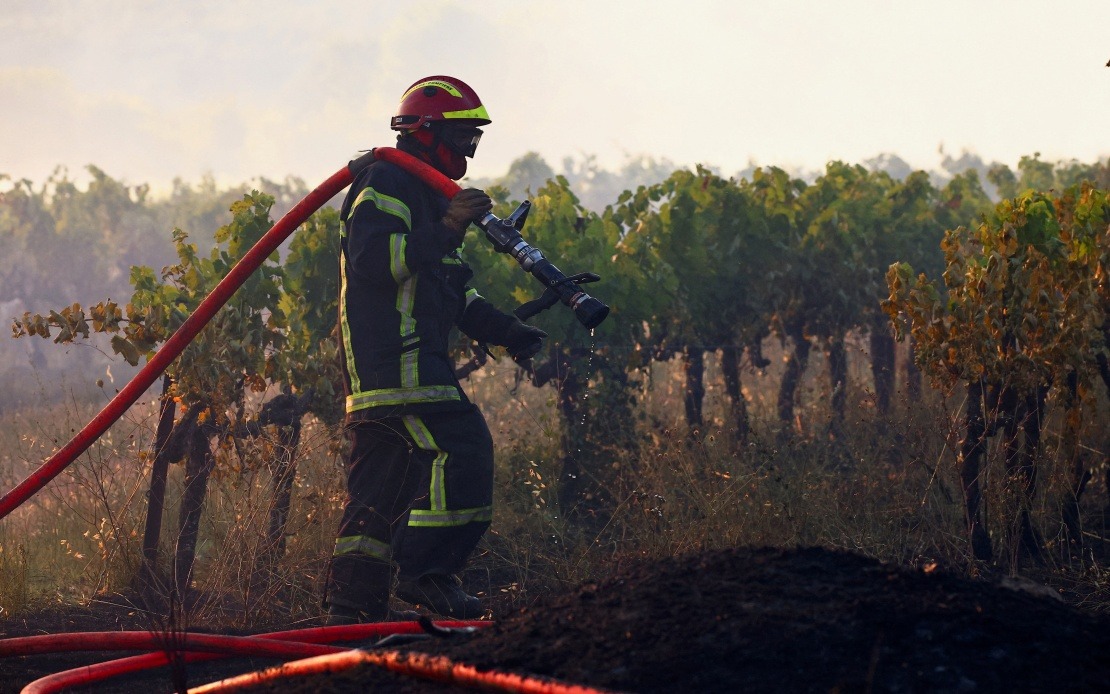
A sprawling wildfire raging across the Var department in southeastern France has destroyed 1,700 hectares of land and triggered widespread evacuations, underscoring the mounting climate challenge confronting Europe during an unprecedented summer heat crisis. The prefecture issued a statement confirming the scale of destruction as of Wednesday evening, while authorities mobilised one of the largest emergency response operations the region has witnessed in recent memory.
The geographical impact extends across five separate communes—Ponteves, Cotignac, Sillans-la-Cascade, Correns and Montfort-sur-Argens—where approximately 400 residents were ordered to leave their homes as the inferno advanced. Among those affected communities, Cotignac experienced particularly severe consequences, with the majority of the 2,300 households losing electrical power. The electricity blackouts compounded the hardship for residents already grappling with extreme temperatures and the immediate threat posed by the advancing flames.
The firefighting response reflects the gravity of the situation, with authorities deploying a massive coordinated effort drawing resources from across France. A total of 900 firefighters, augmented by personnel from neighbouring departments to strengthen capacity, have been engaged in containment and suppression operations. Supporting these personnel are 350 specialised vehicles equipped for firefighting operations, alongside 60 gendarmes tasked with maintaining order, controlling access to danger zones, and coordinating evacuation procedures. This substantial marshalling of emergency services demonstrates the intensive labour required to combat such large-scale natural disasters in the modern era.
The wildfire erupted during a period when France has experienced extraordinary climatic stress. President Emmanuel Macron characterised the summer of 2022 as marked by a record-breaking number of wildfires—the highest recorded since the conclusion of World War II. This historical benchmark underscores how contemporary climate patterns are producing emergencies that challenge national infrastructure and institutional capacity in ways not previously encountered in living memory.
The broader meteorological context illuminates the systemic pressures driving these disasters. At the end of June, France's national weather service triggered its highest alert status across 72 of the country's 96 departments, establishing an unprecedented record for simultaneous high-alert zones. Temperature readings during this period approached 40 degrees Celsius, with certain locations exceeding this threshold. The combination of prolonged heat, low humidity, and parched vegetation creates an environment where wildfires ignite easily and spread with ferocious speed, transforming large swathes of countryside into tinderboxes.
For Malaysian observers monitoring international climate impacts, the French wildfire crisis carries significant implications. Southeast Asia has itself battled recurring transboundary haze and forest fires, particularly during El Niño phases when drought conditions intensify across the region. The scale and frequency of the French emergency demonstrates how climate change is reshaping hazard profiles globally, with even developed nations requiring fundamental restructuring of emergency response capabilities. The resource intensity of modern wildfire suppression—requiring hundreds of personnel, specialised equipment, and coordinated multi-jurisdictional planning—indicates that prevention and climate mitigation may ultimately prove more cost-effective than perpetually expanding firefighting capacity.
The displacement of 400 residents represents more than a statistical measure of impact; it reflects the disruption of livelihoods, separation of families, and psychological strain accompanying forced evacuation. Communities in the Var region faced not merely the immediate danger of encroaching flames but also the uncertainty of whether homes, agricultural lands, and generational property would survive. For rural areas heavily dependent on tourism and agriculture, such disruptions carry lasting economic consequences beyond the immediate disaster period.
The power disruption affecting 2,300 households adds another layer of complexity to emergency response. In contemporary society, electricity access determines capacity to charge communication devices, operate medical equipment, refrigerate food, and maintain basic comfort during extreme heat. The coincidence of wildfire emergency and heat wave means that those evacuated or isolated by disruptions face compounded vulnerability, particularly elderly residents or those with health conditions requiring electrical support systems.
France's experience during this summer reflects broader European patterns. Mediterranean and southern regions increasingly resemble conditions associated with semi-arid climates, with fire seasons extending earlier into spring and later into autumn. This transformation of environmental baselines suggests that nations must fundamentally reconsider spatial planning, building standards, vegetation management, and resource allocation to accommodate the new climate reality. What was once considered an occasional emergency now appears as a regular seasonal occurrence demanding permanent institutional adaptation.
The mobilisation of nearly a thousand firefighters illustrates both the commitment of French authorities and the enormous human cost of climate-driven disasters. Each deployed personnel represents resources diverted from routine services, training exercises, and preparation for other potential emergencies. As wildfire frequency escalates, nations face difficult choices about whether to continuously expand emergency services or redirect investments toward prevention, adaptation, and mitigation of underlying climate drivers.
Regional implications extend beyond immediate firefighting operations. International observers, including those in Southeast Asia grappling with similar hazards, monitor European responses to inform their own strategic planning. The success or failure of French containment efforts, the adequacy of evacuations, and the speed of recovery all provide instructive lessons for nations developing resilience frameworks. Cross-border knowledge sharing regarding best practices in early warning systems, community preparedness, and resource coordination strengthens global disaster management capacity.

