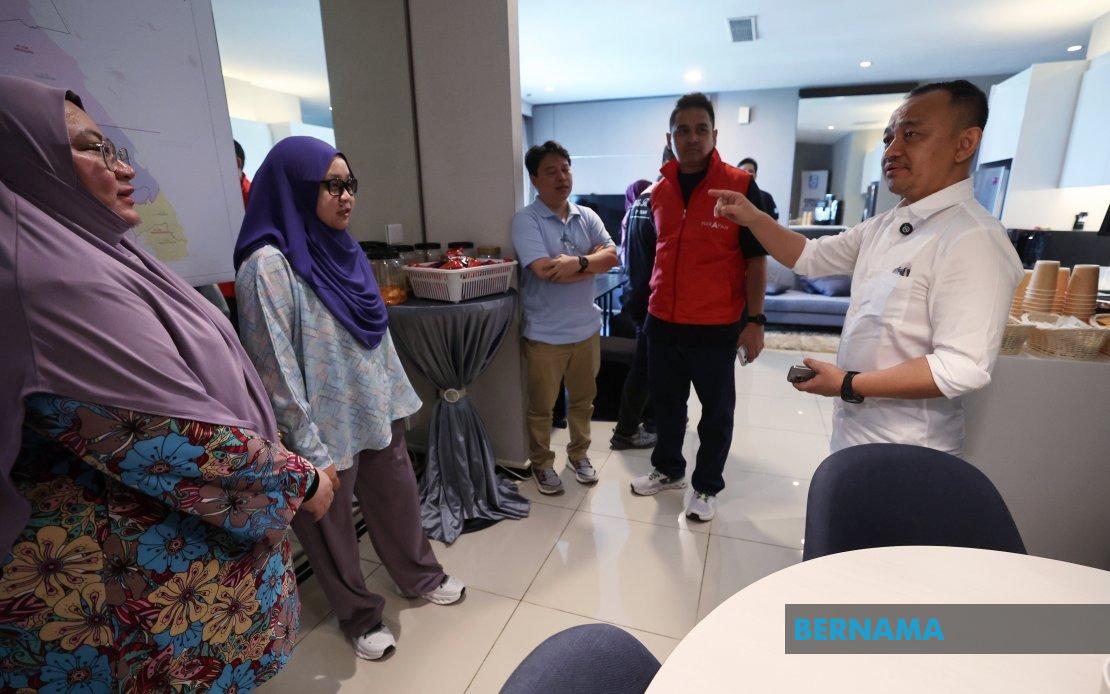
Dr Maszlee Malik, the Pakatan Harapan contender for the Puteri Wangsa state seat, has unveiled plans to deploy a purpose-built mobile application designed to revolutionise how residents engage with their representative. The platform would enable constituents to lodge grievances and report neighbourhood problems with greater ease and speed, addressing what Maszlee sees as a critical service gap in a constituency defined by geographical sprawl and demographic heterogeneity. The former education minister's proposal reflects an understanding that constituencies straddling affluent residential enclaves like Austin Heights and rural settlements such as Felda Ulu Tebrau require adaptive governance tools to bridge the substantial gap between needs and service delivery.
The rationale underpinning the app extends beyond mere complaint management. Maszlee has identified a systemic inefficiency whereby eligible vulnerable populations—specifically single mothers and persons with disabilities—often remain unaware of assistance schemes or encounter friction navigating bureaucratic channels. The application would function as both a reporting mechanism and a discovery tool, enabling authorities to proactively identify and reach marginalised groups whose circumstances might otherwise escape official notice. This dimension suggests a philosophy of governance oriented toward closing information gaps that perpetuate exclusion, a particularly salient consideration for Malaysian constituencies where administrative complexity sometimes obscures entitlements from those most in need.
The technological inspiration for Maszlee's initiative derives from international precedent. He has drawn lessons from New York City Mayor Zohran Mamdani's engagement methodologies, which leverage digital infrastructure alongside conventional social media to create direct feedback channels between constituents and elected officials. The comparison illuminates a broader trend among progressive politicians globally toward dissolving intermediaries between residents and representatives, replacing hierarchical complaint structures with platforms enabling immediate constituent input. For Malaysian context, this approach represents a departure from traditional town-hall models, though Maszlee has indicated his intention to retain such forums rather than substitute technology for face-to-face interaction.
Beyond the application itself, Maszlee's engagement strategy encompasses sustained collaboration with civil society organisations, residents' associations, and government bodies, complemented by periodic town halls addressing localised concerns. This multi-channel architecture suggests recognition that technology comprises one instrument within a broader governance toolkit rather than a panacea. The emphasis on institutional partnerships also signals awareness that effective constituent service requires coordination across formal and informal networks, particularly where local issues intersect with federal or state mandates. The resilience of traditional community structures in Malaysian society means that technological solutions must integrate rather than displace existing social frameworks.
The campaign itself has embraced a sophisticated digital strategy recognising that conventional door-to-door outreach reaches progressively narrower demographic segments. Young voters, professionals employed in Singapore, and those residing in dispersed or peripheral areas frequently remain inaccessible to traditional campaigns, their schedules and geographic dispersal rendering walkabouts inefficient vectors for political engagement. Social media platforms offer compensatory reach, enabling message dissemination to populations that might otherwise evade campaign contact entirely. This recognition reflects the electoral landscape's transformation as mobility and employment patterns have fractionalised geographically-bound political communities.
The challenge posed by digital platforms, however, extends beyond reach. Algorithmic curation and echo chambers—wherein users encounter predominantly ideologically-congruent content—create fragmentation risks whereby campaign messaging fails to penetrate beyond sympathetic audiences. To counteract these dynamics, Maszlee's team has adopted granular targeting protocols, tailoring messaging content to specific localities and demographic cohorts while remaining attentive to socioeconomic, ethnic, and age-based variations in voter priorities. This segmentation acknowledges that Puteri Wangsa's internal diversity generates divergent political concerns: affluent residents may prioritise infrastructure maintenance and property values, whereas rural communities might emphasise agricultural support or public transport connectivity.
The strategic targeting encompasses several distinct voter populations. Generation Z voters, increasingly concentrated in urban precincts, respond to digital engagement differently than older cohorts and require messaging calibrated to issues like climate policy, employment flexibility, and educational accessibility. Malaysians employed across the Straits, particularly those from the Chinese community, constitute a diaspora electorate whose engagement demands culturally-sensitive framing and recognition of transnational identity considerations. Residents inhabiting less urbanised zones face distinct infrastructure and service provision challenges warranting separate communicative approaches. Professionals in salaried employment occupy yet another segment with characteristic time constraints and policy preferences. This demographic mapping reflects sophisticated campaign analysis recognising that one-size-fits-all messaging inevitably fails where constituent populations possess materially different lived experiences and priorities.
The Puteri Wangsa contest itself unfolds within a competitive five-way configuration. Beyond Maszlee, the seat will be contested by Rashifa Aljunied representing the Malaysian United Democratic Alliance, Teow Chia Ling of Barisan Nasional, Nicholas Paul Vincent standing for Parti Bersama Malaysia, and independent candidate Wang Wee Siong. This fragmentation suggests that no candidate commands overwhelming local dominance, creating an environment where marginal organisational or communicative advantages may prove decisive. Maszlee's technological and strategic innovations might thus represent attempts to secure differentiation in what appears a relatively competitive race.
The 16th Johor state election will proceed on July 11, with early voting scheduled for July 7. The timing places campaigns in their final intensive phase, during which digital strategies must convert awareness into mobilised support. For Maszlee, the mobile application proposal simultaneously functions as both a genuine policy commitment and a campaign positioning statement, signalling modernity and responsiveness to technologically-minded voters while potentially alienating traditionalists preferring conventional constituent relations. The stakes extend beyond individual electoral success to encompass broader questions regarding how Malaysian state elections incorporate technological innovation into democratic processes, establishing precedents that might influence future campaigns.
The initiative's ultimate success depends upon implementation fidelity and user adoption rates. Sophisticated applications require ongoing maintenance, regular feature updates, and substantive responsiveness to submitted complaints—without which they risk becoming symbols of unfulfilled technological promise. For Puteri Wangsa residents unaccustomed to digital constituent services, successful uptake requires intuitive interface design, multilingual functionality, and demonstrated evidence that app-submitted grievances receive timely attention. Should Maszlee's campaign succeed and the application be deployed, its performance will likely inform subsequent Malaysian politicians' technology adoption decisions, either validating digital-governance approaches or cautioning against investments in solutions failing to generate tangible constituent service improvements.

