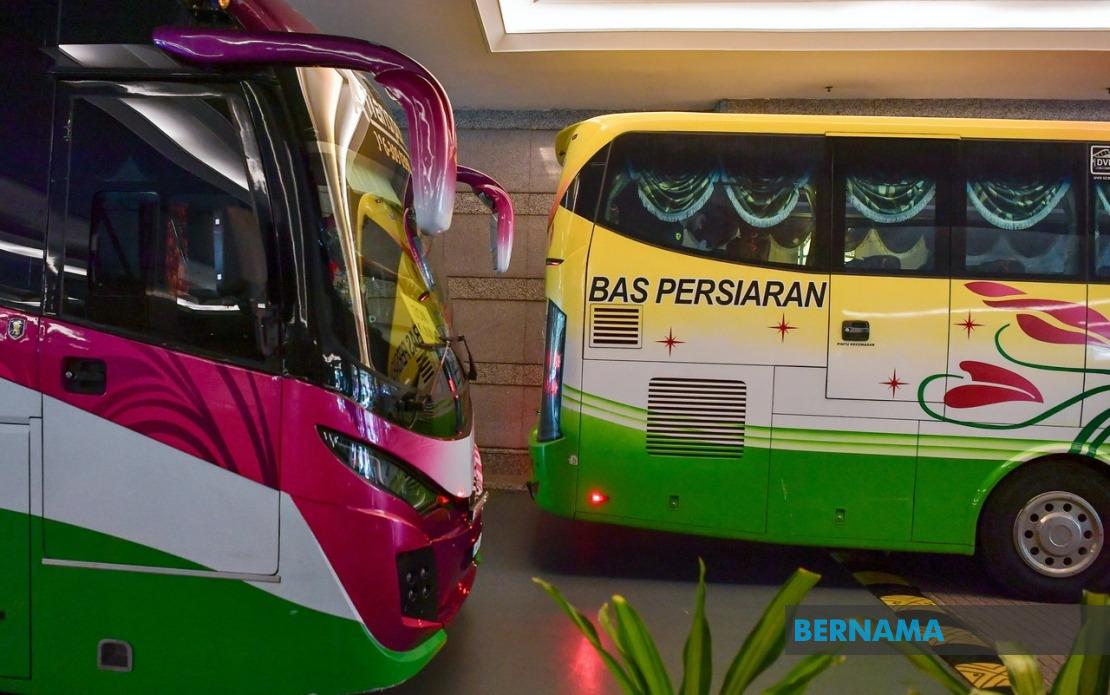
The Malaysian Association of Tour and Travel Agents has formally contested the government's recent decision to strip licensed tourism transport operators from the diesel subsidy programme, mounting a substantive pushback against what it characterises as a fundamentally flawed policy rationale. MATTA president Nigel Wong directly contradicted Finance Minister II Datuk Seri Amir Hamzah Azizan's assertion that diesel subsidies directed at tourism vehicles would serve only foreign tourists, arguing instead that the government has misunderstood the operational breadth of Malaysia's licensed tourism transport sector.
Wong's intervention centres on a critical factual claim: that tourism transport vehicles in Malaysia cater to a diverse passenger base encompassing domestic holidaymakers, school excursion groups, corporate team-building events, incentive travel arrangements, religious pilgrimage groups, educational study tours and community programmes. This range of services means that subsidising diesel for these operators would tangibly benefit Malaysian citizens across multiple demographic and socioeconomic categories, not merely international arrivals. The association's position fundamentally reframes the subsidy question from a foreign visitor benefit into a domestic affordability matter.
The exclusion decision carries immediate financial implications for the tourism transport industry. By removing access to subsidised diesel, operators face noticeably higher operating costs that the association contends will inevitably translate into elevated fares and pricier travel packages. For Malaysian families and groups already considering domestic holiday options, these price increases could prove decisive in whether they pursue tourism activities at all. The ripple effect extends beyond transport operators themselves to encompassing accommodation providers, food and beverage establishments, attraction operators and local retail businesses dependent on tourist spending.
Wong raised a secondary concern that warrants scrutiny in Malaysia's regulatory environment. Higher fares and reduced affordability in the licensed tourism transport sector could inadvertently incentivise Malaysian consumers to shift toward unlicensed and unregulated transport providers. This outcome would undermine the government's own tourism governance objectives and potentially create safety and consumer protection vulnerabilities within the sector. The policy, intended perhaps to improve fiscal discipline, could perversely strengthen the informal economy at the expense of regulated operators who comply with licensing and safety requirements.
The timing of MATTA's objection carries particular weight given Malaysia's positioning around the Visit Malaysia 2026 campaign. This multi-year tourism promotion initiative aims to elevate both domestic and international visitor volumes, positioning tourism as a meaningful contributor to economic growth and employment generation. By constraining the affordability of tourism transport services, the subsidy exclusion functionally works against the stated objectives of VM2026. The association argues that more competitively priced tourism transport services would encourage Malaysian residents to discover domestic destinations while simultaneously enhancing Malaysia's appeal relative to regional competitor destinations for international travellers.
Beyond immediate consumer pricing, MATTA's submission introduces a macroeconomic argument worth unpacking. The association contends that stronger tourism activity generates multiplier economic benefits that could exceed the direct budgetary cost of targeted diesel subsidies. Tourism spending creates employment across multiple sectors including hospitality, retail, transport and entertainment. Tax revenues from increased tourism activity flow back to government coffers. Local communities benefit from visitor spending. When framed through this broader economic lens, supporting tourism transport becomes defensible not merely as sectoral assistance but as strategic economic stimulus aligned with Malaysia's growth objectives.
The association has articulated a specific set of recommendations directing the Finance Ministry to revisit the exclusion decision, collaborate with the Ministry of Tourism, Arts and Culture and relevant industry participants to design a carefully calibrated subsidy mechanism that targets legitimate operational needs, and fundamentally reconceptualise tourism transport as a strategic economic enabler rather than a peripheral expenditure item. This framing deliberately shifts the conversation from cost-cutting to investment strategy, positioning tourism transport support as integral to broader economic policy rather than sectoral pleading.
Wong's characterisation that the Finance Ministry decision fundamentally misunderstands the operational reality of licensed tourism transport represents a direct institutional disagreement between the industry association and central government financial management. The Finance Ministry apparently proceeded from the assumption that tourism subsidies disproportionately benefit foreign visitors, an assumption MATTA contests as empirically unsupported. This disagreement points to potential communication gaps between the tourism sector and fiscal authorities in policy development processes.
For Malaysian policymakers evaluating this dispute, several considerations merit attention. First, the budgetary impact of including licensed tourism transport in diesel subsidies requires quantification. Second, the distinction between legitimate subsidised operators and potential cost-gaming needs careful design to prevent leakage. Third, the relationship between transport affordability and domestic tourism participation deserves empirical investigation. Fourth, the potential macroeconomic benefits of tourism sector expansion warrant consideration alongside direct subsidy costs. These analytical questions suggest that a policy reversal or modification might prove economically rational even from a pure fiscal standpoint, depending on empirical parameters.
The MATTA challenge also reflects broader regional dynamics around tourism competitiveness. Throughout Southeast Asia, governments are increasing tourism investment as a growth strategy. If Malaysia's transport subsidy policy makes Malaysian tourism less affordable relative to Thai, Vietnamese or Indonesian alternatives, the region's shifting tourist flows could penalise Malaysian operators and communities dependent on tourism revenue. From this competitive perspective, transport affordability becomes a factor in regional market positioning rather than merely a domestic budgetary matter.
Moving forward, resolution likely requires substantive dialogue between the finance and tourism ministries, incorporating data from the licensed transport industry about passenger demographics and operational realities. The association's intervention signals that the tourism sector views this subsidy decision as economically consequential and policy-reversible, rather than settled. Whether the government elects to reconsider, modify, or defend the exclusion will communicate important signals about the priority attached to tourism sector development versus fiscal consolidation in Malaysia's current policy hierarchy.

