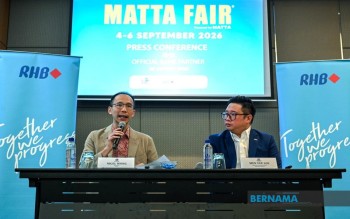
The Malaysian Association of Tour and Travel Agents has outlined an ambitious agenda for the government's forthcoming Budget 2027, centred on making the travel and tourism sector more competitive through targeted fiscal support. MATTA president Nigel Wong articulated the industry's priorities during a press conference at the MATTA Fair, framing tax relief and investment commitments as essential tools for revitalising Malaysia's tourism proposition at a critical moment. The budget, scheduled for tabling by the Finance Minister on October 9, presents a timely opportunity to align fiscal policy with the Visit Malaysia 2026-2027 campaign, a signature government initiative designed to position the country as a premier regional destination.
Enhanced tax deductions for tour operators represent the cornerstone of MATTA's submission. Wong emphasised that such relief would translate directly into increased promotional activity abroad, enabling travel agencies to invest more aggressively in marketing Malaysia to source markets across Asia, Europe, and beyond. This supply-side approach reflects a strategic insight: that tour operators, when granted greater fiscal flexibility, will channel additional resources into overseas campaigns that generate demand for Malaysian holidays. Without such incentives, operators face margin pressures that constrain their capacity to undertake costly international marketing initiatives, potentially limiting Malaysia's ability to compete with rival destinations such as Thailand, Indonesia, and Vietnam, which often deploy generous promotional allowances to their private sectors.
The infrastructure modernisation component of MATTA's proposal addresses a longstanding challenge in Malaysia's tourism ecosystem. Wong pointed to the Sultan Abdul Samad Building renovation as a benchmark for the kind of heritage-led enhancement the industry seeks across the nation. Malaysia possesses an extraordinary portfolio of historical and natural assets—from colonial-era structures in Georgetown and Ipoh to natural wonders ranging from rainforests to island formations—yet many have deteriorated or fallen into neglect. Strategic refurbishment programmes, Wong suggested, would elevate these attractions into world-class experiences capable of justifying premium pricing and extended stays. The ripple effects extend beyond tourism; preserved heritage sites strengthen urban identity, attract cultural tourists with higher spending patterns, and generate employment in restoration, hospitality, and related services.
Crucially, Wong framed infrastructure investment as a whole-of-government challenge requiring coordination beyond the tourism ministry. He called for municipal councils and local authorities to assume greater responsibility for ensuring that city centres and urban precincts meet international standards for walkability, safety, and cleanliness. This observation reflects frustration within the industry over the disconnect between flagship attractions and their surrounding environments. A gleaming museum or heritage site loses appeal if visitors encounter litter, poor street lighting, or perceived security risks in adjacent areas. By involving local authorities as partners in tourism quality assurance, the industry aims to create seamless, high-quality urban experiences that justify Malaysia's positioning in competitive global tourism markets.
The request for expanded promotional budgeting underscores the resource intensity of the Visit Malaysia 2026-2027 campaign. Major tourism campaigns typically require sustained, multi-channel spending across digital media, trade shows, influencer partnerships, and destination marketing collaborations. Competitors in the region invest substantial sums to secure top-of-mind awareness among affluent leisure travellers and business tourists. Malaysia's promotional allocation has faced periodic constraints, limiting the reach and frequency of international campaigns. MATTA's submission implicitly acknowledges that without adequate government backing, private-sector efforts alone cannot generate the volume of visitor inflows necessary to justify infrastructure investments and support the broader economic growth targets linked to tourism expansion.
The timing of MATTA's submission carries strategic weight. Budget 2027 arrives at an inflection point for Malaysian tourism. The nation has recovered substantially from pandemic disruptions, and competing destinations have simultaneously upgraded their offerings and marketing intensity. The Visit Malaysia 2026-2027 initiative represents a coordinated attempt to capture market share during a high-growth period for regional travel. Tax incentives, infrastructure quality, and promotional spending function as complementary policy levers: incentives motivate private-sector engagement, infrastructure attracts and satisfies visitors, and promotion generates initial demand that operators then fulfil. A shortfall in any element compromises the entire system.
MATTA's advocacy also reflects sectoral anxieties about policy consistency and medium-term planning. The travel industry requires multi-year visibility into government support frameworks to justify capital investments, staffing decisions, and market-development efforts. One-off budget allocations create uncertainty; operators cannot confidently commit resources if they cannot anticipate whether tax relief or promotional support will persist beyond a single fiscal year. By presenting a comprehensive, integrated agenda, MATTA signals that the industry seeks not merely short-term relief but a structural repositioning that treats tourism as a strategic economic pillar warranting sustained, predictable government partnership.
For Malaysian consumers and the broader economy, MATTA's submissions carry indirect relevance. Stronger tourism sectors generate foreign exchange, employment, and entrepreneurial opportunities across hospitality, transportation, retail, and cultural industries. Enhanced international visitor flows support domestic airlines, hotels, restaurants, and attractions. Improved urban infrastructure and heritage conservation benefit residents and visitors alike. Tax-efficient tour operators may pass some benefits to consumers through competitive pricing, although market dynamics and margin requirements often limit such pass-through. The real impact flows toward the supply chain: operators, guides, drivers, accommodation providers, and craftspeople benefit most directly from sustained, government-supported tourism growth.
The submission also illuminates broader tensions within Malaysian policy-making. Tourism competes for budgetary resources with healthcare, education, and infrastructure outside the tourism domain. Political and bureaucratic priorities shift with election cycles and leadership transitions. MATTA's detailed, reasoned advocacy—grounded in competitive analysis and linked explicitly to government targets—represents an attempt to anchor tourism priorities within rational, outcome-focused budget-making rather than discretionary allocation. Whether such arguments prove persuasive to the Finance Minister and cabinet will emerge when Budget 2027 is unveiled and debated in Parliament during October and beyond.

