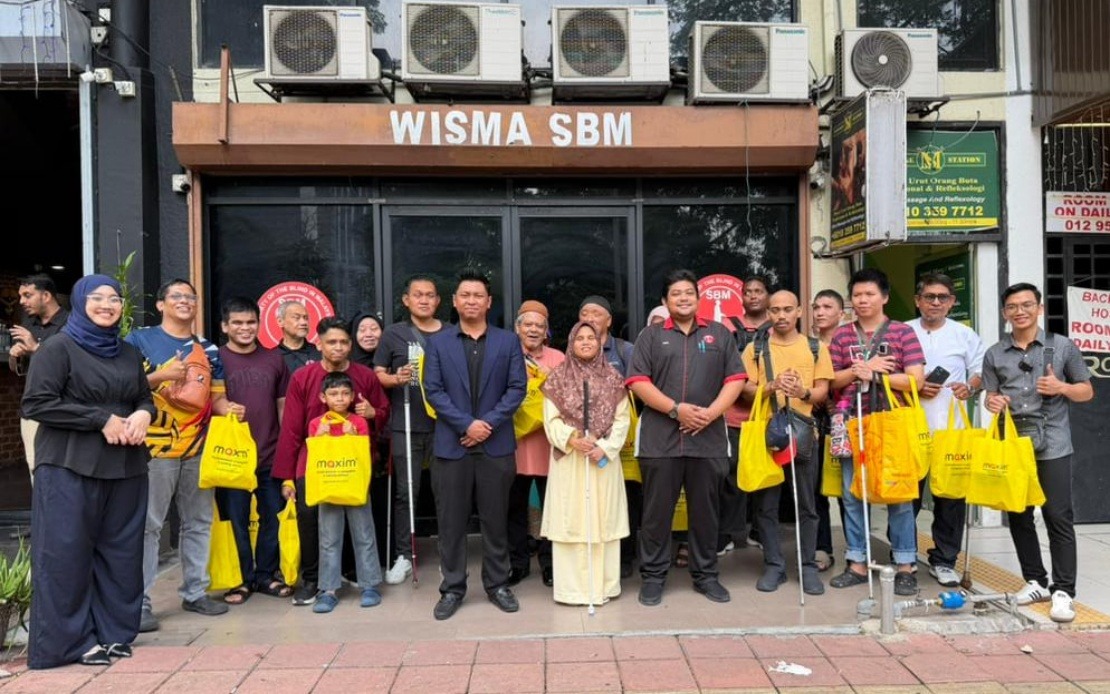
Malaysian e-hailing platform Maxim is intensifying its push to dismantle transportation barriers affecting persons with disabilities, elderly citizens, and economically disadvantaged households through a combination of discounted fares, digital innovation, and collaborative partnerships across the nation. The company's leadership views reliable mobility not merely as a convenience but as a fundamental enabler of social and economic participation that can unlock pathways to employment, healthcare, and community engagement for marginalised groups who have historically struggled to access transportation services.
Syed Abdul Syarif Syed Peiaru, Maxim's Kuala Lumpur regional head, articulated the company's underlying philosophy by positioning transportation as a catalyst for empowerment rather than a simple transit mechanism. His comments reflect a growing recognition within Southeast Asia's mobility sector that equitable service design must address the practical needs of citizens who face compounding barriers—whether mobility impairments, age-related limitations, or financial constraints—that prevent them from fully participating in modern urban life. This framing suggests a business model rooted in social impact alongside commercial viability, a positioning increasingly valued by Malaysian consumers and stakeholders concerned with inclusive development.
The centrepiece of Maxim's accessibility strategy is its Mesra OKU service, a specialised offering engineered for persons with disabilities that incorporates several customer-centric features. The service extends passenger waiting periods to accommodate those requiring additional time for boarding, trains drivers in basic assistance techniques, provides dedicated support for mobility aids such as wheelchairs and walking frames, and integrates voice-recognition booking capabilities that bypass traditional app navigation. This multi-layered approach demonstrates recognition that accessibility barriers are rarely singular; rather, they accumulate across the journey experience, from the moment a passenger decides to book through final arrival at their destination.
Technology functions as both an accessibility tool and an innovation platform within Maxim's framework. The platform's transparent fare display, real-time driver connectivity, and streamlined booking interface reduce friction for users who may have limited digital literacy or who utilise assistive technologies. Syed Abdul Syarif's emphasis on TalkBack voice-recognition features—developed in collaboration with the Society of the Blind in Malaysia—illustrates how platforms can embed accessibility into their core architecture rather than treating it as an afterthought. This partnership also serves an awareness-raising function, educating visually impaired users about digital mobility solutions that previously may have seemed inaccessible to them.
Beyond technological features, Maxim has introduced targeted pricing mechanisms designed to ensure that persons with disabilities and individuals requiring special assistance are not priced out of essential mobility services. These initiatives acknowledge that transportation affordability intersects directly with broader economic inequality; when vulnerable populations face higher effective transportation costs, they become increasingly isolated from employment opportunities, educational institutions, and healthcare facilities. By embedding subsidised fares into its commercial model, Maxim is attempting to shift the cost structure so that accessibility does not require charity but flows from standard operations.
The company's partnership strategy extends beyond commercial relationships into the social ecosystem, with collaborations spanning hospitals, educational institutions, and non-governmental organisations serving vulnerable populations. These alliances create distribution channels for Maxim's services while simultaneously embedding the platform into established networks of trust and support within underserved communities. When a hospital or educational institution recommends or facilitates access to Maxim's services, it reduces information barriers and builds confidence among potential users who might otherwise remain unaware of accessibility options.
Maxim's involvement in adaptive sports reveals an often-overlooked dimension of mobility equity: the capacity to participate in recreational, competitive, and community-building activities. By providing transport support for Sarawak para swimmers and other adaptive athletes, the company recognises that mobility barriers extend into leisure and personal development spheres. This positioning acknowledges that inclusion means more than accessing essential services; it encompasses the full spectrum of human activities and aspirations that constitute a dignified life.
From a regional perspective, Maxim's approach signals a broader maturation of Southeast Asia's mobility sector beyond its initial focus on convenience and speed. As platforms mature and market saturation increases in urban centres, competitive differentiation increasingly flows from social impact credentials and inclusive service design. For Malaysian policymakers and regulators, Maxim's initiatives provide evidence of market-driven solutions to accessibility challenges that have historically fallen primarily to public transportation systems operating under resource constraints. However, this reliance on private sector initiative also raises questions about sustainability and equity across regions where commercial viability may be lower.
The strategic emphasis on rural and underserved area expansion addresses one of Malaysia's persistent development challenges: the gap in service quality and accessibility between urban and peripheral communities. E-hailing platforms have historically concentrated in major metropolitan areas where driver density and passenger demand create viable commercial conditions. By committing to expansion into less densely populated regions, Maxim is accepting lower per-ride margins in exchange for broader market reach and social impact—a calculation that reflects either investor pressure for inclusive growth or a recognition that political and social legitimacy increasingly requires attention to geographic equity.
Syed Abdul Syarif's vision explicitly connects transportation accessibility to broader outcomes: educational attainment, employment security, health maintenance, and social participation. This holistic framing moves the conversation beyond mobility as an isolated service to mobility as an infrastructure for human development. For Malaysian policymakers designing national inclusion strategies, this perspective suggests that transportation accessibility should be integrated into poverty alleviation, disability inclusion, and aging-in-place policy frameworks rather than treated as a standalone transportation issue.
The company's stated commitment to ongoing platform refinement through user consultation with disability advocates and community organisations suggests a feedback-driven approach rather than a top-down design model. This methodology reduces the risk of implementing features that, while well-intentioned, miss actual user needs due to insufficient consultation with intended beneficiaries. In a Malaysian context where consultation mechanisms for policy affecting vulnerable groups remain underdeveloped, Maxim's engagement approach models good practice that could influence broader industry and government norms.
Moving forward, Maxim's stated intention to deepen partnerships with government agencies, healthcare systems, NGOs, and educational institutions positions transportation as a connective node within broader social infrastructure ecosystems. This collaborative vision suggests that digital platforms need not operate as standalone commercial entities but can function as infrastructure providers embedded within public-serving missions. For Malaysia's broader digital economy narrative, this positioning demonstrates how technology companies can simultaneously pursue commercial success and contribute to social cohesion and national development objectives, particularly regarding vulnerable populations historically underserved by market-driven solutions.

