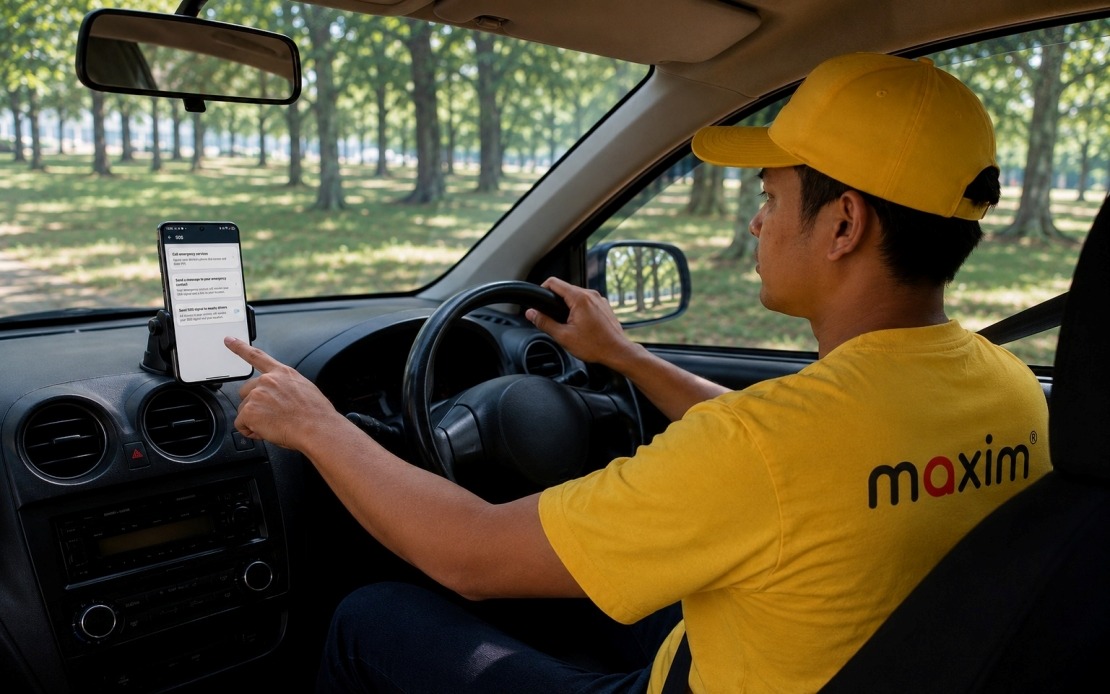
Maxim Malaysia has significantly strengthened its commitment to user safety by deploying a comprehensively redesigned emergency response system. The upgraded safety infrastructure represents a substantial shift in how the ride-hailing platform handles critical situations, moving from a single-option alert mechanism to a multi-layered approach that empowers both drivers and passengers to make real-time decisions about who should be notified when trouble strikes.
The centrepiece of this enhancement is a redesigned SOS button that now functions identically for all platform users. When activated during an emergency, the button provides an immediate choice: users can dial 999 to connect directly with official emergency services, or they can trigger automated notifications to up to three pre-registered emergency contacts. This flexibility acknowledges that not all crises demand identical responses, and different situations may benefit from different first responders.
The notification system itself has been engineered for reliability in challenging conditions. When emergency contacts receive an alert, they obtain two critical pieces of information: the user's precise GPS coordinates and a live-tracking link that allows them to monitor the situation in real time as it unfolds. Crucially, Maxim has built redundancy into this system, ensuring that messages can be delivered even when internet connectivity is weak or intermittent, a consideration particularly relevant in Malaysia where network coverage varies significantly across urban and rural areas.
For driver-partners specifically, Maxim has introduced a Driver Alert System that transforms nearby colleagues into an informal rapid-response network. When a driver faces an emergency, the system broadcasts notifications to other Maxim drivers operating within a three-kilometre radius, informing them of both the nature of the incident and its precise location. This peer-support mechanism aims to provide immediate on-scene assistance while professional emergency responders are en route, potentially reducing response times in critical moments.
Mohd Hazwan Musli, director of Maxim Malaysia, framed these enhancements as a recognition that safety infrastructure must adapt to the realities of on-road work. Rather than imposing a single standardised response protocol, the company has prioritised user agency, allowing drivers and passengers to determine whether their first call should be to official authorities, to trusted family members, or to fellow platform members in their vicinity. The director emphasised that the ability to make this choice within seconds can prove decisive when lives or wellbeing hang in the balance.
The system operates through encrypted data transmission that adheres to contemporary security protocols. Information transmitted via the SOS function, Driver Alert System, or Trip Sharing feature remains protected from unauthorised access, with decryption possible only for authorised security personnel and relevant government authorities operating under established legal procedures. This encryption architecture is essential given the sensitivity of location data and personal contact information involved in emergency situations.
Beyond the SOS infrastructure, Maxim has layered additional protective features throughout its platform. An in-app chat function incorporates anti-fraud mechanisms designed to shield users from financial schemes or social engineering attacks. The platform maintains continuous internal monitoring of journey data, capturing essential trip information including GPS tracking records for every booking. Passengers benefit from a Trip Sharing feature enabling them to forward real-time tracking links to family or friends immediately upon entering a vehicle, creating an external accountability mechanism and allowing loved ones to monitor their progress.
For Malaysian and Southeast Asian markets, these enhancements carry particular significance. The ride-hailing sector has faced scrutiny regarding safety standards, with regulators and advocacy groups pushing platforms to demonstrate robust protections for workers classified as independent contractors rather than employees. Maxim's investment in driver-centric features like the Driver Alert System suggests an attempt to address persistent concerns about driver vulnerability during late-night operations or in isolated locations.
The multi-contact alert capability also reflects cultural patterns in Malaysia and the broader region, where extended family networks often play central roles in emergencies. Rather than assuming that official emergency services should always be the first point of contact, the system acknowledges that many users may prefer to alert parents, spouses, or siblings who can mobilise local resources or provide immediate support before formal responders arrive.
The emphasis on functionality during poor connectivity conditions demonstrates understanding of the platform's operational geography. While Kuala Lumpur and other major metropolitan centres enjoy robust broadband infrastructure, many ride-hailing trips traverse areas where network reliability remains inconsistent. An SOS system that depends entirely on internet availability could fail precisely when users most desperately need it, making the SMS fallback capability genuinely valuable rather than merely ornamental.
These safety enhancements occur within a broader global context of intensifying scrutiny of the ride-hailing industry. Regulators worldwide have demanded proof that platforms prioritise user protection, and companies that demonstrate tangible safety investments may face less regulatory pressure and potentially enjoy competitive advantages in licensing negotiations. For Maxim, which operates across multiple Southeast Asian jurisdictions with varying regulatory expectations, rolling out standardised safety features can streamline compliance while signalling serious commitment to all stakeholders.
The upgraded system also reflects an industry-wide recognition that safety sells. Passengers evaluating ride-hailing options increasingly factor personal security into their platform choices, making transparent safety features a competitive differentiator. Similarly, driver recruitment and retention depend partly on platforms demonstrating genuine concern for partner safety, reducing attrition among experienced drivers who might otherwise migrate to competitors offering superior protections.

