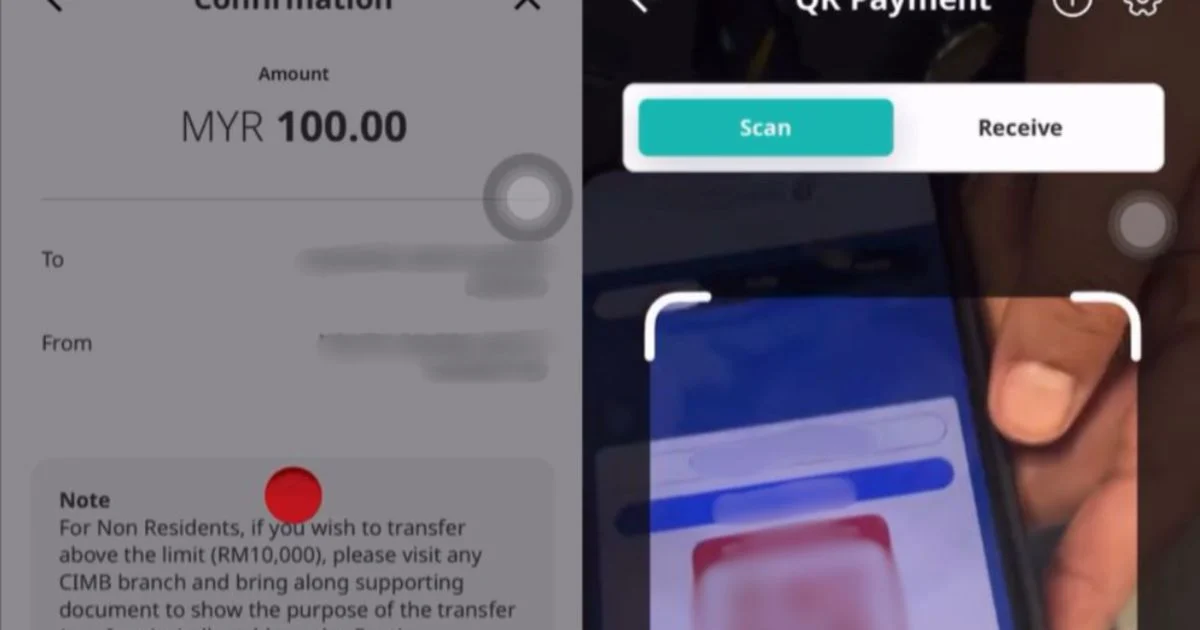
The Malaysian Border Control and Protection Agency has opened a formal inquiry into claims that one of its personnel at Kuala Lumpur International Airport Terminal 2 solicited and accepted a RM100 payment via a personal quick response code transaction, raising fresh concerns about financial impropriety at the nation's busiest airport terminal.
The allegation underscores ongoing vulnerability in Malaysia's border control infrastructure where officers with direct authority over passenger processing and documentation clearance come into contact with travellers in situations of asymmetric power dynamics. Passengers requiring swift clearance may feel compelled to comply with informal payment requests, creating conditions where unscrupulous officials can extract money outside formal channels.
Personal QR codes have become a preferred instrument for soliciting unofficial payments across the region because transactions leave minimal traceable evidence compared to cash exchanges and operate within the digital payment ecosystem that authorities find harder to monitor comprehensively. The method's apparent innocuousness masks its use as a vehicle for corruption, allowing recipients to claim ambiguous purposes for deposits into personal accounts.
KLIA Terminal 2, which processes substantial daily passenger volumes across international and regional routes, has previously been subject to scrutiny regarding operational standards and officer conduct. The terminal's significance as a gateway processing hundreds of thousands of monthly travellers makes it particularly important that procedural integrity is maintained and that passengers can proceed through immigration and customs without facing unofficial levies.
The MCBA's decision to launch an investigation signals institutional awareness that such allegations demand urgent clarification, though the agency has not disclosed specific details regarding who filed the complaint, when the alleged incident occurred, or what documentation exists to corroborate the claim. These procedural details will prove crucial in determining whether the allegation reflects isolated misconduct or symptomatic systemic deficiency.
Malaysia's border agencies operate under escalating pressure to prevent illicit movements of goods and persons while simultaneously maintaining service standards that facilitate legitimate travel and commerce. This balancing act requires personnel of unquestionable integrity, particularly those in frontline positions where direct interactions with the travelling public occur and where opportunities for financial impropriety present themselves.
The incident also reflects broader regional challenges affecting airport operations across Southeast Asia, where passenger-facing officials occasionally exploit their positional authority to generate supplementary income through informal channels. Authorities in neighbouring countries have encountered comparable issues, prompting some to implement enhanced supervision mechanisms, mandatory electronic transaction systems for legitimate fees, and whistleblower protocols that encourage reporting without fear of retaliation.
Malaysia's tourism and aviation sectors depend substantially on international traveller confidence that border procedures will be conducted professionally and transparently. Allegations of unofficial payment demands can damage reputation, deter leisure visitors and business travellers, and create perception that traversing Malaysian immigration involves hidden costs beyond published fees. This reputational dimension makes thorough investigation and public communication about outcomes particularly important.
The investigation will likely examine transaction records, security camera footage from the relevant checkpoint area, and statements from both the accused officer and the traveller who reported the allegation. If substantiated, such findings could result in disciplinary action ranging from formal warnings through suspension to dismissal, depending on severity and whether the individual had prior conduct issues documented in their personnel file.
Institutional strengthening mechanisms might include mandating that all fee-related transactions occur through official digital systems with automatic receipts, implementing real-time supervisor monitoring at high-traffic checkpoints, and establishing accessible complaint mechanisms that passengers can utilise to report suspicious requests without jeopardising their clearance status or travel plans.
The MCBA and airport authorities should consider whether enhanced transparency around legitimate fees, clearer signage in multiple languages, and proactive officer education regarding conduct standards might create deterrents against future impropriety. International best practice at major hub airports typically involves visible supervisory presence, random integrity checks, and public acknowledgment of enforcement actions that demonstrate commitment to clean operations.
For Malaysian travellers and international visitors transiting through KLIA, this investigation represents an opportunity for the nation's border agencies to reinforce their commitment to professional conduct and to demonstrate that allegations of misconduct trigger serious institutional response. The outcome will influence perceptions of Malaysia's airport standards at a time when the aviation sector seeks to rebuild international confidence following pandemic disruptions.
The MCBA has indicated that it will complete its investigation and determine appropriate action based on findings, though no timeline for conclusion has been publicly specified. Stakeholders including traveller advocacy groups and aviation industry representatives should monitor developments to ensure that the investigation proves thorough and that any necessary systemic improvements receive genuine implementation rather than symbolic acknowledgment.

