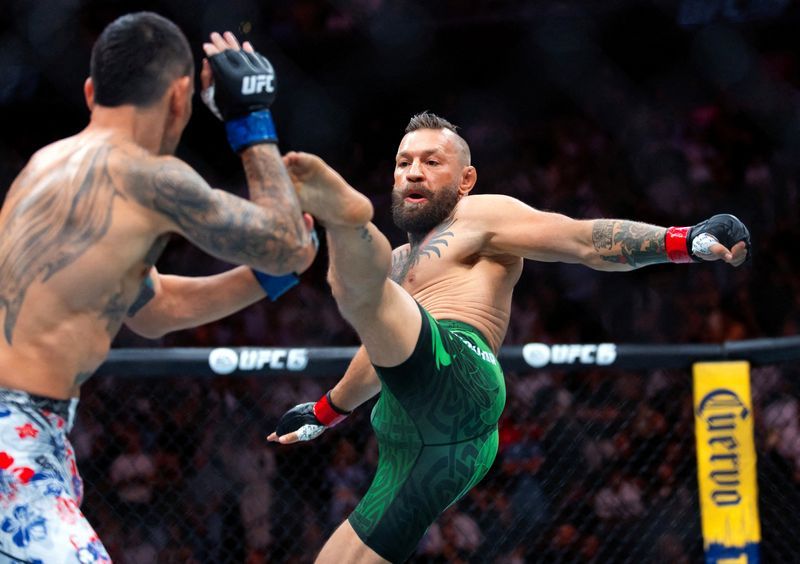
Conor McGregor's comeback to professional fighting lasted barely more than a minute. The Irish mixed martial artist suffered a significant knee injury early in his Saturday bout against Max Holloway in Las Vegas, forcing him to signal the referee that he could not continue just 69 seconds into the fight. McGregor announced on Monday via social media that he intends to have surgery to address the injury and expressed determination to return to the octagon, marking yet another chapter in a career that has been repeatedly interrupted by setbacks both inside and outside the sport.
The injury occurred in the opening moments of the fight when McGregor landed badly after attempting a jump kick during an exchange with Holloway. Rather than continue fighting through the pain, the 37-year-old Irish fighter made the prudent decision to withdraw, immediately drawing attention from the referee to indicate that the injury had rendered him unable to proceed. This swift conclusion to what had been billed as a significant return to action represented a disappointing outcome for both McGregor and fans who had anticipated witnessing a meaningful competitive performance.
McGregor's reaction to the setback reflected a philosophical approach to the situation. On Instagram, he posted a message combining religious sentiment with determination, stating "All things work out for my good! All things are possible for me because I am a believer!" He outlined his intended path forward: surgery, pre-rehabilitation work, a gradual return to martial arts training, and ultimately a return to competition. He notably referenced "the final fight of the contract," suggesting he may be approaching the conclusion of his current agreement with the Ultimate Fighting Championship.
The current injury represents another obstacle in what has become a turbulent period for the former two-weight champion. McGregor's ability to maintain consistent fight schedules and sustained performance has been compromised by various challenges over the past five years. The most recent instance of significant injury occurred when he broke his leg during a contest against Dustin Poirier five years ago, an incident that had lengthy ramifications for his ability to compete at the highest levels of the sport.
Plans for McGregor's return to fighting have been repeatedly derailed by circumstances both within and beyond his control. Most recently, a scheduled June 2024 matchup against Michael Chandler had to be cancelled after McGregor sustained a broken toe during training camp. These types of training injuries, while often appearing minor on the surface, can have significant implications for fighters attempting to maintain their competitive edge and schedule.
Beyond the physical challenges of his sport, McGregor has faced considerable legal and regulatory complications. An Irish civil court determined in 2024 that he was liable in a rape allegation involving Nikita Hand concerning an incident from 2018. This civil judgment added to the reputational and personal burdens the fighter has carried in recent years, contributing to a complex backdrop against which his attempted comeback has unfolded.
Additionally, McGregor faced regulatory action from the sport's anti-doping authorities. In October 2025, he accepted an 18-month ban imposed by Combat Sports Anti-Doping for what was termed "whereabouts failures." This penalty stemmed from his failure to be available for three separate biological sample collection attempts during 2024. The ban was backdated to an earlier point, meaning it expired in March of this year, theoretically clearing the way for his recent return to competition.
For Malaysian and Southeast Asian combat sports enthusiasts, McGregor's career trajectory offers instructive lessons about the demands of professional fighting at elite levels. The intersection of physical injury, personal circumstances, and regulatory compliance creates a complex environment in which even the most accomplished fighters must operate. McGregor's prominence in mixed martial arts has made his struggles publicly visible in ways that illustrate the multifaceted pressures facing professional athletes in the modern era.
The broader implications of McGregor's situation extend to questions about fighter recovery protocols and the timeline required for meaningful returns to competition following injury. His expressed commitment to the rehabilitation process suggests he understands the necessity of proper preparation, though observers may question whether the cumulative effect of injuries and other complications has eroded his capacity to perform at championship levels. The reference to "the final fight of the contract" may indicate recognition that his time at the absolute elite level of the sport is finite.
Looking forward, McGregor's path to successful return will depend on several factors: the severity of the knee injury and the success of surgical intervention, his dedication to the extended rehabilitation process, and his ability to train without sustaining additional injuries. Each of these elements presents genuine challenges, and observers of the sport will be watching to determine whether the former champion can genuinely return to meaningful competition or whether his injuries and other circumstances have effectively concluded his active fighting career at a high level.

