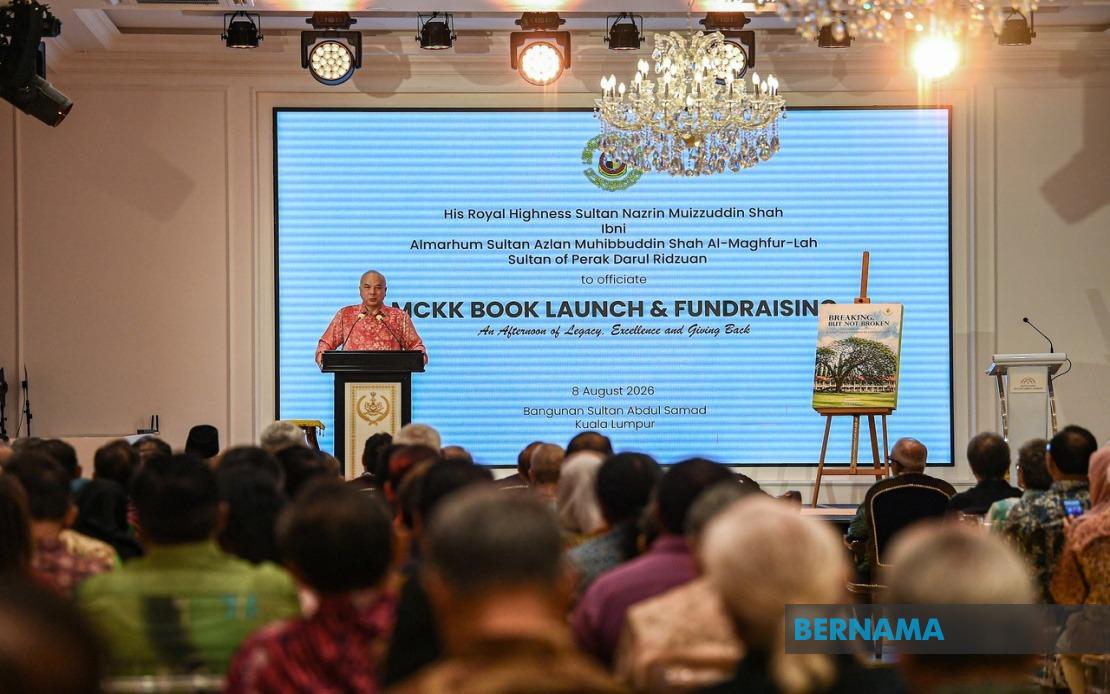
The Malay College Kuala Kangsar and other premier Malaysian heritage schools stand at a crossroads, yet possess the potential to emerge stronger through strategic adaptation to contemporary realities, according to Sultan Nazrin Shah of Perak. Speaking at a book launch event in Kuala Lumpur, the Ruler who serves as Royal Patron of MCKK's Board of Governors outlined a vision for these venerable institutions to reclaim their standing in an educational landscape dramatically transformed by technological advancement and shifting economic demands.
Sultan Nazrin's remarks underscore a growing anxiety among Malaysia's educational establishment about the decline of so-called "power schools" that once reliably produced leaders and high achievers. The premier residential institutions, historically celebrated for their rigorous programmes and selective intake, have increasingly struggled to maintain their lustre as Malaysia's education system diversifies and international competition for talent intensifies. The Ruler's intervention signals that urgent action is required to reverse this trajectory, particularly among institutions with such deep historical roots and national significance.
The fundamental challenge, as articulated by Sultan Nazrin, extends beyond merely updating curricula or acquiring new facilities. Rather, these schools must fundamentally reconsider their pedagogical approach and institutional identity within a world increasingly shaped by artificial intelligence and rapid technological disruption. The education sector, he argued, requires wholesale reimagining and re-equipping to adequately prepare students for an era where technological literacy and adaptability will determine career prospects and societal contribution.
Central to Sultan Nazrin's vision is the notion that heritage schools must cultivate two equally critical dimensions of human development. On one hand, they must produce graduates with practical skills and knowledge suited to evolving labour markets driven by technological change. On the other, and equally importantly, they must nurture well-rounded individuals equipped with the ethical sensibilities, critical thinking capabilities, and commitment to public service that characterises meaningful social participation. The Ruler emphasised that while both elements remain perpetually relevant, the current period of dramatic and unpredictable transformation makes their simultaneous delivery more imperative than ever.
The book being launched, authored by Ghazally Ismail, Ahmad Ibrahim, and Hisham Badrul Hashim, appears to deliver an unflinching assessment of MCKK's contemporary challenges. Sultan Nazrin commended the authors for their willingness to tackle sensitive institutional questions with candour, even where their analysis proved harsh. The scholarship extends beyond MCKK to examine the broader ecosystem of select older residential schools, all of which share similar trajectories of diminished influence and less assured capacity to produce graduates of exceptional calibre.
A particular concern highlighted by Sultan Nazrin relates to perceived deficiencies in graduating cohorts from these institutions. Graduates are increasingly observed to lack commanding language abilities, demonstrate limited capacity for critical thinking, and appear insufficiently motivated by service-oriented values. These shortcomings represent a marked departure from the institutional legacy, where such qualities were considered hallmarks of the MCKK graduate profile. The Ruler's candid identification of these gaps signals that Malaysia's leadership recognises the urgency of institutional reform.
The financial dimensions of MCKK's modernisation efforts reveal substantial commitment to renewal. Tan Sri Dr Ahmad Tajuddin Ali, chairman of MCKK's Board of Governors, reported that the MCKK Foundation has accumulated over RM36 million in donations and contributions since its 2008 establishment. This capital has been strategically deployed to address both immediate and long-term institutional needs, demonstrating that the school's transformation agenda enjoys considerable financial support from alumni networks and corporate benefactors.
Physical infrastructure improvements have consumed approximately RM19 million of foundation resources, including construction of the IB Complex and Auditorium Tun Abdul Razak. An additional RM3.5 million has been devoted to restoration and refurbishment initiatives spanning dormitory facilities, educational spaces, sporting amenities, and heritage building preservation. These investments signal recognition that a heritage institution's physical environment remains integral to its educational mission and student experience, particularly in residential school settings where campus facilities shape character development alongside classroom learning.
Beyond bricks and mortar, the Foundation has deliberately built a sustainable endowment exceeding RM16 million, bolstered by contributions from major corporations including PETRONAS and His Majesty Sultan Hassanal Bolkiah of Brunei Darussalam. This endowment structure ensures that funding for institutional priorities extends beyond any single funding cycle, providing stability for long-term programmes. To date, more than RM7 million in investment income has been returned to the college, creating a renewable resource stream independent of annual fundraising fluctuations.
The endowment-generated income has directly supported multiple dimensions of MCKK's mission beyond infrastructure. Scholarships and financial assistance for academically deserving but economically disadvantaged students have broadened the school's socioeconomic diversity, traditionally a concern for heritage institutions often perceived as serving only elite families. Leadership development programmes, teacher professional development initiatives, and student participation in international competitions represent investments in human capital that are less visible but potentially more consequential than physical facilities.
Sultan Nazrin's intervention carries particular weight given Malaysia's ongoing national discourse about educational quality and social mobility. Heritage schools occupy a distinctive position in the Malaysian education system, combining historical prestige with contemporary questions about relevance and accessibility. The Ruler's public acknowledgment that these institutions face genuine challenges, coupled with his framing of adaptation as necessary rather than optional, provides political cover for MCKK and similar schools to pursue potentially controversial changes to admission processes, curricula, or institutional culture.
The emphasis on artificial intelligence and technological change warrants particular attention given Malaysia's national aspirations for digital economy transformation and high-skill job creation. If heritage schools can successfully reimagine themselves as incubators for AI-era leadership capabilities, they could cement their relevance to Malaysia's future competitiveness. However, this requires moving beyond conventional academic excellence to foster genuine innovation, entrepreneurial thinking, and technological fluency alongside traditional intellectual disciplines.
Ultimately, Sultan Nazrin's remarks suggest that Malaysia's heritage schools need not surrender their institutional identity to remain vital. Rather, they must consciously adapt their methods while preserving their underlying commitment to developing capable, thoughtful, and ethically grounded citizens. The substantial financial resources now flowing into MCKK's renewal efforts, combined with leadership attention from the palace, indicate that stakeholders remain invested in ensuring these institutions thrive rather than fade into historical irrelevance. The coming years will reveal whether such investments can successfully recalibrate heritage schools for the challenges and opportunities of the AI age.

