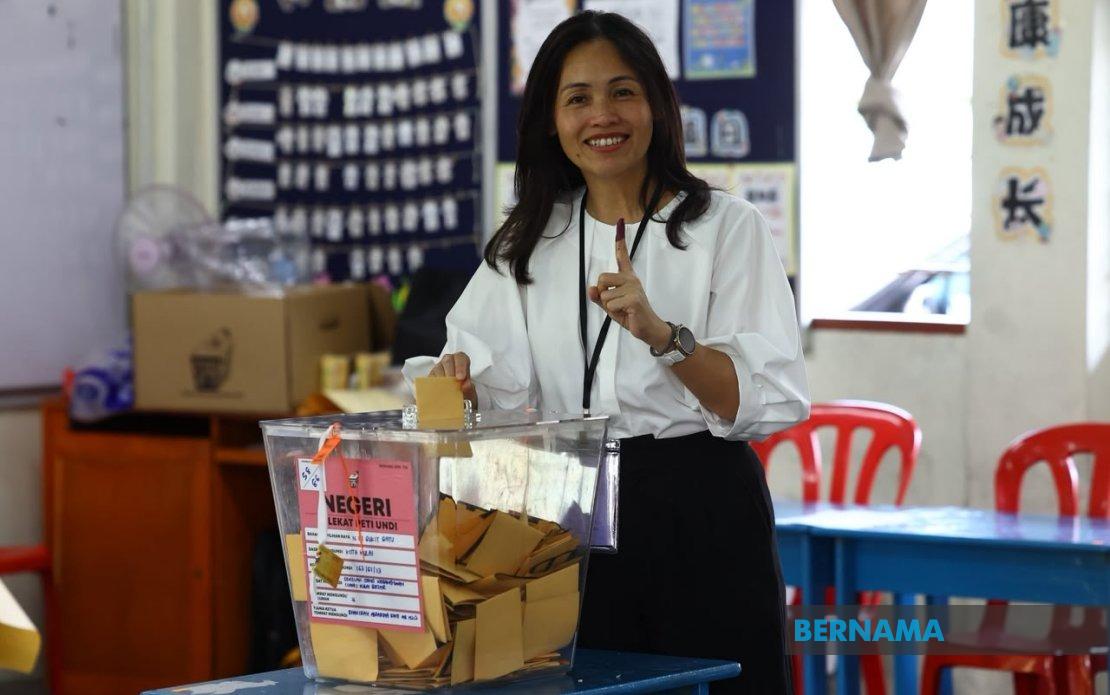
The Malaysian Communications and Multimedia Commission fielded 29 separate complaints touching on online misinformation, inflammatory speech, and fraudulent schemes during the campaign leading up to the 16th Johor state election held on July 11. Deputy Communications Minister Teo Nie Ching disclosed the figures while voting in Kulai, underscoring the persistent challenge of digital disinformation during electoral contests in Malaysia.
The complaint breakdown reveals the multifaceted nature of problematic online conduct during the election period. Seventeen cases involved the circulation of false or unverified information deliberately designed to mislead voters, while eleven allegations centred on hate speech targeting specific communities or identities. A single complaint lodged separately documented a fraudulent account created to impersonate another user—a tactic increasingly common in coordinated disinformation campaigns.
Within the hate speech category, the nature of violations reflected Malaysia's constitutional sensitivities around protected subjects. Nine complaints targeted content perceived as inflammatory regarding racial matters, while individual cases examined separately alleged disrespect toward religious institutions and the monarchy. These violations fall within the framework of 3R content—race, religion, and royalty—terminology that encapsulates Malaysia's legal and social red lines around expression in the digital sphere.
Teo's public accounting of these figures during the election itself signals the authorities' commitment to transparency regarding digital policing during competitive electoral moments. The MCMC's active monitoring and receipt of complaints demonstrates both institutional vigilance and the public's willingness to report suspected violations. However, the numbers also hint at broader questions about the adequacy of existing safeguards and whether 29 complaints represent the complete picture of problematic content circulating during a statewide election involving millions of voters.
The scale of the Johor contest underscores why digital integrity matters significantly for Malaysian electoral legitimacy. With 172 candidates competing across 56 State Legislative Assembly seats and more than 2.6 million registered voters participating, the election represented a substantial exercise in democratic selection. In such high-stakes environments, even modest quantities of well-targeted misinformation can meaningfully influence voter perceptions and behaviour, particularly among less digitally sophisticated segments of the electorate.
Teo's exhortation to voters to cultivate digital literacy and skepticism toward unverified claims reflects a pragmatic acknowledgement that regulatory bodies alone cannot police the entire information ecosystem. Her framing positions citizens as active participants in maintaining electoral integrity rather than passive recipients of official messaging. This rhetorical approach aligns with global best practices in election administration, where voter education and media literacy initiatives complement traditional regulatory oversight.
The distribution of complaints also illuminates recurring vulnerabilities in Malaysia's online information environment. The predominance of fake news allegations suggests that false claims—whether about candidate records, policy positions, or electoral procedures—continue circulating despite fact-checking initiatives and official guidance. Simultaneously, the significant number of hate speech complaints indicates that electoral campaigns remain flashpoints for identity-based tensions, with online platforms enabling rapid dissemination of divisive content.
For Southeast Asia more broadly, Malaysia's experience during this election provides instructive data points regarding digital governance challenges during competitive elections. Other democracies in the region grapple with similar tensions between protecting free expression and preventing demonstrable harms like coordinated disinformation. The specificity of Malaysia's 3R framework—institutionalizing particular categories of restricted speech—reflects the nation's distinct constitutional architecture but also generates questions about inconsistent application and potential overreach.
Teo's remarks also merit attention regarding Malaysia's institutional approach to digital regulation. The MCMC, as the lead technical authority, operates within established legal parameters while responding to public complaints. This model distributes responsibility between government agencies, platforms, and citizens, though tensions inevitably arise regarding enforcement consistency, remedial speed, and appeals processes. Whether the 29 complaints resulted in substantive enforcement action remains unclear from the available reporting.
Looking forward, the Johor election experience offers lessons for future electoral contests throughout Malaysia and the region. As digital platforms become ever more central to campaign communication and voter information-gathering, the infrastructure for detecting and countering false claims must evolve correspondingly. The relatively modest complaint total might reflect either effective public reporting mechanisms or potential underreporting of violations that audiences witness but do not formally document.
Teo's emphasis on voter empowerment through digital literacy represents an important counterbalance to purely regulatory approaches. Elections depend fundamentally on public confidence in information integrity, and that confidence emerges not merely from top-down enforcement but from citizenry equipped to evaluate claims critically and distinguish credible sources from dubious ones. Investments in media literacy, particularly targeting younger voters most engaged with digital platforms, offer longer-term solutions to misinformation challenges that regulatory action alone cannot address.
Ultimately, the MCMC's documented complaints during the Johor campaign reflect both Malaysia's regulatory apparatus functioning and the persistent reality that no system completely prevents malicious or misleading content. The 29 complaints represent detected and reported violations, but they signal broader currents of misinformation and inflammatory speech flowing through digital channels. As Malaysian elections continue, the balance between protecting electoral integrity and preserving open democratic discourse will remain contested terrain requiring careful calibration by regulators, platforms, and voters themselves.

