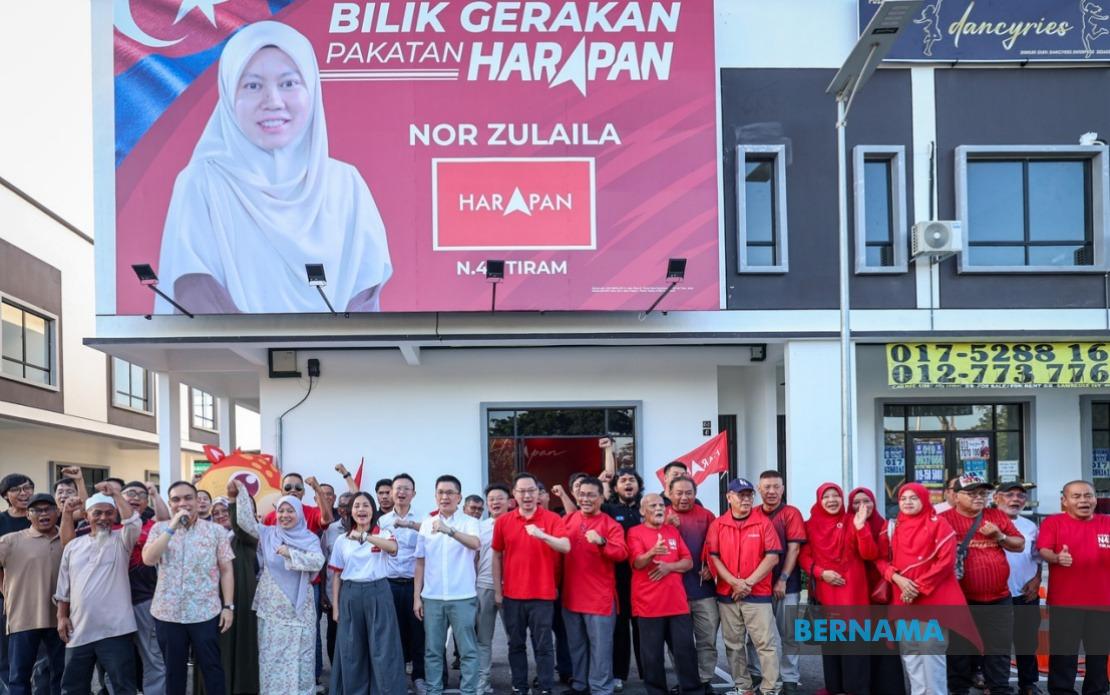
The Malaysian Communications and Multimedia Commission has been tasked with maintaining reliable internet connectivity across Johor during the state election campaign period, according to Deputy Communications Minister Teo Nie Ching. Speaking at the launch of the Pakatan Harapan operations room for the N40 Tiram constituency in Pasir Gudang, Teo emphasised that steady digital access represents a fundamental requirement for the smooth operation of campaign activities and the effective dissemination of electoral information to the public.
Teo's directive reflects growing recognition among Malaysian policymakers that broadband infrastructure has become integral to contemporary election management. Beyond traditional rallies and door-to-door canvassing, modern political campaigns increasingly rely on digital platforms to reach voters, coordinate volunteers, and respond swiftly to emerging campaign narratives. The move positions internet reliability as a public interest concern equivalent to physical security and transportation logistics during election periods.
The Deputy Communications Minister indicated that MCMC will implement heightened surveillance protocols, particularly targeting areas anticipated to draw substantial crowd participation. This targeted approach acknowledges that campaign hotspots often experience unexpected surges in connectivity demand when large gatherings coincide with simultaneous social media activity, video streaming, and live-broadcast coverage. By concentrating monitoring resources on high-footfall locations, authorities aim to prevent bottlenecks that might otherwise disrupt campaign operations or frustrate voter engagement.
Teo, who also serves as Johor DAP chief, framed digital infrastructure as inseparable from democratic participation. Political campaigns fundamentally depend on two-way communication channels—parties must broadcast messages to voters, while voters require reliable access to candidate information, voting procedures, and electoral results. Internet outages in any locality could disproportionately disadvantage certain constituencies or demographics lacking alternative information sources, potentially undermining electoral fairness.
The timing of this announcement carries significance within Malaysia's evolving electoral landscape. As digital literacy expands and younger voters increasingly obtain political information through online channels rather than traditional media, ensuring equitable broadband access has become a levelling factor. Rural and urban constituencies alike depend on consistent connectivity to participate fully in campaign discourse. The MCMC intervention suggests governmental acknowledgement that election administration now encompasses digital infrastructure maintenance alongside conventional logistical planning.
At the Tiram operations room launch, Teo reported receiving overwhelmingly positive feedback from constituencies across Johor. Ground campaign observations indicate that voters demonstrate strong commitment to exercising their democratic rights, including those residing outside their registered constituencies who have expressed intentions to return home for polling day. This voter enthusiasm, while encouraging for democratic health, places additional pressure on campaign infrastructure—digital and physical—to manage higher-than-average participation volumes.
DAP's electoral strategy in Johor reflects cautionary lessons from previous campaigns. Teo explicitly rejected the notion of designating any of the seventeen seats the party contests as inherently secure, emphasising instead that every constituency merits dedicated organisational resources and strategic attention. This approach counters the complacency that sometimes emerges when parties assume certain seats are guaranteed victories. By distributing campaign efforts uniformly across all constituencies rather than concentrating resources on marginal races, DAP aims to consolidate existing support bases while pursuing pickup opportunities.
Teo's acknowledgment that distinct areas present unique political challenges demonstrates nuanced campaign analysis. Johor's constituencies encompass urban centres, industrial zones, rural agricultural regions, and suburban developments—each with distinct voter priorities and demographic compositions. Internet infrastructure requirements vary accordingly: urban areas might need capacity for high-volume simultaneous usage during peak campaign events, while rural zones may require coverage expansion to previously under-served communities. Customised approaches to digital infrastructure support this differentiated campaign strategy.
The MCMC's role extends beyond reactive problem-solving to proactive capacity planning. Rather than responding to connectivity failures as they occur, the regulator has been instructed to conduct preventive monitoring and identify potential bottlenecks before they materialise. This forward-looking approach reflects international best practices in election administration, where technical preparation substantially determines operational success. Telecommunications authorities in established democracies routinely coordinate with election commissions to guarantee network resilience during high-stakes political events.
For Malaysian technology and telecommunications stakeholders, the MCMC directive signals that election periods will increasingly incorporate digital infrastructure scrutiny. Internet service providers operating in Johor must ensure their networks can accommodate unexpected demand spikes, while network engineers may need to redeploy capacity temporarily toward campaign hotspots. The announcement effectively establishes internet reliability as an election administration priority alongside more traditional concerns.
The election timeline presents both opportunities and constraints. Nominations commence shortly after this announcement, with early voting scheduled for July 7 and election day set for July 11. This compressed campaign window leaves limited time for infrastructure adjustments or network upgrades. MCMC's emphasis on continuous monitoring suggests authorities will track performance in real-time, potentially implementing rapid interventions if connectivity problems emerge during the early voting phase that could inform adjustments before polling day.
Beyond the immediate Johor context, this episode illustrates broader patterns in Malaysian electoral administration. As digital technologies permeate political communication, government agencies must adapt traditional election management frameworks to encompass cyber-infrastructure concerns. The precedent established in Johor—where communications regulators become active participants in election logistics—may inform future electoral cycles in other states and at the federal level. Policymakers increasingly recognise that election integrity and accessibility depend on technological foundations as fundamentally as on legal and procedural frameworks.

