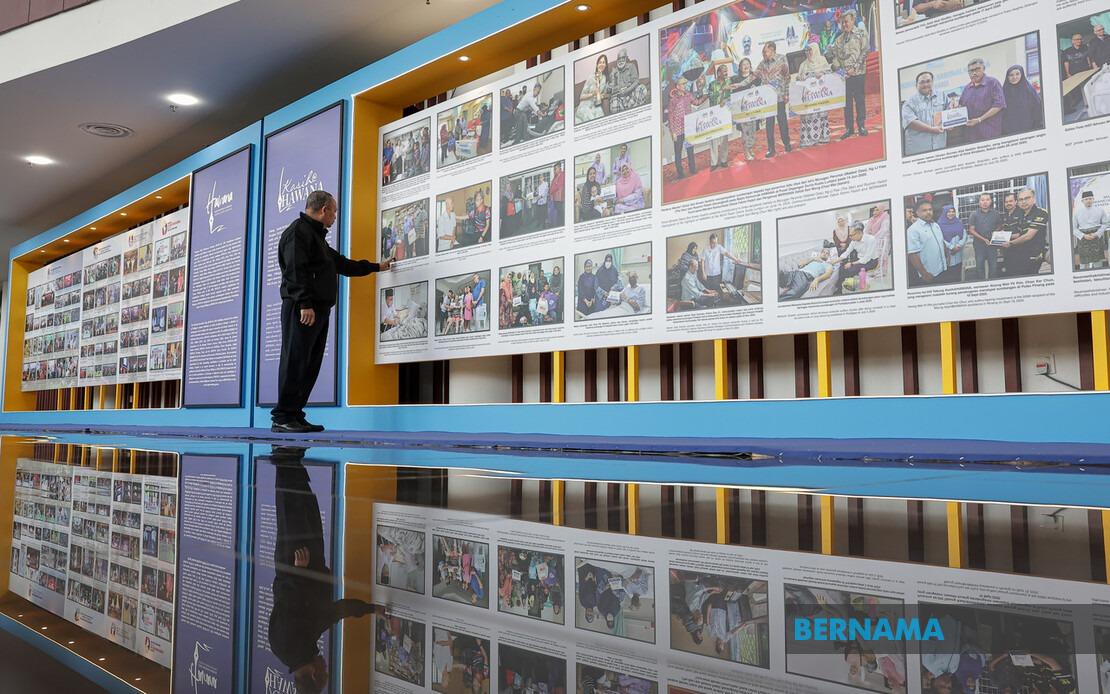
The lead-up to Malaysia's National Journalists' Day (HAWANA) 2026 in Penang has crystallised into a broader conversation about the direction and resilience of journalism across Southeast Asia's largest English-speaking media landscape. With the main celebration scheduled to be officiated by Prime Minister Datuk Seri Anwar Ibrahim on June 20 at PICCA @ Butterworth Arena, the preliminary gatherings have already established a sobering yet constructive tone about the profession's trajectory. Around 1,000 media practitioners from Malaysia and abroad are expected to converge for the event, themed "Media Integrity, Foundation of Credibility"—a choice of emphasis that signals the industry's acute awareness of the trust deficit it faces in an age of misinformation and algorithmic manipulation.
The retreat organised by the Malaysian Federation of Media Clubs (GKMM) on June 19 brought together representatives from 15 media clubs nationwide, underscoring the grassroots nature of professional solidarity in the Malaysian media sector. GKMM president Mohamad Fauzi Ishak outlined how the gathering served dual purposes: strengthening horizontal ties among regional journalism hubs while also providing an occasion to evaluate the federation's own institutional progress. Since its formal establishment on October 24, 2022, GKMM has been building infrastructure for media professionals outside the major newsroom environment, a development particularly significant for smaller publications, provincial broadcasters, and freelance journalists who often operate in relative isolation. The retreat's timing, just before the federation's third annual general meeting, reflects a deliberate rhythm of self-assessment within Malaysia's media community—a practice that appears increasingly necessary as economic pressures mount across the industry.
Communications Minister Datuk Fahmi Fadzil's participation in officiating the retreat signals government recognition of the media sector's institutional challenges and the state's role in facilitating professional dialogue. The presence of Bernama Chief Executive Officer Datin Paduka Nur-ul Afida Kamaludin and Editor-in-Chief Arul Rajoo Durar Raj further underscored the event's significance, as Malaysia's national news agency remains a bellwether for journalism standards across the region. Bernama's involvement in implementing HAWANA 2026 reflects its dual responsibility as both a major news organisation and a quasi-public institution tasked with upholding journalistic norms.
More intellectually substantive has been the Malaysian Press Institute's (MPI) town hall session titled "2035: Will Journalists Still Exist?", held at Han Chiang University College of Communication in Penang. This forum moved beyond procedural celebration to confront the existential pressures reshaping the profession. The three-part panel—featuring MPI president Datuk Yong Soo Heong, New Straits Times Press deputy group managing editor Farrah Naz Abd Karim, and Media Prima group editor Azhari Muhidin—represented a cross-section of Malaysia's largest news organisations. The framing of the question itself, posed as a genuine uncertainty rather than rhetorical flourish, acknowledged what industry analysts have long observed: artificial intelligence, automation of newsroom functions, and AI-powered content generation are fundamentally altering what journalists do and how newsrooms function.
The urgency surrounding these discussions reflects concrete industry dynamics. Across Malaysia and the broader Southeast Asian region, traditional advertising revenues that historically subsidised journalism have migrated to digital platforms controlled by Google and Meta. Simultaneously, AI language models are now capable of producing news summaries, market reports, and routine factual pieces that previously employed dozens of junior reporters. The Malaysian Press Institute's focus on artificial intelligence adoption and digitalisation acknowledges that ignoring these trends would amount to professional negligence, yet embracing them without careful thought about quality and oversight poses equally serious risks. For Malaysian readers and the broader Asian context, the stakes extend beyond employment: they concern whether rigorous, investigative journalism addressing corruption, environmental degradation, and human rights violations will survive when economic models no longer support such work.
Changing news consumption patterns represent a third structural challenge that the town hall examined. Malaysian audiences, like readers throughout Asia, increasingly obtain news through social media feeds, messaging apps, and algorithmic recommendations rather than through traditional news sites or broadcast schedules. This shift has profound implications for editorial gatekeeping—the traditional function by which journalists determined what constituted news worthy of public attention. When readers encounter information through fragmented digital channels, the coherent public sphere that journalism traditionally helped construct fragments alongside it. For Malaysian journalists operating in a multilingual, multicultural environment already prone to communal sensitivities, this loss of shared informational space carries particular risks.
The Malaysian Media Council's (MMC) introductory session scheduled for June 20, along with a networking programme for northern region practitioners, represents an attempt to rebuild institutional cohesion and cross-organisational collaboration. The MMC itself exists partly as an industry self-regulatory body—a mechanism through which news organisations collectively address ethical concerns and maintain professional standards without direct government intervention. In the Malaysian context, where press freedom questions have periodically erupted into political controversy, the viability of self-regulation depends on genuine industry consensus and meaningful enforcement capacity. A gathering like HAWANA provides an opportunity for the MMC to demonstrate that journalists themselves, rather than government authorities or commercial interests, can establish and maintain professional norms.
The three-day RIUH @ HAWANA Carnival commencing on the evening of June 19 and continuing through the main celebration reflects a deliberate strategy to make HAWANA 2026 accessible beyond the professional elite. By pairing formal conferences and workshops with carnival activities, organisers seek to engage journalism students, media company employees at all levels, and the general public in conversations about media's role. This democratisation of media literacy and professional discussion aligns with broader Southeast Asian trends toward public engagement with journalism institutions, recognising that sustainable media depends not only on professional quality but also on audience understanding of what journalism is attempting to accomplish.
For Malaysian readers specifically, these developments carry immediate relevance. The conversations unfolding at HAWANA 2026 will influence editorial standards, diversity of voices, and investigative capacity across publications they rely upon for information about governance, business, and social issues. The profession's grappling with artificial intelligence affects not only employment for journalists but the authenticity and accountability of information circulating through Malaysian media. An industry that successfully adapts to technological change while maintaining commitment to accuracy, independence, and public service will strengthen Malaysia's democracy and civil society. Conversely, an industry that fragments into isolated commercial operations chasing algorithmic engagement risks leaving Malaysian citizens poorly informed about matters affecting their lives.
The selection of Penang for HAWANA 2026's main celebration also carries symbolic weight, positioning Malaysia's northern region and its substantial media infrastructure as integral to national journalism conversations. Penang's significant Chinese-language, Tamil-language, and English-language press presence reflects Malaysia's linguistic diversity, and a national celebration that genuinely engages this plurality strengthens the profession's legitimacy. The gathering's articulation of "media integrity" as its central theme, rather than celebrating journalistic achievements in isolation, suggests mature professional consciousness that external trust in journalism matters more than internal morale—a recognition that becomes more urgent as global trust in media institutions continues its decade-long decline.