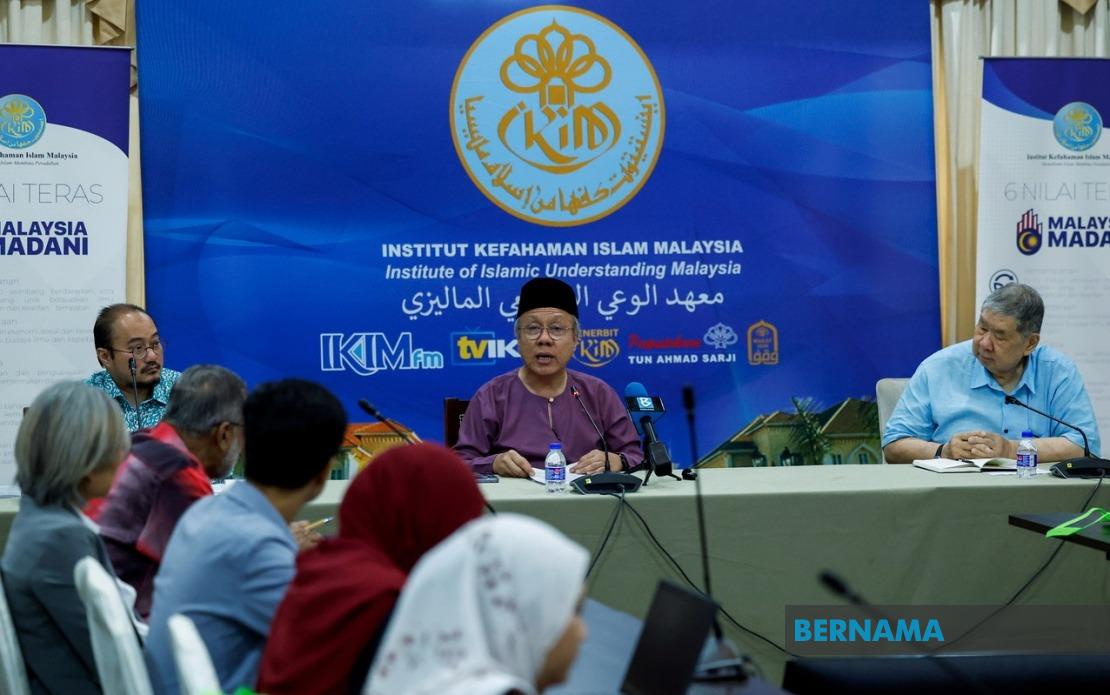
Malaysia's three major institutions — the Malaysian Press Institute, the Institute of Islamic Understanding Malaysia and Lembaga Tabung Haji — jointly organised a structured briefing session for journalists in Kuala Lumpur aimed at clarifying the Royal Commission of Inquiry into the pilgrimage fund operator and correcting potential misconceptions in media coverage. The August gathering brought together over twenty media professionals alongside senior leadership including Tabung Haji Group Managing Director and Chief Executive Officer Mustakim Mohamad, MPI President Datuk Yong Soo Heong and IKIM Director-General Associate Professor Datuk Dr Mohamed Azam Mohamed Adil.
The closed-door session, held at IKIM's headquarters, extended nearly two hours and centred on Mustakim's comprehensive overview of the RCI process, its findings to date and the management responses being implemented. Journalists posed detailed questions about the inquiry's scope, specific governance failures identified, and the trajectory of remedial actions the fund is pursuing. This direct engagement between senior management and the fourth estate represented an effort to move beyond headline-driven reporting toward substantive understanding of the institutional reforms underway.
Yong characterised the collaboration as strategically significant for Malaysia's information environment. He argued that providing journalists with accurate, detailed briefings on Tabung Haji's stabilisation measures would enable more informed public communication and rebuild depositor and investor confidence. The MPI president indicated that a single Kuala Lumpur session represented merely the foundation, suggesting that expansion to other Malaysian states through additional dialogue forums and town hall events would amplify the reach of this narrative clarification effort.
A central messaging point emerged from Mohamed Azam's contribution to the session. The IKIM director-general explicitly reframed the RCI not as a sectarian or communal controversy but fundamentally as a question of institutional management standards and accountability mechanisms. This distinction carries significant weight given Malaysia's heightened sensitivities around religion and ethnicity in public discourse. By positioning the inquiry as a matter of fiduciary responsibility and operational integrity rather than religious governance, IKIM attempted to shift the interpretive lens through which journalists would subsequently report on Tabung Haji developments.
The emphasis on trust and credibility reflected deeper concerns about how the RCI narrative might be weaponised or mischaracterised in polarised political environments. Mohamed Azam specifically called upon media practitioners to propagate this governance-focused interpretation, aiming to restore public confidence not merely in Tabung Haji's current management but in the fund's fundamental role as custodian of Islamic financial principles and the fifth pillar of Islam. This appeal to journalists to actively shape public understanding represented an implicit acknowledgment that media framing substantially influences institutional legitimacy.
Tabung Haji occupies a unique position within Malaysia's Islamic financial ecosystem. As the primary vehicle for processing hajj savings and facilitating pilgrimage among Malaysian Muslims, the institution carries both practical and symbolic significance. When governance failures surface at such an organisation, they ripple beyond administrative circles into religious communities' confidence in Islamic financial stewardship. The RCI's existence itself indicated serious systemic problems requiring external investigation, making the interpretation and communication of findings extraordinarily consequential for public perception.
The partnership between three distinct institutions demonstrated a coordinated approach to managing the reputational fallout from the inquiry. MPI's involvement legitimised the briefing as a media affairs initiative rather than propaganda, while IKIM's participation added religious and cultural authority to the framing, and Tabung Haji's direct presence enabled factual exposition. This triangular arrangement sought to achieve what singular institutional messaging might not: credible, balanced communication that acknowledged governance shortcomings while emphasising remedial competence.
For Malaysian and regional observers, this episode illuminated broader questions about institutional accountability within Islamic financial frameworks. Southeast Asia's growing Islamic finance sector increasingly faces scrutiny regarding governance standards, fiduciary practices and transparency mechanisms. How Malaysia's flagship pilgrimage fund navigates its RCI and restores stakeholder confidence will likely establish precedents influencing perceptions of Islamic financial institutions across the region.
The literacy programme initiative also reflected evolving media-institution relations in Malaysia's complex political landscape. Rather than defensive posturing or limited disclosure, the three organisations opted for constructive engagement with journalists, recognising that nuanced coverage required substantive briefing and contextual framing. This approach implicitly acknowledged that media practitioners required support to distinguish between legitimate accountability questions and politicised rhetoric exploiting the RCI for sectarian purposes.
Moving forward, the success of this collaborative initiative will measurably depend on whether subsequent media coverage reflects the governance-centred narrative or reverts to more sensationalised framings. The organisers' willingness to conduct similar sessions across Malaysian states suggested recognition that single-event briefings possess limited durability without sustained reinforcement. Building authentic understanding among journalists—rather than merely attempting to influence their reporting—represented the more ambitious and potentially more durable approach embedded in this literacy programme concept.

