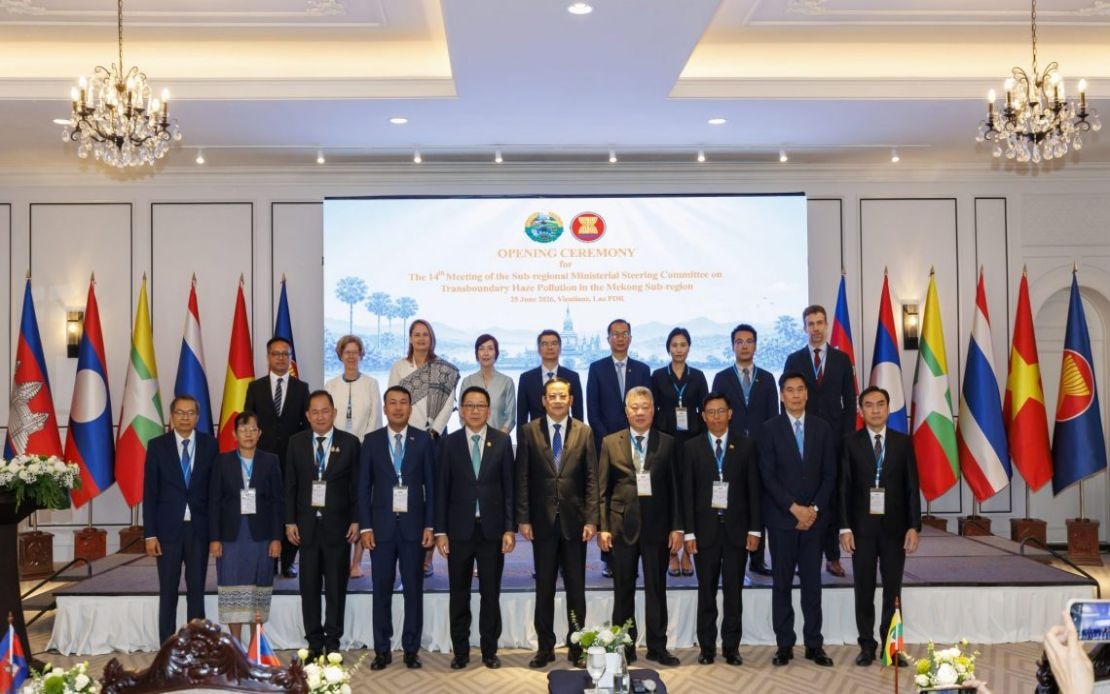
Governments across the Greater Mekong Subregion are stepping up coordinated action to prevent a repeat of the transboundary haze crisis that has plagued Southeast Asia in recent years, as dangerous temperature spikes and the looming threat of El Niño conditions create ideal circumstances for widespread forest and peatland fires. The alarm bells are sounding from Bangkok to Ho Chi Minh City, where urban heat records are mounting even as the monsoon season approaches, forcing policymakers to prioritise cross-border fire prevention and air quality management ahead of the critical dry months.
The urgency became evident at the 14th Meeting of the Sub-Regional Ministerial Steering Committee on Transboundary Haze Pollution in the Mekong Sub-Region, held on June 25 in Vientiane, Laos, where regional officials convened to assess escalating threats to the subregion's environmental stability and economic wellbeing. Lao Prime Minister Sonexay Siphandone underscored the gravity of the situation, cautioning that forest fires and the resulting air pollution have emerged as defining challenges affecting the entire subregion, with cascading consequences for biodiversity loss, public health deterioration, and substantial economic losses that ripple across multiple sectors and nations.
The scale of the problem is evident in recent hotspot data presented at the ministerial gathering. Between December 2025 and May 2026, the number of fire hotspots detected across the Mekong region increased by approximately eight percent compared to the corresponding period in the previous year, a troubling indicator that current prevention and control mechanisms require substantial reinforcement. This upward trend arrives at a particularly vulnerable moment, as the region faces converging climate pressures that amplify fire risk and reduce the natural barriers that typically contain such incidents within national boundaries.
Temperature patterns across major urban centres reveal the severity of current climatic stress on the region. Despite being in the nominal rainy season, Ho Chi Minh City is enduring an intense heatwave characterised by sustained high temperatures and limited precipitation, while Bangkok similarly struggles with acute heat conditions that weather scientists attribute directly to climate change acceleration and El Niño-induced atmospheric disruptions. These anomalies underscore how traditional seasonal patterns are becoming increasingly unreliable, complicating disaster preparedness and emergency response planning for both urban and rural populations.
The Lao Ministry of Agriculture and Environment has issued specific warnings regarding El Niño impacts anticipated during the current rainy season, predicting temperature surges in vulnerable areas potentially reaching 35 to 38 degrees Celsius. Coupled with forecast predictions of highly irregular rainfall distribution, prolonged dry periods in certain areas, and diminished water levels in critical river systems, these conditions converge to create severe drought risk, acute water scarcity, heightened forest fire probability, and substantial damage to agricultural production and livestock operations that support millions across the subregion.
For Malaysia and other ASEAN members, the implications of uncontrolled Mekong fires extend far beyond Indonesia's borders. The transboundary nature of smoke and pollutants means that haze originating from forest fires in Laos, Thailand, or Cambodia inevitably drifts across maritime boundaries, degrading air quality in Malaysia, Singapore, and Brunei, disrupting economic activity, straining healthcare systems managing respiratory illness surges, and affecting agricultural productivity in affected regions. The economic calculus is substantial: previous major haze episodes in 1997-1998 and 2015 cost the ASEAN region billions in healthcare expenses, lost productivity, and tourism revenue disruption.
The ministerial meeting produced commitments from ASEAN member states to coordinate fire hotspot reduction strategies and establish enhanced mechanisms for controlling transboundary haze during peak dry seasons. These pledges represent acknowledgment that unilateral national approaches have proven insufficient, and that fire prevention across the Mekong requires genuine multilateral cooperation, shared intelligence networks, coordinated early warning systems, and harmonised enforcement of forest protection regulations. The challenge lies in translating diplomatic commitments into operational capacity, particularly when border regions often involve complex jurisdictional issues and limited institutional resources.
Scientific forecasters have introduced an additional complication into regional planning: the possibility of a Super El Niño event developing within the current calendar year. Such an extreme weather phenomenon would substantially intensify the temperature and precipitation anomalies already anticipated, potentially extending fire season duration, expanding the geographic footprint of affected areas, and amplifying the cascading impacts on agriculture, water availability, and infrastructure resilience across Southeast Asia. This scenario would represent a worst-case combination of natural climatic forcing with landscape vulnerability factors created by deforestation, peatland degradation, and agricultural expansion.
For Malaysia specifically, transboundary haze from the Mekong region carries direct policy implications. The nation's experience managing previous haze crises has generated institutional experience and technical capacity that could be mobilised to support regional capacity building, but also reveals the limitations of reactive approaches. Malaysian policymakers should view the current alert period as an opportunity to advocate within ASEAN forums for strengthened preventive mechanisms, enhanced technological monitoring of fire hotspots, and potentially expanded financial or technical assistance to partner nations undertaking fire prevention infrastructure development. The cost of prevention measured in millions pales against the economic damage of widespread haze affecting palm oil operations, semiconductor manufacturing, tourism, and public health systems.
The intersection of climate change, El Niño patterns, and existing landscape vulnerabilities across the Mekong creates conditions where incremental improvements in current practices may prove insufficient. Regional governments will require substantial new investment in fire prevention technology, early detection systems, rapid response capabilities, and landscape restoration programmes that reduce fuel loads in vulnerable forest areas. The ministerial gathering represents a starting point, but the actual test will emerge in implementation fidelity during the approaching high-risk season, when political resolve confronts operational constraints and budgetary limitations across multiple countries with varying resource availability.
As temperatures continue climbing and El Niño indicators become clearer in coming months, the Mekong region enters a critical window where preventive action taken now directly determines air quality outcomes that will affect hundreds of millions of Southeast Asian citizens. The transboundary nature of both the threat and necessary solutions means Malaysia's interests are deeply intertwined with fire prevention success across neighbouring countries, making active engagement in multilateral coordination mechanisms not merely supportive but strategically essential for protecting national economic and public health interests.

