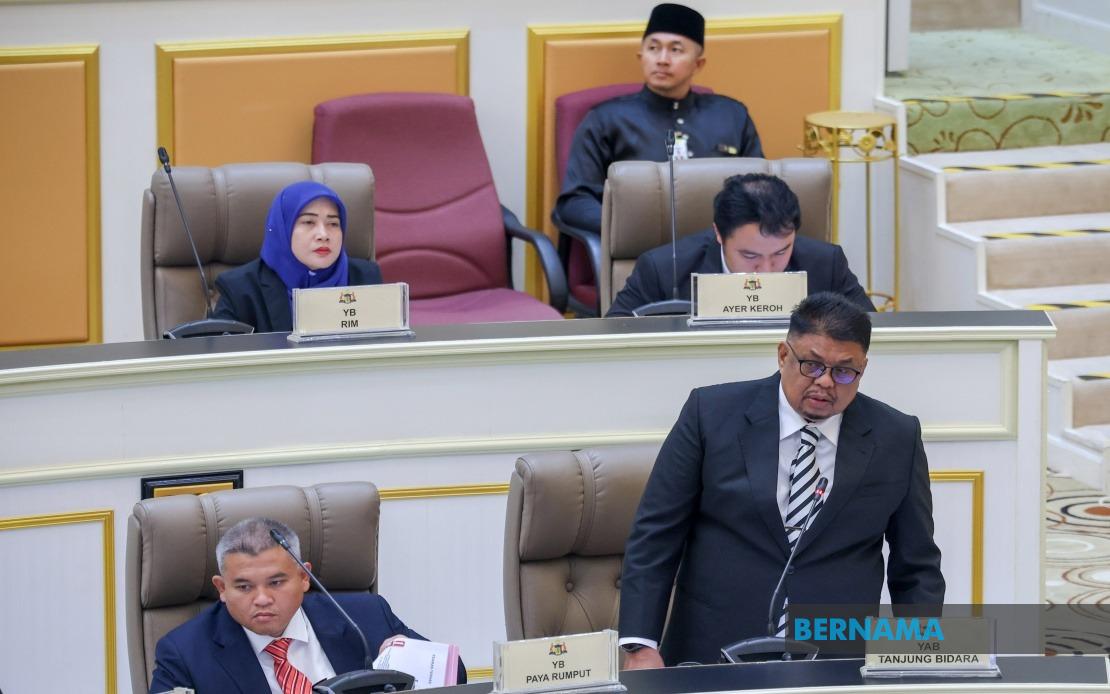
The Melaka State Legislative Assembly has taken a significant constitutional step by approving legislation that would enable the appointment of nominated state assemblymen, moving the state toward a hybrid legislative model that combines electoral and appointed representation. The Melaka State Constitution (Amendment) Bill 2026, approved on July 14, secured comfortable passage with 23 assemblymen voting in favour and five against, signalling substantial support across the political spectrum for this institutional restructuring.
Chief Minister Datuk Seri Ab Rauf Yusoh steered the constitutional amendment through the chamber, framing it as an opportunity to deepen the calibre of legislative discourse in the state assembly. The amendment specifically authorises the appointment of up to seven nominated state assemblymen, representing a modest but deliberate expansion of the chamber's composition. Senior State Executive Councillor for Housing, Local Government, Drainage, Climate Change and Disaster Management Datuk Rais Yasin seconded the proposal, underlining government commitment to the reform.
The rationale offered by the Chief Minister extends beyond merely enlarging the assembly. Ab Rauf articulated a vision where appointed members would bring specialised knowledge and track records in sectors critical to state governance—encompassing law, economics, education, investment, technology and broader state development initiatives. By introducing individuals with technical expertise and proven professional standing, the administration contends that legislative debates would benefit from more informed and systematic examination of policy proposals, particularly on complex administrative and developmental matters where electoral politics alone might not ensure adequate specialist input.
A secondary but important justification centres on inclusive representation. The Chief Minister emphasised that the nomination mechanism could create pathways for demographic and professional groups historically underrepresented in elected assemblies. Women, young people, indigenous Orang Asli communities, ethnic minorities, credentialed professionals and representatives from key industries have often found electoral competition prohibitively difficult despite possessing valuable perspectives and expertise. Appointed seats would theoretically allow merit-based selection divorced from electoral viability, potentially enriching the assembly's diversity and responsiveness to varied community interests.
The amendment's proponents also highlighted enhanced institutional checks and balances as a constitutional benefit. Appointed members, freed from electoral constituencies and associated political pressures, could theoretically exercise greater independence in scrutinising bills, government policies and administrative practices. This separation from electoral imperatives might foster more objective evaluation of government proposals and foster more rigorous questioning of executive actions, strengthening parliamentary oversight functions that are sometimes attenuated when legislators primarily fear electoral consequences.
Opposition participation in debate signalled pragmatic acceptance of the reform's underlying logic. Melaka Opposition Leader Dr Mohd Yadzil Yaakub indicated that his bloc supported the constitutional amendment, contingent on transparent implementation mechanisms and a genuine commitment to prioritising public interest over factional advantage. His invocation of the federal Dewan Negara's appointed component—itself comprising individuals with documented expertise and national contributions—provided a constitutional precedent suggesting that nominated legislative members could function legitimately within Malaysia's broader institutional framework.
The constitutional amendment represents the fulfilment of an election commitment. The Barisan Nasional coalition had pledged to explore appointed assemblymen as part of its 2021 Melaka state election manifesto, categorised under Thrust 1 focusing on political stability and mature democratic conduct. The legislative passage thus concludes a campaign promise made to voters nearly three years ago, demonstrating follow-through on institutional reform pledges.
For Malaysian political observers, the Melaka precedent carries broader implications for state governance architecture across the federation. Several Malaysian states retain constitutional provisions for nominated members in their respective assemblies, though actual utilisation has varied considerably. Melaka's formal approval of this mechanism—backed by cross-party legislative majorities—could embolden other state governments to activate similar constitutional provisions or pursue their own nominations systems, potentially shifting how representation is conceptualised across peninsular and East Malaysian legislatures.
The amendment also reflects evolving thinking about legislative effectiveness in Malaysian state politics. Whereas earlier democratic practice often viewed assemblies primarily as forums for electoral representatives, contemporary governance discourse increasingly emphasises technical competence, sector-specific knowledge and institutional capacity. This reorientation—from pure electoral representation toward mixed models incorporating expertise—mirrors global trends in regional governance where elected chambers increasingly incorporate appointed specialists or advisory mechanisms.
Implementation details remain crucial for the amendment's success. The opacity or transparency of appointment processes, the selection criteria applied to nominees, and the political composition of appointed members will substantially determine whether the reform strengthens legislative capacity or becomes a mechanism for partisan advantage. The government's commitment to meritocratic, transparent selection procedures that genuinely prioritise expertise and diversity will determine whether this constitutional innovation fulfils its stated promise or merely expands executive patronage opportunities.
The Melaka experience will likely inform ongoing debates about legislative reform across Malaysian states. Questions about optimal balance between electoral accountability and appointed expertise, mechanisms for ensuring diverse representation, and safeguards against misuse of nomination powers will preoccupy policymakers considering similar changes. As other states monitor Melaka's implementation of its new constitutional framework, the actual performance of appointed assemblymen in contributing substantively to legislative work will carry profound weight in determining whether this model spreads throughout Malaysia's diverse state legislatures.

