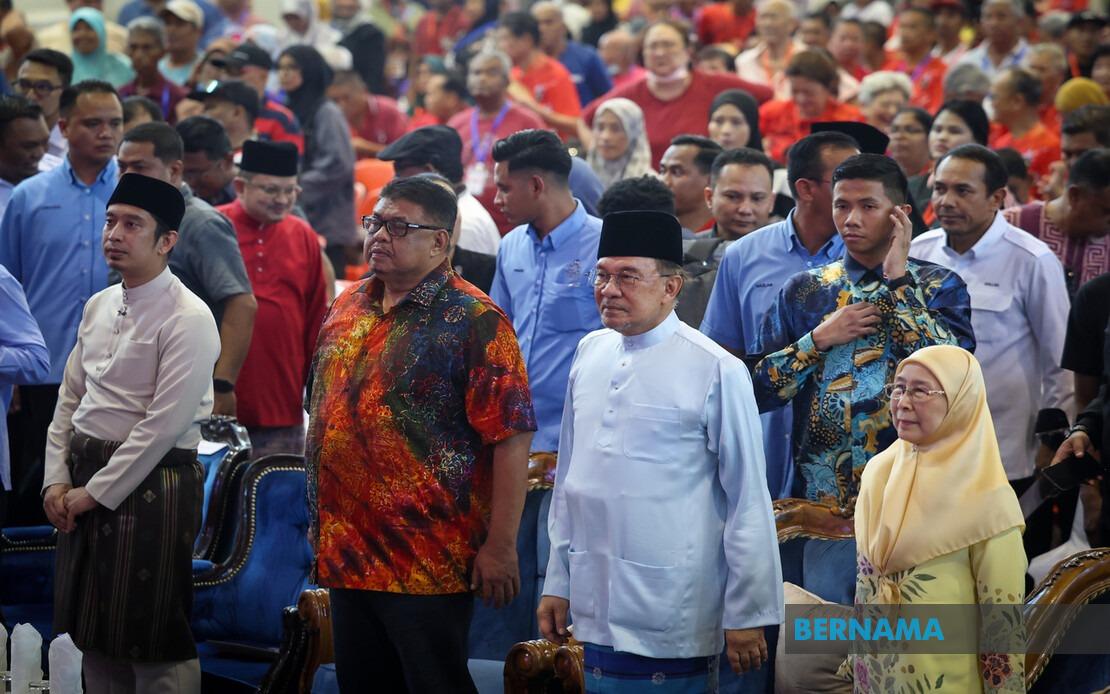
Melaka is emerging as a model for sustainable landscape management in Malaysia, having built a comprehensive framework that integrates legal protection, digital innovation and strategic planning to preserve its natural heritage while supporting economic development. Chief Minister Datuk Seri Ab Rauf Yusoh outlined the state's multifaceted approach at the National Landscape Day 2026 celebration, which drew nearly three thousand participants from across the country, including professionals in landscape architecture, local authority representatives and environmental advocates.
At the heart of Melaka's strategy lies the enforcement of the Tree Preservation Order under the Town and Country Planning Act 1976, legislation that safeguards trees of significant ecological and heritage value. This legal mechanism prevents the indiscriminate felling of mature trees and ensures that landscape planning accounts for existing vegetation rather than treating development and environment as competing interests. For Malaysian readers familiar with urban sprawl in the Klang Valley and other regions where tree cover has diminished rapidly, Melaka's approach represents a shift toward protecting arboreal assets that took decades to mature and cannot be quickly replaced.
Complementing these protective measures, Melaka introduced state-specific Landscape Guidelines in 2022, establishing a detailed framework that guides implementing agencies, local councils and private developers in conducting landscape work in a coordinated, quality-conscious and sustainable manner. This framework transforms landscape development from an ad hoc activity into a systematic process, ensuring that new projects enhance rather than compromise the state's visual and ecological character. The guidelines reflect growing recognition across Southeast Asia that unplanned development externalises environmental costs onto communities while eroding the cultural and natural features that distinguish places and attract investment.
The state government's most innovative initiative is the MyTrees@Melaka system, a digital platform launched in 2017 that has compiled inventory records for over seventy thousand individual trees across Melaka. This database, maintained collaboratively by the state's four local authorities and the Melaka Forestry Department, transforms tree management from a fragmented administrative task into a data-driven, integrated operation. Each tree is recorded, tracked and monitored, enabling authorities to schedule maintenance, assess health, plan replacements and respond to threats in real time. For Malaysian municipalities struggling with outdated record-keeping systems, the MyTrees@Melaka model demonstrates how technology can dramatically improve operational efficiency while creating accountability.
The scope of Melaka's greening initiatives reflects substantial long-term commitment. As of June of the preceding year, the state had successfully planted over ten thousand five hundred trees throughout its territory, with every new tree entering the MyTrees@Melaka database for ongoing monitoring and care. This ensures that tree-planting programmes move beyond symbolic ribbon-cutting ceremonies to meaningful environmental restoration backed by systematic maintenance protocols. The emphasis on recording and monitoring reflects a sophisticated understanding that trees survive and thrive only through sustained management, not through one-off planting campaigns.
Beyond simple tree preservation, Melaka is pursuing a broader vision of landscape stewardship that links environmental protection to economic opportunity and cultural identity. The state government is developing the Aspiring Melaka Geopark, a project that integrates geological heritage, biodiversity conservation, cultural narratives and local identity into a cohesive framework. This approach recognises that landscape preservation succeeds not merely through restriction but through creating value for communities. By positioning natural and heritage assets as platforms for education, conservation and nature-based tourism, Melaka is demonstrating how environmental stewardship can generate sustainable economic returns for residents and small enterprises.
The state's major landscape projects illustrate this integration of conservation, recreation and community benefit. Three significant initiatives implemented in the previous year—the SDG Park at Sungai Melaka, Kampung Felda Air Kangkung Recreation Park and Taman Kejiranan Pulai Indah—transformed underutilised or degraded spaces into public amenities. Continuing this momentum, three additional MADANI Recreational Park projects are underway, upgrading the Dataran Sejarah Ayer Keroh landscape, the Ayer Keroh Art Lanai and the Bukit Beringin Masjid Tanah MADANI Recreational Park. These projects embody a philosophy that progress encompasses more than economic growth and infrastructure; it includes environmental preservation and improvement in quality of life through accessible public spaces.
Melaka's approach carries implications for urban planning across the region. As Malaysian cities expand and climate pressures intensify, the integration of legal protection, digital management and strategic landscape planning offers a replicable model that other states and municipalities might adapt. The MyTrees@Melaka system, while developed locally, addresses challenges common across Southeast Asia: incomplete record-keeping, fragmented responsibility, maintenance gaps and difficulty in planning long-term environmental strategies. The successful compilation of over seventy thousand tree records demonstrates feasibility and scalability.
The National Landscape Day 2026 event, which attracted participants from across Malaysia, served as a knowledge-exchange platform where Melaka's framework was presented alongside initiatives from other local authorities. Twelve PBT pavilions showcased diverse landscape approaches and innovations, creating space for dialogue about best practices and emerging opportunities in landscape management. This collaborative dimension reinforces that while Melaka's specific initiatives reflect local conditions and governance structures, the broader principles—coordination, data-driven decision-making, community engagement and integration of conservation with economic value—apply across Malaysian contexts.
Chief Minister Ab Rauf's framing of landscape development as integral to progress and quality of life represents a philosophical stance that elevates environmental stewardship from a regulatory burden to a core governmental responsibility. By documenting and celebrating tree-planting achievements, promoting recreational spaces and linking landscape preservation to geopark development and tourism, Melaka is constructing a narrative in which environmental protection and community wellbeing reinforce each other. For Malaysian readers observing urban development patterns in their own states, this integrated approach offers a practical counterpoint to narratives that present development and environment as inherently opposed, suggesting instead that thoughtful planning can advance both economic and ecological objectives.

