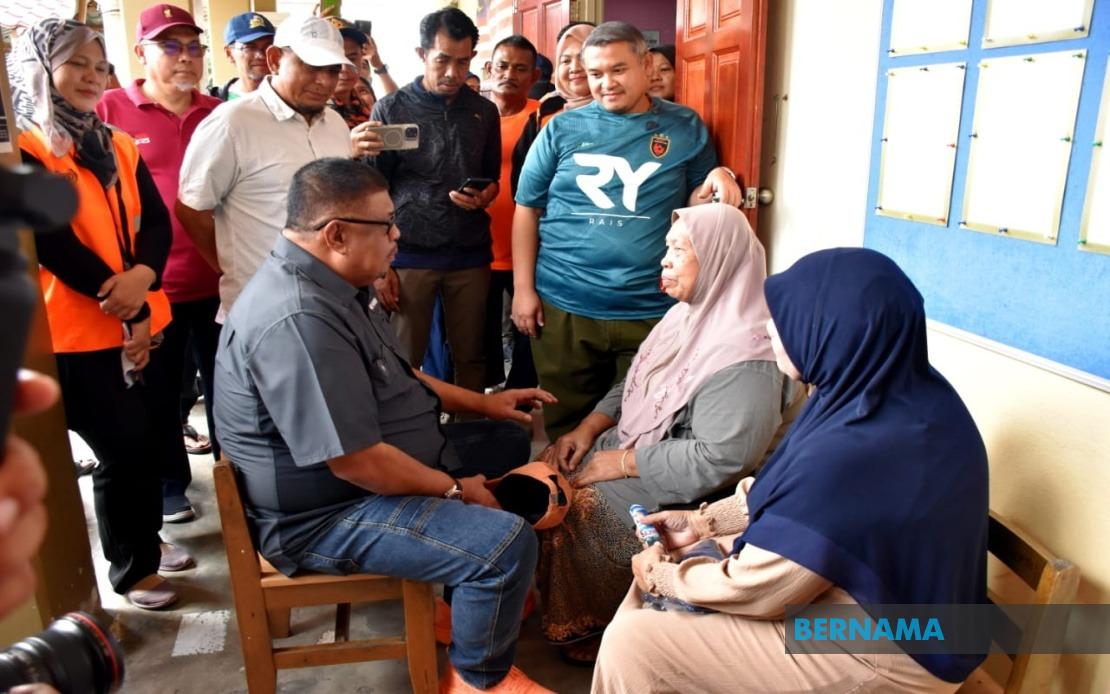
Melaka Chief Minister Datuk Seri Ab Rauf Yusoh has committed to breaking a cycle of flooding that has tormented the Tanjung Minyak community for more than three decades. The pledge came during a visit to evacuees sheltering at Sekolah Kebangsaan Tanjung Minyak 2, where residents have been forced to seek temporary refuge following the region's most intense rainfall in over two decades. This intervention signals mounting political pressure to address what has become one of Melaka's most intractable infrastructure challenges.
The chief minister indicated that the state government will undertake a comprehensive review of all proposals and technical recommendations submitted by relevant agencies. Rather than pursuing ad hoc remedies, officials plan to construct a systematic, long-term strategy addressing the structural and environmental factors that transform monsoon and tropical downpours into disastrous inundation. The emphasis on methodical evaluation reflects recognition that previous interventions have failed to deliver lasting relief to residents whose homes and livelihoods remain vulnerable to annual flooding cycles.
The latest deluge underscores the scale of Melaka's drainage crisis. Phenomenal rainfall exceeding 100 millimetres was recorded in both Melaka Tengah and Alor Gajah districts by mid-afternoon, surpassing precipitation levels associated with Tropical Storm Senyar, which battered the region in late 2024. This meteorological event, described as exceptional even by historical standards, overwhelmed water retention systems designed to handle normal seasonal patterns. The overflow inundated residential neighbourhoods, prompting authorities to establish multiple relief centres across the state.
Currently, approximately 900 evacuees representing roughly 300 families are distributed across several temporary shelters statewide. These residents face an uncertain timeline for return to their homes, dependent upon both water levels receding and underlying drainage infrastructure being either repaired or replaced. The displacement underscores the human cost of unresolved infrastructure deficits, affecting household economies, children's schooling, and community cohesion. Authorities have emphasised that welfare provisions remain a priority until normalcy is restored, reflecting both humanitarian concern and political acknowledgment of public frustration.
The state government has activated emergency protocols designed to ensure rapid mobilisation of resources and coordinated assistance. The District Office assumes primary responsibility for coordinating immediate aid distribution, while state government channels funding and support materials to affected populations. Multiple agencies have been placed on heightened alert status, enabling faster response deployment if subsequent rainfall events trigger additional flooding. This operational posture acknowledges that Melaka's monsoon season presents recurring hazards that demand permanently elevated institutional readiness.
According to Melaka Irrigation and Drainage Department director Mohd Adnan Ahmad Fauzi, causative factors include both exceptional meteorological conditions and the limited capacity of existing infrastructure. The convergence of heavy rainfall with inadequate drainage capacity created the flooding scenario. Technical assessments indicate that drainage systems designed for historical precipitation averages have become increasingly inadequate as climate patterns shift, producing more intense rainfall events. This structural vulnerability affects not only Tanjung Minyak but potentially other low-lying residential areas throughout the region.
For Malaysian readers, Melaka's flooding predicament reflects broader Southeast Asian challenges confronting rapid urbanisation without corresponding infrastructure modernisation. Rising sea levels, increasingly intense rainfall events attributed to climate change, and coastal settlement patterns combine to elevate flood risk for many Malaysian communities. Melaka's three-decade struggle offers cautionary perspective on the long-term consequences of deferring infrastructure investment, a pattern replicated across multiple Malaysian states where development has outpaced drainage system upgrades.
The political dimensions merit consideration as well. Ab Rauf Yusoh's public commitment to resolving this chronic problem signals that Melaka's electorate has elevated flood management from technical bureaucratic issue to electoral priority. Previous political administrations faced similar pressures without delivering comprehensive solutions, creating voter scepticism about whether current pledges represent genuine strategic breakthrough or merely rhetorical appeasement. Successful implementation would require sustained funding commitment, coordination across multiple government departments, and potentially substantial modifications to land use patterns in flood-prone zones.
Technical solutions likely span multiple approaches rather than single interventions. Drainage system expansion and modernisation remain essential but insufficient alone; land-use planning modifications may be necessary to reduce settlement density in naturally flood-prone areas. Green infrastructure including enhanced wetland areas could provide additional water retention capacity. Elevated building standards for flood-vulnerable districts might reduce damage when inundation occurs unavoidably. Comprehensive climate adaptation strategy would address both immediate drainage deficiencies and longer-term environmental shifts producing more intense precipitation events.
The Tanjung Minyak flooding crisis also illuminates resource allocation tensions within state governments. Infrastructure investment in drainage systems generates minimal voter visibility compared to public facilities or transport projects, yet delivers essential protection services. Budget constraints force administrators to prioritise more politically visible spending, potentially deferring critical drainage work. Ab Rauf Yusoh's intervention suggests shifting political calculations regarding the electoral consequences of continued inaction on this infrastructure domain.
Moving forward, implementation credibility will depend upon demonstrable progress within specified timeframes. Residents require more than rhetorical commitments; they demand tangible improvements in drainage capacity, improved warning systems, and possibly relocation assistance for properties in the most flood-vulnerable locations. Whether the current state administration sustains focus on this issue through the technical study and implementation phases remains uncertain. Success would position Melaka as a model for addressing chronic regional flooding, while continued failure would reinforce public cynicism regarding government capacity to manage fundamental infrastructure challenges.

