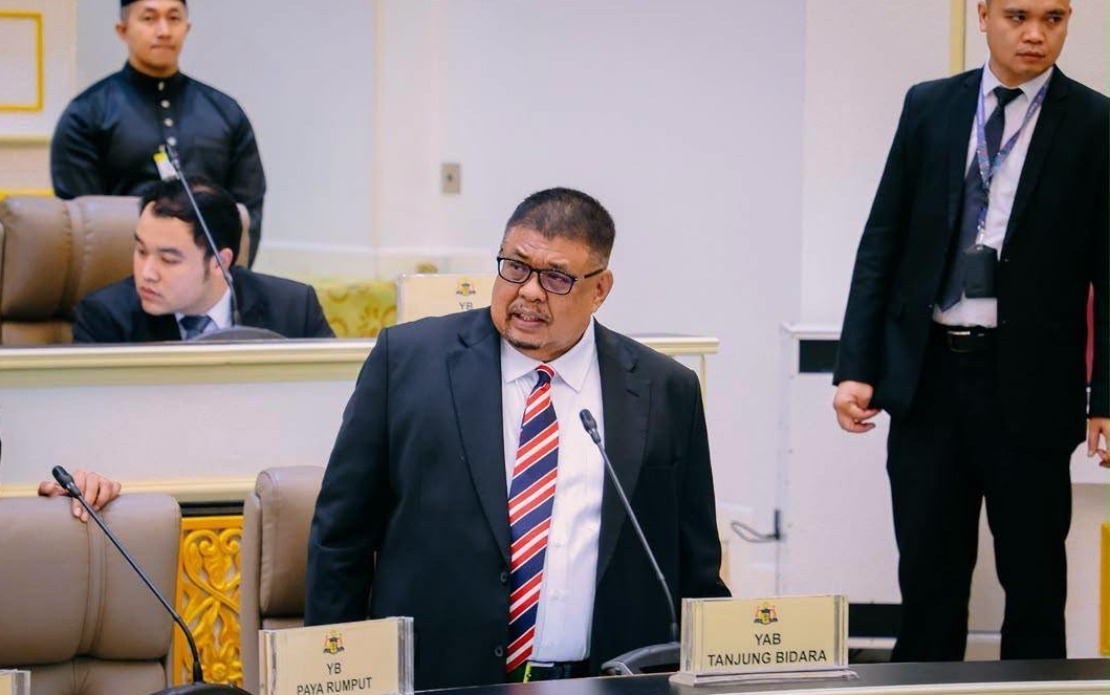
Melaka's Chief Minister Datuk Seri Ab Rauf Yusoh has sought to reassure stakeholders that the state government's operations will proceed without disruption following the withdrawal of the Democratic Action Party from the administration. Speaking at a press conference held at the Seri Negeri Complex in Ayer Keroh on July 15, Ab Rauf emphasised that the departure of DAP representatives would not impede the state's administrative machinery, development programmes, or the delivery of public services to residents.
The political realignment in Melaka represents a significant shift in the state's governing coalition, triggered by the State Legislative Assembly's approval of a constitutional amendment permitting the appointment of assemblymen. This procedural change prompted four DAP state assemblymen—Allex Seah Shoo Chin from Kesidang, Low Chee Leong from Kota Laksamana, Leng Chau Yen from Banda Hilir, and Kerk Chee Yee from Ayer Keroh—to submit their resignations from the state government, effectively ending DAP's participation in the administration.
Ab Rauf's statement reflects an attempt to stabilise investor and public confidence during a period of political uncertainty. The Chief Minister directed particular assurances toward the business community and external investors, emphasising that the state government remains committed to systematic governance and will fulfil public expectations despite the coalition reconfiguration. This messaging seeks to prevent any economic disruption or hesitation in planned investments due to the political transition.
The timing of the DAP withdrawal carries significance within Malaysia's broader political landscape. Prime Minister Datuk Seri Anwar Ibrahim had explicitly requested the Melaka DAP to reconsider their decision, urging postponement to prioritise development and public welfare. However, Ab Rauf noted that DAP's decision became final upon submission of resignation letters following the party's press conference, rendering further negotiation untenable. This sequence underscores the rapid pace at which political decisions unfolded, leaving limited room for reconciliation efforts at the federal level.
In addressing the immediate practical implications of DAP's departure, Ab Rauf outlined the transitional arrangement for vacant executive council positions. Rather than filling these posts immediately, the Chief Minister determined that existing administrative members would absorb the responsibilities on a temporary basis. This measured approach may reflect a pragmatic calculation to maintain administrative continuity while avoiding the appearance of hasty political appointments that could further inflame tensions.
The Chief Minister's statement notably adopted a conciliatory tone regarding DAP's participation in the previous administration. Ab Rauf expressed appreciation for the cooperation of DAP representatives throughout their period of joint governance, signalling a desire to preserve working relationships despite the formal break. He articulated a philosophical position that the loss of formal coalition membership need not translate into adversarial relations, framing the separation as a matter of differing political principles rather than personal acrimony.
The broader context involves competing visions regarding democratic institutions and constitutional governance in Melaka. The amendment enabling appointment of assemblymen generated sufficient controversy within DAP to precipitate withdrawal, suggesting deep disagreement over the institutional direction of the state. From DAP's perspective, the amendment appeared to compromise the elective principle fundamental to representative democracy. Ab Rauf's refusal to prolong debate over this disagreement reflects recognition that further public contestation could damage the state's governance reputation.
Melaka's situation mirrors broader tensions within Malaysia's complex multi-level political system, where federal and state-level coalitions operate under different configurations and occasionally conflicting interests. The state has experienced considerable political volatility in recent years, and the latest developments underscore the fragility of coalition arrangements dependent on consensus among ideologically diverse partners. For regional observers, the episode illustrates how governance stability cannot be assumed even within established political alliances.
The economic implications warrant consideration, particularly given Melaka's importance as a tourism and manufacturing hub. International investors and major corporations typically monitor political stability as a risk factor in capital allocation decisions. Ab Rauf's deliberate messaging around administrative continuity serves partly to mitigate concerns that political flux might translate into inconsistent policy implementation or delayed project approvals. The state government's track record in maintaining service delivery during transitions will influence future investment confidence.
For the DAP, the withdrawal decision represents a principled stand on constitutional governance issues, but it also involves political costs. The party relinquishes direct influence over state administration and resource allocation while facing potential criticism from constituents regarding reduced access to government positions and patronage. The extent to which DAP can maintain political relevance in Melaka without formal participation in government will partly determine whether this decision proves strategically sound.
Ab Rauf's assurances regarding continued coordination with the federal government attempt to anchor Melaka's governance framework within the broader national structure. Maintaining these relationships becomes particularly important when state administrations experience transitions, as federal cooperation in funding allocations and development approvals significantly affects state-level capacity to deliver services. The Chief Minister's emphasis on preserving federal ties suggests awareness that isolated state governance proves ineffective in Malaysia's federal system.
The situation also raises questions about the sustainability of composite coalitions in Malaysian state governments more broadly. The Melaka experience demonstrates that even functional partnerships can fracture rapidly when fundamental institutional questions arise. This pattern may motivate political actors elsewhere to consider single-party or more ideologically cohesive governing arrangements as preferable to complex multi-party coalitions prone to disagreement over core governance principles.

