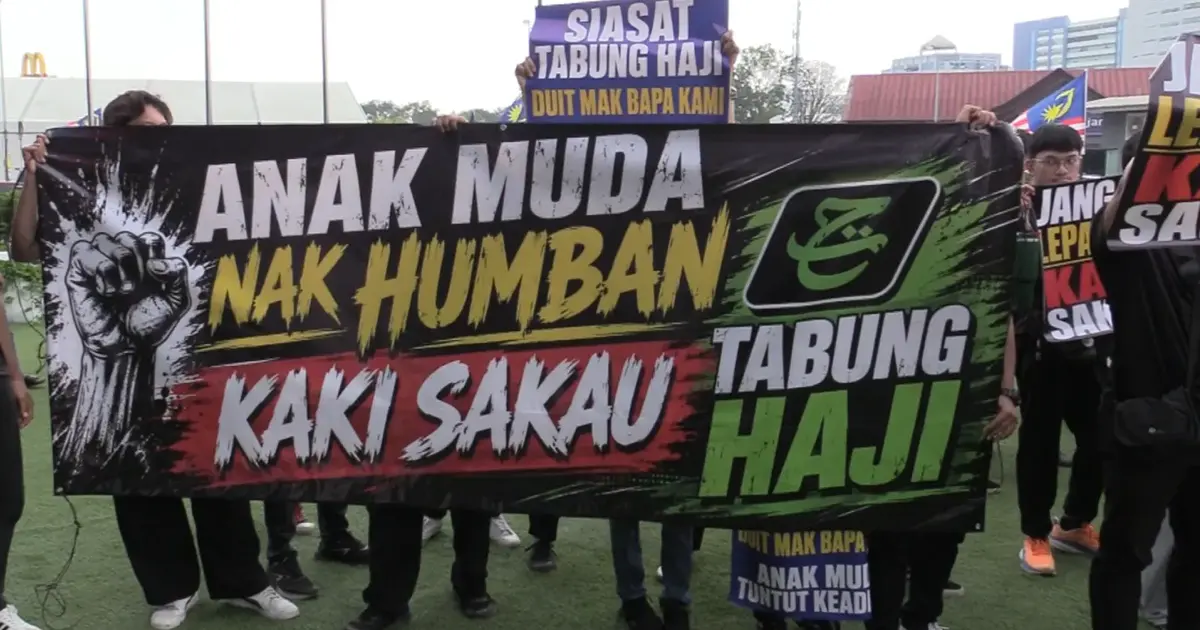
Approximately 250 members of the People's Justice Party in Melaka took their grievances outside the party congress venue, staging an impromptu rally to push for an accelerated probe into Tabung Haji-related matters. The demonstration underscored growing internal pressure within the opposition coalition to address what party members view as a critical concern for the Muslim and Malay community in Malaysia.
The protesters maintained that the Tabung Haji controversy resonates deeply with Malays and Muslims nationwide, making thorough investigation imperative for the party's credibility and public standing. This sentiment reflects broader anxieties within the community about governance of religious and community institutions, particularly those managing assets designated for pilgrimage and Islamic purposes. The rally signals that PKR's grassroots membership expects their leadership to champion investigations into institutional accountability rather than allowing such matters to fade from public discourse.
Tabung Haji has faced scrutiny in recent years regarding financial management and administrative practices. The pilgrimage fund, established to help Malaysian Muslims save for and facilitate the Hajj journey to Mecca, holds significant religious and cultural importance beyond its economic function. Any governance failures within the institution thus carry consequences that extend into the spiritual and communal dimensions of Islamic practice in Malaysia. The pressure from Melaka PKR members reflects recognition that public confidence in such institutions affects broader trust in governance structures.
The demonstration occurred during what appears to be an internal party gathering, suggesting that concerns about the Tabung Haji investigation have become a substantive policy discussion point rather than peripheral issue among rank-and-file PKR supporters. Party congresses typically serve as forums where grassroots members can voice priorities and expectations to leadership, and the decision to organise external protest indicates members felt their concerns required amplification beyond standard procedural channels.
Within Malaysia's complex political landscape, opposition parties face particular pressure to distinguish themselves through principled stances on governance and accountability. For PKR, which positions itself as a reformist alternative, responsiveness to member demands regarding institutional investigations becomes both a matter of internal party dynamics and broader political messaging. The Melaka membership's action suggests they view the party's handling of such issues as a litmus test for commitment to the reform agenda.
The connection members drew between Tabung Haji investigations and Muslim-Malay interests reflects how religious and communal dimensions intersect with governance concerns in Malaysian politics. Institutions managing funds designated for Islamic purposes carry heightened symbolic weight; their proper functioning becomes intertwined with perceptions of how Malaysian authorities protect and advance community interests. This explains why relatively technical financial matters acquire emotional and political resonance.
For Southeast Asia more broadly, this episode illustrates patterns whereby faith-based institutions and governance concerns become flashpoints for political mobilisation. As Malaysia navigates post-pandemic economic challenges and governance questions, issues affecting community trust in institutional management gain political salience. Opposition parties, including PKR, must calibrate how they engage with such concerns to maintain grassroots momentum without appearing to politicise religious matters inappropriately.
The Tabung Haji matter also touches on Malaysia's regulatory framework for Islamic institutions. Hajj savings funds across Muslim-majority nations face similar oversight questions, but Malaysia's specific approach to Tabung Haji governance reflects particular historical and constitutional arrangements. Whether investigations proceed and what remedies they produce will shape how Malaysian policymakers approach regulation of similar community-oriented Islamic institutions going forward.
Within PKR specifically, the rally represents a moment where leadership must weigh grassroots demands against broader coalition considerations and political strategy. How the party responds—whether by escalating calls for investigations, tempering demands, or adopting intermediate positions—will influence member satisfaction and party cohesion. Given the emotional and communal dimensions members attached to their protest, dismissive responses could generate lasting friction within the membership base.
The demonstration also highlights how Malaysian political parties attempt to channel popular concerns into actionable policy positions. By concentrating around the Tabung Haji issue at a party congress, the Melaka members sought to convert their grievances into formal party advocacy, establishing investigative commitment as a condition for sustained membership engagement and support. This reflects calculated recognition that institutional accountability messaging resonates with core constituencies.
Looking forward, the investigation's trajectory and outcomes will carry consequences extending beyond PKR. Should inquiries uncover significant governance failures, they could trigger broader reforms affecting how religious community institutions operate throughout Malaysia. Conversely, if investigations prove inconclusive or face bureaucratic obstacles, they may reinforce member perceptions that systemic accountability remains elusive—potentially feeding disengagement or demanding alternative political solutions. For Malaysian voters observing how different parties handle such accountability questions, the Tabung Haji investigation represents a concrete test of genuine commitment to institutional reform versus rhetorical positioning.

