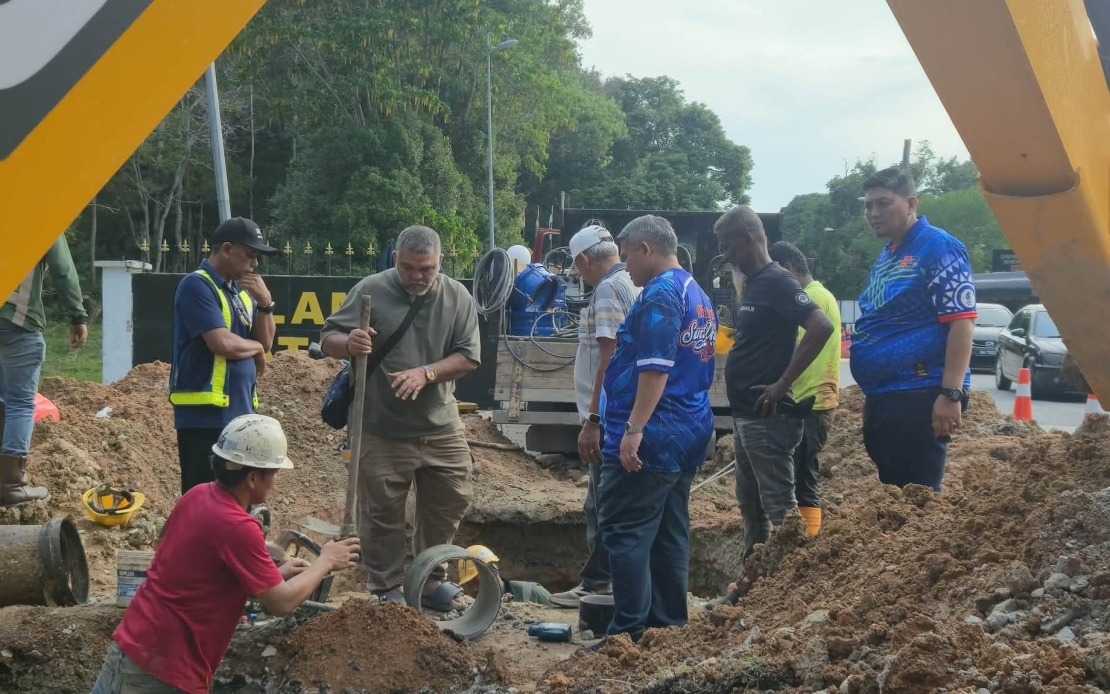
The Melaka state government has moved to address mounting water supply challenges at Kem Terendak in Sungai Udang by proposing the construction of a temporary water tank as an interim solution to the crisis that has disrupted services for thousands of residents and military families. Through Syarikat Air Melaka Berhad (SAMB), the state authorities have put forward this short-term intervention while the broader Development and Upgrade of the Water Reticulation System project progresses toward completion in April 2028. The announcement reflects growing concerns about the adequacy of water infrastructure at the military installation and the need for immediate relief measures during what appears to be an extended period of service instability.
Datuk Rais Yasin, the senior executive councillor responsible for housing, local government, drainage, climate change and disaster management, emphasised that the temporary tank initiative hinges on securing formal approval from the Ministry of Defence. While the state government has positioned itself as a willing partner in resolving the crisis, the ultimate authority over infrastructure decisions at the military camp rests with federal agencies, creating a bureaucratic layer that may delay implementation. Rais, who represents Sungai Udang in the state assembly, acknowledged this institutional reality while reaffirming the state's commitment to supporting affected residents, service personnel, and their families through SAMB's intervention.
The water disruptions at Kem Terendak have created a significant humanitarian challenge, with approximately 2,000 military personnel and civilian households experiencing supply failures over a five-day period, alongside five educational institutions including a MARA Junior Science College. The crisis originated from a substantial pipe fracture along Jalan Kampung Payasum in Sungai Udang, with initial repair completion anticipated within hours but full water restoration expected to require an additional one to two days. This timeline underscores the vulnerability of the camp's water distribution network and the cascading effects of infrastructure failures on military readiness and civilian welfare within the installation.
In response to the immediate shortfall, SAMB has mobilised an emergency water delivery operation involving 25 tanker lorries supplying 25,000 gallons daily since the crisis began. Despite this substantial emergency response, Rais acknowledged that the volume remains inadequate given the scale of demand among the affected population. The state utility has also ensured that schools within the camp receive dedicated water containers to enable educational activities to proceed uninterrupted, recognising that disruptions to student schedules would compound existing hardships for military families relying on these institutions.
The incident has highlighted underlying infrastructure vulnerabilities that extend beyond the immediate pipe burst, prompting officials to consider structural solutions rather than merely reactive interventions. The planned temporary water tank represents a transitional measure designed to stabilise supply during the protracted implementation period of the larger water reticulation upgrade project. This phased approach reflects practical recognition that major infrastructure overhauls require years to plan, fund, and execute, leaving communities dependent on interim solutions that bridge the gap between problem identification and comprehensive remediation.
The handover of two 5,000-litre water tanks from SAMB to Kem Terendak, witnessed by Terendak Garrison Headquarters commanding officer Lt Col Annuar Kaliman and SAMB chief executive officer Datuk Mohd Saleh Jusman, provided immediate supplementary capacity while longer-term solutions are negotiated. These portable storage units offer flexibility in responding to supply fluctuations and can serve as buffers during peak demand periods or when pipe maintenance requires temporary shutdowns. The ceremony symbolised inter-agency cooperation, though the underlying tension between state and federal authority over military installations remained evident in discussions about requisite approvals.
The proposal to deploy mobile water tankers alongside the temporary tank construction demonstrates multi-layered contingency planning intended to prevent recurrence of the supply collapse experienced over the past week. Mobile distribution capacity provides agility that permanent infrastructure cannot match, allowing authorities to adjust volumes based on operational needs and maintenance schedules. This flexible approach has become increasingly essential across Southeast Asia as aging water networks face mounting pressure from population growth, climate variability, and deferred maintenance, making hybrid emergency-and-permanent solutions increasingly common in crisis management.
Rais's formal apology to Kem Terendak residents and affected families, coupled with assurances of sustained state government support, reflects acknowledgment that the supply crisis has imposed genuine hardship on vulnerable populations including children and elderly dependents within military housing. Water access remains foundational to health, sanitation, and dignity, making prolonged disruptions particularly serious for communities with limited alternative sources. The state's positioning as an advocate for these constituencies, despite the technical jurisdiction of federal defence authorities, suggests that political calculation intersects with genuine humanitarian concern in shaping the government's response.
The April 2028 completion date for the comprehensive water reticulation upgrade represents a five-year horizon, indicating that communities will depend on temporary measures and emergency responses for a considerable period. This timeline raises questions about the adequacy of planning processes that allowed infrastructure to deteriorate to crisis point, particularly at a military installation that should presumably benefit from prioritised federal maintenance allocations. The gap between current crisis and future resolution underscores broader challenges affecting water security across Malaysia, where deferred infrastructure investments periodically crystallise into acute supply emergencies affecting civilians and military personnel alike.
The Kem Terendak situation exemplifies challenges facing water utilities throughout Southeast Asia as they attempt to balance maintenance of aging networks, expansion to serve growing populations, and adaptation to climate impacts on water availability. Malaysia's relatively high per capita water availability masks distribution inequities and infrastructure vulnerabilities that manifest periodically in regional supply crises. The Melaka government's willingness to allocate SAMB resources to support a military installation indicates recognition that water security transcends jurisdictional boundaries and demands collaborative approaches even when institutional authority remains contested.
Moving forward, the success of the temporary tank proposal will depend on expedited Ministry of Defence approval and effective coordination between state utility authorities and military camp management. The incident has exposed information gaps about the extent of ongoing infrastructure work and timelines for comprehensive remediation, suggesting that enhanced transparency and structured progress reporting could improve community confidence. Whether the temporary measures prevent recurrence of the five-day crisis, or merely delay more serious supply failures until the 2028 upgrade completion, will determine public assessment of government responsiveness to essential services affecting thousands of residents and military families.

