Melaka's Chief Minister Datuk Seri Ab Rauf Yusoh has made an appeal to property developers operating within the state to view elevator installations not as optional amenities but as fundamental infrastructure requirements when constructing shoplots and residential units that rise beyond two storeys. Speaking at a housing agreement signing ceremony, he stressed that such provisions are particularly vital for elderly residents and play a meaningful role in developing a more liveable Melaka for all demographics.
The Chief Minister revealed that the state administration is actively developing a revised policy framework that would mandate lift facilities in proposed commercial shoplots and three-storey residential complexes. This regulatory shift reflects growing concerns about property development patterns in the state, where accessibility shortcomings have emerged as a significant market constraint. Rather than treating lifts as luxury additions that inflate construction costs, the Melaka government positions them as essential infrastructure components that directly influence buyer confidence and long-term asset viability.
Ab Rauf drew attention to inventory challenges affecting specific Melaka neighborhoods, noting that residential and commercial properties across Kota Laksamana, Banda Hilir and Melaka Raya districts have experienced prolonged sales stagnation. His analysis suggests that the absence of vertical access systems represents one of several contributing variables to weak market absorption. By establishing a policy requirement for lifts, the state aims to remove a significant purchasing barrier that likely discourages acquisitions by elderly buyers, family members caring for seniors, and others with mobility considerations.
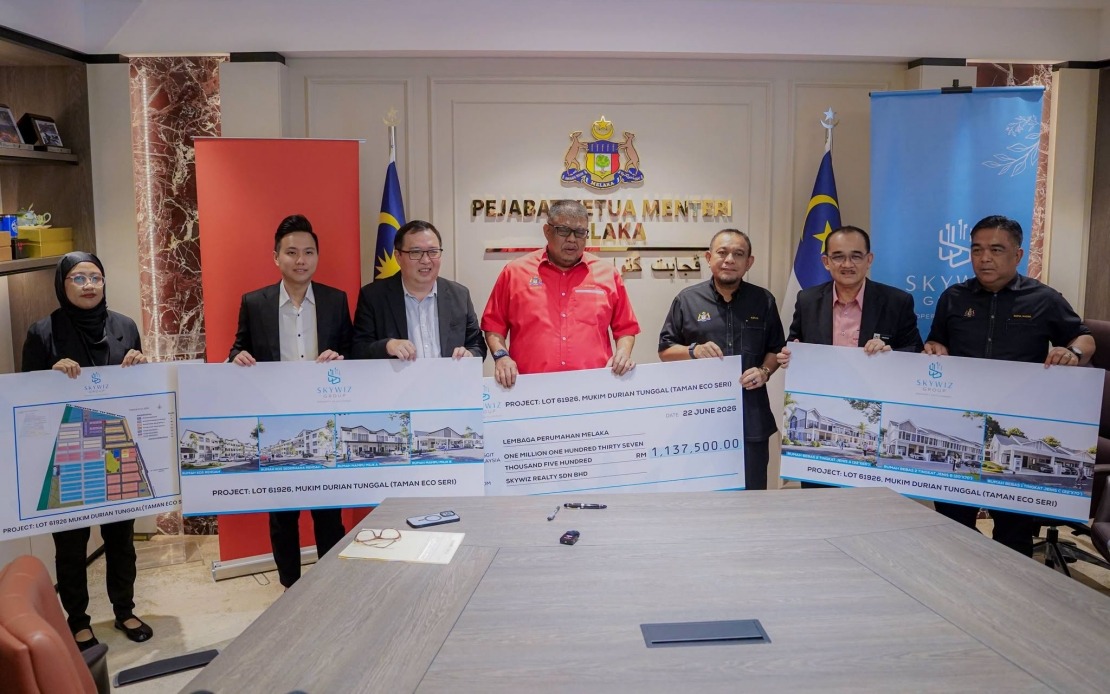
The comments emerged during a signing ceremony for an Affordable Housing Development Agreement between the Melaka Housing Board (LPM) and Skywiz Reality Sdn Bhd. The ceremony included LPM executive director Datuk Murad Husin and reinforced the state's broader commitment to expanding housing options across affordability tiers. This institutional partnership represents one component of Melaka's multi-faceted approach to addressing the state's housing shortage through strategic development initiatives.
Beyond the immediate lift directive, Melaka has articulated an ambitious numerical target for residential expansion. The state government intends to construct more than 38,440 affordable housing units in coming years, substantially increasing homeownership opportunities for existing residents. To date, 23,514 such units have reached completion, representing meaningful progress toward this goal. These efforts form part of the Melaka Sayang Rakyat (MeSRa) initiative, an overarching framework designed to align housing development with broader economic and social priorities affecting state residents.
Ab Rauf framed residential property ownership as extending far beyond mere economic asset accumulation. Rather, he presented home ownership as foundational to family stability, community cohesion, and equitable state development that benefits multiple demographic layers. This positioning suggests that Melaka's housing strategy aims to address social dimensions alongside purely commercial construction metrics, acknowledging interconnections between housing access and broader quality-of-life considerations.
The Skywiz Reality Sdn Bhd project details illustrate the composition of contemporary Melaka housing development. The developer will construct 903 housing units across a 26.56-hectare site in Mukim Durian Tunggal, Alor Gajah, with work scheduled across a three-year implementation window. The affordable housing component comprises 453 units subdivided into four categories: 61 low-cost houses, 54 low-medium cost houses, 200 Type A affordable homes and 138 Type B affordable homes. The remaining 450 units will be released to the open market, reflecting a mixed-income development model increasingly common in Malaysian housing initiatives.
From a financial perspective, the Skywiz project is expected to generate RM2.38 million in revenues for LPM, contributing to the board's operational sustainability and capital availability for future development endeavors. The developer faces strict timelines, with construction obligations commencing within 90 days following Form B issuance by the Hang Tuah Jaya Municipal Council (MPHTJ). This compressed activation period reflects municipal determination to prevent the project deferrals and scheduling delays that have historically plagued comparable developments.
Government oversight mechanisms built into the development agreement establish accountability frameworks designed to maintain project integrity. The LPM has assumed direct monitoring responsibilities to ensure developer compliance with contractual commitments across scheduling, specification adherence, and quality standards. This supervisory posture reflects Melaka's experience with development projects where lax implementation oversight resulted in compromised outcomes for end-users and diminished confidence in subsequent state-sponsored initiatives.
The lift mandate initiative reflects a broader Southeast Asian policy trend toward strengthening accessibility requirements in residential and commercial building codes. Malaysia's aging demographic profile, with extended life expectancy and increasing numbers of citizens over 65, makes accessibility provisions economically rational rather than socially optional. Developers who implement these standards effectively position themselves competitively within maturing property markets where buyer preferences increasingly favor barrier-free design and universal accessibility principles.
For Malaysian property investors and homebuyers, Melaka's regulatory direction signals evolving expectations regarding multi-storey building specifications. Older developments lacking lift infrastructure may face resale complications as market expectations shift toward accessibility features that accommodate diverse user populations. The state's policy initiative therefore creates competitive advantages for newly constructed projects while potentially necessitating retrofitting or value adjustments for existing non-compliant inventories. This market restructuring particularly affects commercial shoplots in aging districts, where operator productivity and commercial viability depend substantially on customer accessibility and goods movement efficiency.
Melaka's emphasis on lift installations within affordable housing programs also demonstrates awareness that lower-income homeowners often include elderly family members and individuals with limited mobility. By ensuring that price-sensitive housing options include essential accessibility infrastructure, the state prevents the creation of lower-tier housing stock that, while financially accessible, imposes uncompensated accessibility burdens on residents. This approach recognizes that true affordability encompasses total cost of ownership and livability quality beyond mere purchase price.
The state's coordinated housing expansion strategy, combining regulatory requirements, development partnerships and revenue-generating agreements, illustrates integrated approaches to addressing demographic and market-driven housing demand. By embedding accessibility standards within affordable housing programs while encouraging their adoption across market-rate developments, Melaka is working to establish baseline expectations that normalize accessibility features across its entire residential stock, benefiting current residents while positioning the state as a model for inclusive development within Malaysia's competitive regional real estate landscape.

