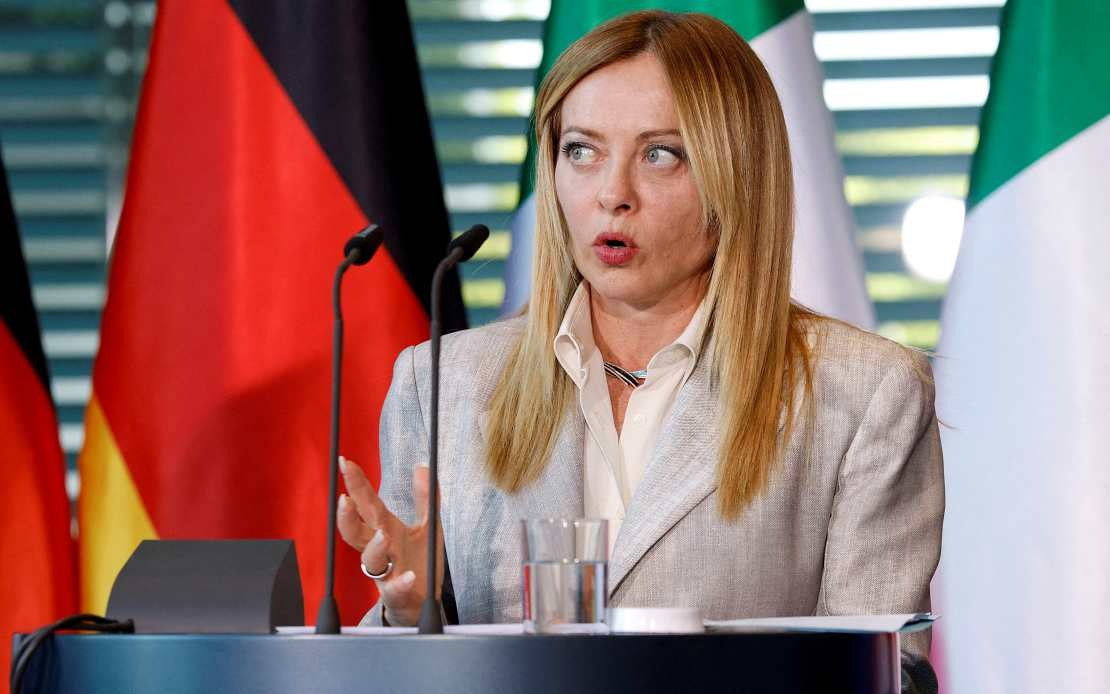
Italian Prime Minister Giorgia Meloni has unveiled an ambitious proposal to establish migrant processing and return centres in countries outside the European Union, positioning the initiative as a comprehensive response to the bloc's ongoing migration pressures. The plan, which could see the first facilities operational by 2027, will feature prominently during Tuesday's informal online meeting of EU home affairs ministers, where Italy's Interior Minister Matteo Piantedosi will present Rome's vision to his counterparts across the continent.
The timing of Meloni's proposal coincides with escalating migration challenges within Europe itself. Late last month, the Spanish autonomous city of Ceuta experienced an unprecedented humanitarian surge when approximately 60,000 people crossed from neighbouring Morocco into the enclave within a single 24-hour period—a staggering figure given that Ceuta's entire population stands at merely 85,000. The Spanish government responded by deploying additional police, Civil Guard units, and military personnel to manage the crisis and deter further illegal crossings, highlighting the desperation at Europe's southern borders and the inadequacy of existing mechanisms to contain mass movement.
Meloni's strategy builds substantially on Italy's existing bilateral approach. Rome has already forged an agreement with Albania to establish migrant centres abroad, operating these facilities under Italian jurisdiction and expense. The model processes asylum applications while simultaneously detaining and facilitating the expulsion of undocumented migrants. However, the Italian experiment has encountered significant obstacles. Courts within Italy have repeatedly intervened to block migrant detention, ordering returns to Italian territory and challenging expedited border procedures designed for citizens from designated safe countries. This judicial resistance reflects tensions between the executive's hardline immigration stance and the judiciary's interpretation of rights protections.
The practical results from Italy's Albanian venture underscore the complexities of offshore processing. Between May 2025 and mid-July 2026, only 685 individuals were transferred to Albania, and fewer than 15 percent of those were subsequently repatriated—suggesting that the model's effectiveness remains marginal despite its high operational costs. Maintaining the Gjader centre in Albania during 2025 alone consumed approximately €50 million, representing a substantial financial commitment with limited return on investment in terms of actual deportations achieved.
Despite these challenges, Meloni has secured broader European backing for her vision. Danish Prime Minister Mette Frederiksen has publicly endorsed the initiative, while Greece has similarly committed to piloting such a scheme beginning in 2027. More significantly, twenty-two EU member states collectively sent a letter to European Commission President Ursula von der Leyen and European Council President Antonio Costa requesting serious consideration of new protective mechanisms against illegal migration. This coordinated approach suggests that frustration with migration pressures transcends individual capitals and reflects a continent-wide appetite for alternative solutions.
Rome's immediate objective is to conclude agreements with third countries following the Albanian model by year's end. The proposal anticipates that European Union funds will underwrite the operational costs of these extraterritorial centres, effectively distributing financial responsibility across the bloc rather than concentrating it on frontline states like Italy and Spain. Rwanda and Uganda have emerged as the African nations furthest advanced in bilateral negotiations with European partners, while Denmark, Austria, the Netherlands, and Germany have assumed leadership roles in driving the initiative forward.
For Southeast Asian observers, the European debate carries particular resonance. Malaysia and other regional nations have long grappled with similar irregular migration challenges, hosting significant numbers of Rohingya, Bangladeshi, and other vulnerable populations. The EU's struggle to manage migration flows and coordinate policy responses offers cautionary lessons about the limitations of external processing approaches when underlying factors driving displacement remain unaddressed. The relatively low repatriation rates from Italy's Albanian experiment suggest that simply moving processing offshore does not automatically translate into successful returns or resolution of migration drivers.
The financial dimension of Meloni's proposal also warrants attention. Proposing EU-wide funding for third-country operations represents a significant commitment of collective resources. The €50 million annual cost for a single Albanian facility indicates that scaling such operations across multiple countries could require substantial multilateral investment. This budgetary reality may complicate negotiations with member states facing domestic fiscal pressures, particularly as the EU navigates broader economic uncertainties and defence spending commitments.
The proposal furthermore raises questions about the legal and diplomatic architecture required to make such arrangements function effectively. Italy's experience demonstrates that creating processing centres abroad does not eliminate the reach of domestic courts or international humanitarian obligations. Agreements must navigate complex questions of jurisdiction, legal accountability, and migrant rights protections. The involvement of Rwanda and Uganda suggests that African nations are developing greater leverage in negotiations with European states, potentially extracting concessions beyond simple facility hosting fees.
Meloni's initiative reflects a broader rightward political trajectory within the EU on migration matters. The Italian prime minister has positioned restrictive immigration as central to her governing philosophy, and this new proposal aligns with her repeated assertion that Europe must fundamentally reshape how it manages arrivals and asylum processes. Her ability to rally twenty-two member states to jointly advocate for new protection mechanisms demonstrates that concerns about irregular migration transcend ideological divides and appeal to governments across the political spectrum.
The proposed 2027 operational date provides a three-year window for negotiating agreements, establishing infrastructure, and creating legal frameworks—a compressed timeline given the complexity involved. Greece's parallel commitment to the same starting year suggests coordinated planning among leading advocates. However, the glacial pace at which some EU initiatives materialise, combined with unpredictable judicial interventions as seen in Italy's experience, suggests that achieving full operational status by the target date may prove optimistic.
Ultimately, Meloni's proposal represents Europe's continued effort to externalise migration management rather than address root causes of displacement. While offshore processing may offer political benefits by appearing tough on borders, the evidence from Italy's Albanian centres indicates that such approaches deliver limited practical results. The widespread European support for exploring this model nonetheless signals that many governments view migration as a sufficiently acute challenge to warrant substantial financial commitments and diplomatic effort, even when track records remain unimpressive.

