Dataran Putrajaya became the focal point of Malaysia's National Day commemorations on August 31, as tens of thousands of citizens converged on the venue to mark 69 years since the nation's independence. The gathering, representing the country's diverse demographic tapestry, brought together people of all ages, ethnic backgrounds, and social standings in a collective expression of patriotic sentiment and shared national identity. The palpable energy across the federal administrative capital underscored the continued resonance of Merdeka Day celebrations within Malaysian society, despite the passage of nearly seven decades since independence.
The chosen theme for this year's festivities—Malaysia MADANI: Kesejahteraan Dinikmati—sought to connect the foundational principles of independence with contemporary aspirations for national welfare and prosperity. This thematic framework reflected broader governmental messaging around development and inclusive growth, positioning the National Day observance as an opportunity to assess progress while reinforcing collective commitment to the nation's future trajectory. The emphasis on shared well-being suggested an attempt to bridge historical narratives of independence with present-day concerns about economic opportunity and social cohesion across Malaysia's multicultural landscape.
Putrajaya's selection as the venue represented a continuation of the federal capital's prominent role in hosting national-level celebrations, though such designation remains periodically rotated across the country. The administrative hub had previously served as the primary stage for National Day festivities in 2003, 2005, 2018, 2019, 2023, 2024, and 2025, establishing it as a favoured location for state ceremonial occasions. This recurring choice reflects both the symbolic significance of Putrajaya as the seat of federal government and practical considerations regarding venue capacity, security arrangements, and accessibility for participant populations from across Malaysia's peninsula and eastern states.
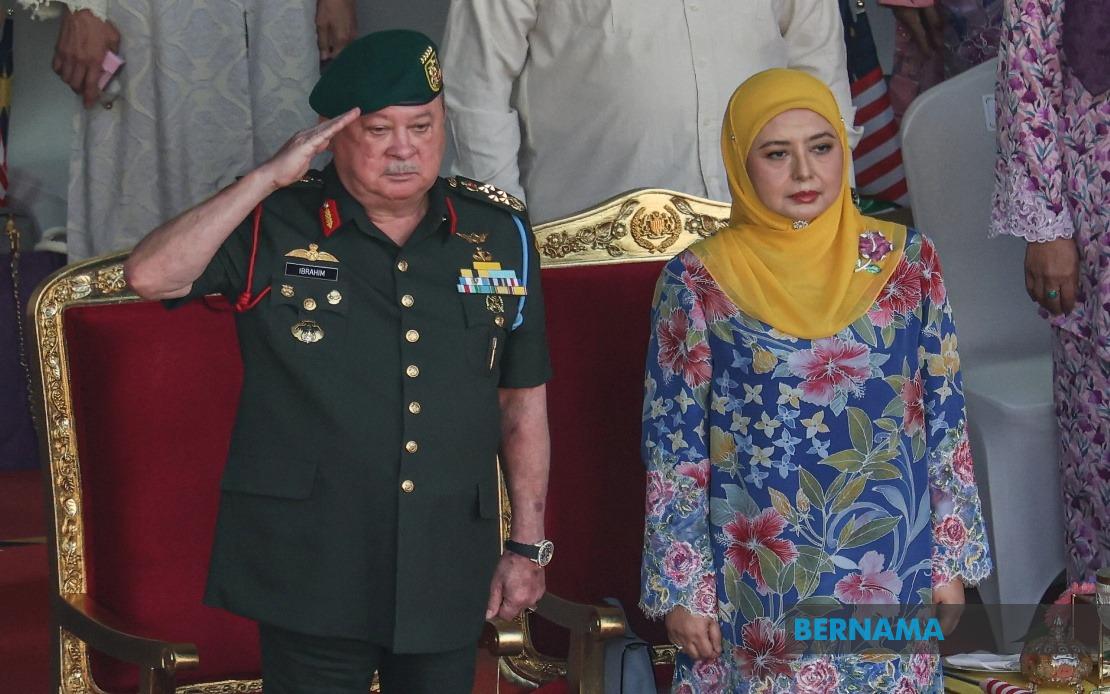
Proceedings commenced with Prime Minister Datuk Seri Anwar Ibrahim and his spouse, Datuk Seri Dr Wan Azizah Wan Ismail, taking their positions at the designated royal stage at 7:53 in the morning. Their arrival set the ceremonial tone for subsequent events, with formal musical accompaniment reinforcing the solemnity and importance of the occasion. Within minutes, the focal point shifted to Their Majesties Sultan Ibrahim and Raja Zarith Sofiah, whose arrival at eight o'clock marked the formal beginning of the day's principal proceedings and signalled the commencement of scheduled programming.
The royal entrance featured a military display that emphasised both tradition and national symbolism. Five helicopters executing a coordinated flypast whilst bearing the Jalur Gemilang created a striking visual spectacle that captured attention across the assembled crowds. This aerial component, coordinated with instrumental renditions of both the national anthem and the royal salute, demonstrated the integration of ceremonial elements designed to evoke emotional resonance and reinforce national identity through sensory experience. The synchronisation of military precision with patriotic symbolism reflected standard protocols for high-state occasions throughout the Commonwealth tradition.
Beyond the royal principals, the celebration attracted significant governmental and diplomatic attendance that underscored the event's official status. Deputy Prime Minister Datuk Seri Dr Ahmad Zahid Hamidi took his place alongside cabinet-level representatives, including Communications Minister Datuk Seri Fahmi Fadzil, who simultaneously served as chairman of the overarching committee coordinating National Day and Malaysia Day celebrations for 2026. The presence of foreign diplomats and international delegates acknowledged Malaysia's engagement within the regional and global community, whilst simultaneously projecting an image of domestic stability and national confidence to external audiences.
The ceremonial programme proper opened with the collective singing of Negaraku, establishing a participatory dimension that engaged attendees beyond passive spectatorship. The formal raising of the Jalur Gemilang to accompaniment of fourteen gun reports—one resonating for each of Malaysia's states—invoked territorial unity through numerical symbolism. This ritual, executed by the 41st Battery of the Royal Artillery Regiment under Major Hafizan Mat Ghani's command, connected ceremonial practice to constitutional federalism, reminding participants of the constitutional architecture underlying national governance.
The recitation of the Rukun Negara represented perhaps the most substantively meaningful component of the morning's programme, introducing explicitly philosophical content into proceedings that might otherwise remain primarily ceremonial. Led by Malaysian Fire and Rescue Department Deputy Commissioner Datuk Abdul Razak Muda, this constitutional pledge was recited collectively by JBPM personnel and accompanied by sign language interpretation via Nur Alyanatasha, extending accessibility and emphasising inclusive participation. The inclusion of sixty-nine recitation participants—one for each year of independence—created numerical resonance that reinforced the commemorative significance of the occasion.
The traditional sevenfold declaration of Merdeka that followed this segment provided the emotional crescendo toward which the morning's formal elements had been building. As the cry echoed across Dataran Putrajaya, attendees collectively raised miniature flags in synchronized response, creating a visually compelling demonstration of national sentiment. This moment—recurring annually yet retaining emotional potency for participants—encapsulated the essential purpose of National Day observance: collective reaffirmation of national identity and renewed commitment to the principles undergirding independence.
For Malaysian observers and the broader Southeast Asian region, such commemorative exercises serve functions extending beyond ceremonial obligation. They provide regularised opportunities for nationwide populations to experience explicitly framed national identity, particularly important within multicultural societies where competing historical narratives and communal allegiances might otherwise fragment collective consciousness. The Malaysia MADANI theme's emphasis on shared prosperity suggests governmental acknowledgment that contemporary national cohesion depends not merely on historical memory but on perceived equitable advancement and tangible improvements in citizen welfare.
The scale of participation witnessed at Dataran Putrajaya reflected sustained public engagement with independence commemoration, despite domestic political complexities that periodically preoccupy national discourse. The intergenerational and multi-ethnic composition of attendees demonstrated that Merdeka Day transcends partisan divisions, providing uncommon common ground within otherwise polarised political environment. This unifying capacity, however, remains contingent upon perceived governmental legitimacy and social inclusion within frameworks of national development.
Looking toward subsequent commemorations, the staging of National Day celebrations at Dataran Putrajaya continues establishing the federal capital as Malaysia's primary venue for state-level spectacle and ceremonial performance. The regularity of return engagements in this location suggests institutional preference for centralised, controlled celebratory environments, even as alternative venues might offer symbolic value through geographic distribution. The implications for regional observers centre on Malaysia's capacity to maintain cohesion and shared national purpose across diverse constituencies, a challenge increasingly relevant throughout Southeast Asia's multicultural democracies facing comparable pressures toward communal fragmentation and competing narratives of national identity.

