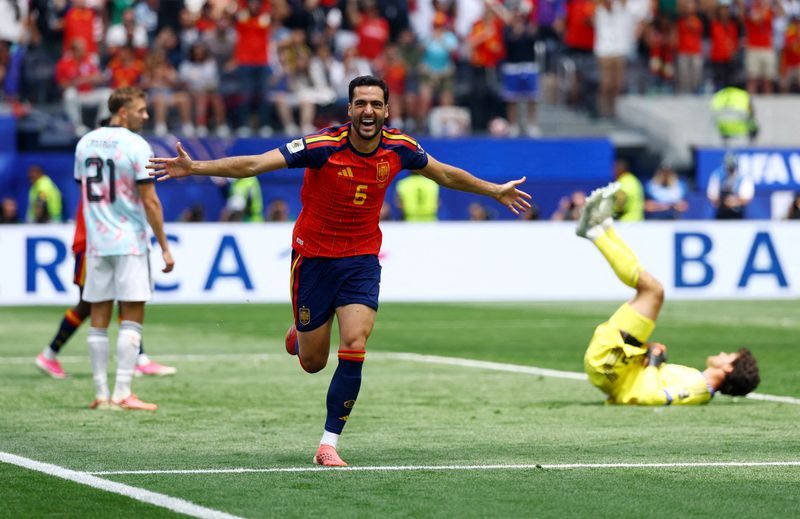
Spain marched into the World Cup semi-finals on Friday evening with a hard-fought 2-1 victory over Belgium at Los Angeles Stadium, setting up an eagerly anticipated showdown against France. The decisive moment came when substitute Mikel Merino pounced on a loose ball in the 86th minute after Belgian goalkeeper Senne Lammens failed to secure Pau Cubarsi's low strike, turning what had been a tightly contested quarter-final into a Spanish celebration. The result means that Luis de la Fuente's side, the defending European champions, now stands just two wins away from claiming the World Cup trophy.
Merino's knack for arriving at crucial moments proved decisive once again. The midfielder, who had already scored the winning goal as a substitute in Spain's previous knockout encounter against Portugal, demonstrated remarkable composure to finish from close range. His achievement marks a singular honour in World Cup history—he is the first player ever to score the winning goal in two separate knockout-stage matches while coming on from the bench. Speaking after the match, Merino reflected on his impact, suggesting that careful preparation and focus create the conditions for such pivotal contributions to materialise. With just two matches separating Spain from World Cup glory, Merino and his teammates now focus their efforts towards overcoming the tournament's dominant force.
Spain's journey through the opening half showcased the tactical sophistication that Luis de la Fuente has instilled in the team. Fabian Ruiz handed the European champions an early advantage on the half-hour mark, capitalising on a goalmouth scramble that unfolded after Thibaut Courtois made a full-length diving save. Ruiz's finishing, sliding the ball between defender Timothy Castagne's legs, rewarded Spain's aggressive approach and justified de la Fuente's selection gamble in choosing the Paris Saint-Germain midfielder ahead of Barcelona's Pedri.
Belgium, however, demonstrated the resilience that has defined their World Cup campaign. Eleven minutes after falling behind, Charles De Ketelaere arrived perfectly timed at the far post to head home Timothy Castagne's delivery, levelling the contest and delivering what would prove to be Spain's first conceded goal of the tournament. The Belgian equaliser represented more than a mere statistical milestone; it provided genuine momentum to a team already battling against significant adversity, and the sides retreated to their dressing rooms with honours even as the Californian heat intensified.
Belgium's preparation for this quarter-final encounter was complicated by injury setbacks that undermined their capacity to compete at full strength. The squad was already without midfielder Amadou Onana, sidelined by an anterior cruciate ligament tear sustained during their round-of-16 elimination of the United States. Moments before kickoff, captain Youri Tielemans was withdrawn from the starting lineup after sustaining a warm-up injury, forcing Hans Vanaken to step into an unfamiliar leadership role. These circumstances placed Belgium in a disadvantageous position from the outset, testing the depth of Kevin De Bruyne and Romelu Lukaku's veteran presence.
Following the interval, Spain emerged with renewed vigour and control. The European champions dominated possession while methodically probing Belgian defensive vulnerabilities, with teenager Lamine Yamal—just eighteen years old—providing electric attacking thrust throughout the second period. Yamal's youthful dynamism and technical quality posed constant problems for the Belgian backline, and Spain's patient approach gradually wore down their opponents' resistance.
The breakthrough arrived with Merino's introduction off the bench. His contribution within two minutes of stepping onto the pitch demonstrated the impact that fresh legs and tactical flexibility could deliver. While Belgium subsequently searched for an equalising response, mounting several promising attacks through their experienced players, they ultimately lacked the capacity to breach Spain's defence and force the match towards extra time.
Spain's progression to the semi-finals marks their return to that stage for the first time since 2010, when they captured their sole World Cup title under Vicente del Bosque. The historical resonance of that achievement underscores the significance of the current campaign and provides both inspiration and expectation for de la Fuente's outfit. The coach's confidence remained evident in his post-match comments, acknowledging France's considerable strength while expressing conviction in his team's preparations and capabilities.
The semi-final fixture against France, scheduled for Dallas on Tuesday, promises to be one of the tournament's standout contests. France enters the match as tournament favourites and has demonstrated the attacking prowess and defensive organisation that characterises world-class international football. De la Fuente's assertion that the French camp will harbour similar concerns about facing Spain suggests the Spanish coach believes his team possesses the tactical and technical resources to trouble even the most formidable opponents. With just 180 minutes of football separating Spain from a potential World Cup triumph, the path forward grows increasingly demanding yet tantalisingly within reach.
The victory provided some respite for Spanish supporters and neutrals alike, delivering an entertaining spectacle amid the challenging conditions at Los Angeles Stadium. The sold-out crowd predominantly backed Spain, creating an atmosphere that tilted proceedings in the Europeans' favour and contributing to the emotional intensity of Merino's decisive intervention. For Malaysia and broader Southeast Asian observers tracking the tournament's progression, Spain's evolution into serious contenders represents a reminder that defensive solidity, patient possession football, and clinical finishing remain fundamentally rewarding approaches in modern international football, lessons applicable to regional footballing development initiatives.

