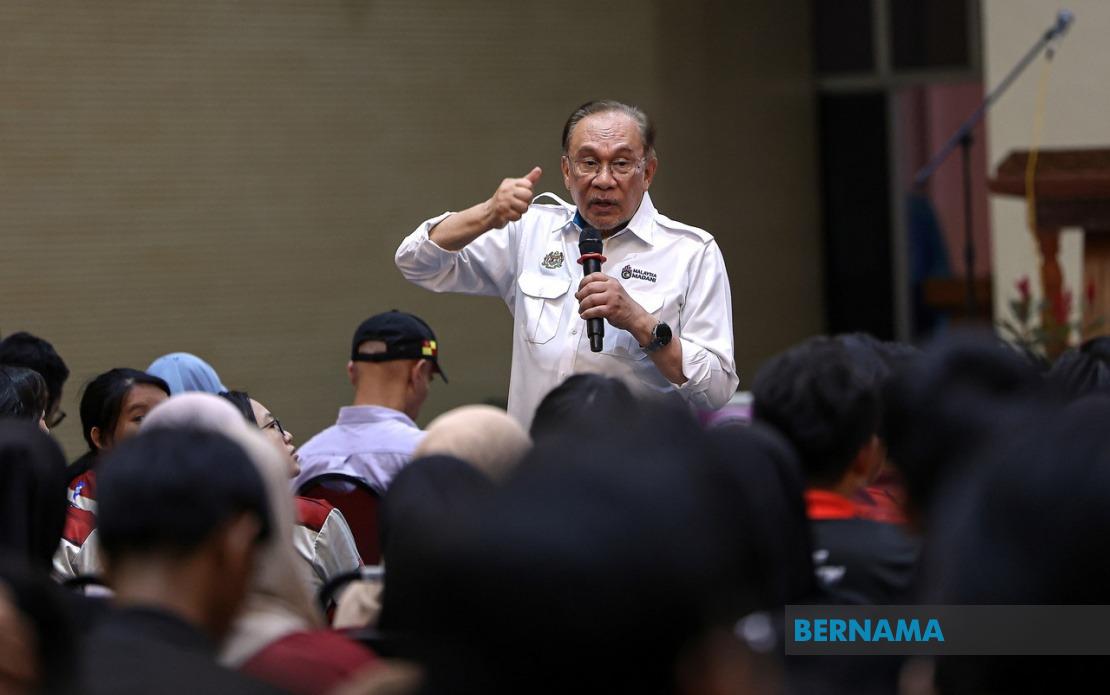
Prime Minister Datuk Seri Anwar Ibrahim has set out a framework for matriculation programme admissions that aims to balance meritocratic principles with equity considerations, addressing longstanding tensions over university access in Malaysia. Speaking at a youth engagement event in Seremban on July 22, Anwar indicated that the government intends to create pathways for students excelling academically whilst simultaneously preserving affirmative action provisions for communities facing socioeconomic barriers to tertiary education.
Under the outlined approach, students achieving the highest marks in the Sijil Pelajaran Malaysia (SPM) examination—specifically those securing 10As—would gain guaranteed admission to matriculation programmes without regard to ethnic background. This represents a significant commitment to race-blind merit criteria at the point of entry for top-tier performers, reflecting broader government rhetoric around inclusive meritocracy. The automatic admission threshold sends a clear signal that exceptional academic achievement constitutes a path to higher education access regardless of a student's racial or ethnic identity.
Anwar's emphasis on automatic entry for top achievers addresses concerns among non-Bumiputera communities that rigid quota systems may prevent their highest-performing students from gaining places in competitive programmes. By guaranteeing entry for 10A students across all communities, the government attempts to defuse perceptions of systemic exclusion whilst maintaining that merit remains a primary criterion for advancement. This approach aligns with broader international trends toward transparent, achievement-based selection mechanisms that can command wider public acceptance.
Simultaneously, Anwar reaffirmed the government's commitment to maintaining Bumiputera quotas within the matriculation system, characterising these provisions not as preferential treatment but as recognition of structural disadvantages faced by specific groups. The Prime Minister specifically cited demographic composition and the particular challenges confronting students from rural and interior regions, encompassing areas across peninsular Malaysia, Sabah, and Sarawak. This framing suggests that quota systems are intended to address geographic and socioeconomic disparities rather than serving purely ethnic objectives.
The dual-track approach outlined by Anwar reflects the Malaysian government's attempt to navigate a politically complex landscape where education access intersects with constitutional protections for Bumiputera interests, demographic representation, and meritocratic principles. By preserving quotas whilst opening pathways for exceptional performers irrespective of race, the policy seeks to satisfy multiple constituencies: those prioritising merit-based selection, those committed to Bumiputera rights, and those advocating for fairer access across socioeconomic lines.
Geographically, Anwar's specific mention of students from rural and interior areas in Sabah and Sarawak reflects government awareness of persistent educational disparities in East Malaysia. Students in these regions often face greater obstacles in accessing quality secondary education, language support, and examination preparation resources compared to their urban counterparts. The matriculation quota system, when framed this way, becomes a tool for compensating for earlier systemic inequalities rather than simply allocating places according to immutable characteristics.
For Malaysian families and students contemplating tertiary education pathways, this policy framework offers clearer signals about admission prospects. Students who achieve 10As can reasonably expect matriculation entry, reducing uncertainty for Malaysia's highest academic achievers. For other applicants, quota protections remain in place, though the policy does not address what admission criteria apply to students below the 10A threshold who fall outside protected categories—a significant gap that may perpetuate debates around fairness in middle-range admissions.
The matriculation programme itself serves as a crucial gateway to Malaysian universities, particularly the public institutions that train teachers, engineers, doctors, and other professionals. Policies governing matriculation access therefore shape not merely individual educational trajectories but the demographic composition of Malaysia's professional classes. Balancing merit recognition with equity considerations at this juncture carries implications for social mobility, professional workforce diversity, and public confidence in institutional fairness.
Anwar's remarks were delivered at the "Jelajah Rakan Muda" programme at the Youth and Sports Complex in Paroi, reflecting the government's ongoing engagement with younger voters and constituents navigating educational transitions. Youth and Sports Minister Dr Mohammed Taufiq Johari's presence underscored the policy's salience within the government's broader youth agenda. Such public articulation of education policy at community engagement events suggests the administration recognises education access as a political priority requiring regular, transparent communication.
The practical implementation of this policy framework will test the government's commitment to stated principles. Clear guidelines defining eligible qualifications, appeals processes, and transition mechanisms will be essential. Transparency in how matriculation places are allocated across categories—automatic merit admission, quota-protected intake, and any remaining spots—will determine whether stakeholders perceive the system as genuinely balanced or as a rhetorical compromise that preserves existing hierarchies under new language.
Moreover, the policy's effectiveness depends on upstream improvements in secondary education quality, particularly in less-developed regions, ensuring that quota protections address real disadvantage rather than masking broader systemic gaps. If rural and underprivileged students continue facing inferior schools and resource constraints, quota entry to matriculation may provide temporary access whilst leaving fundamental inequalities unaddressed. Anwar's framing suggests government awareness of these connections, but translating rhetoric into sustained educational investment across all regions remains the critical test of policy sincerity.

