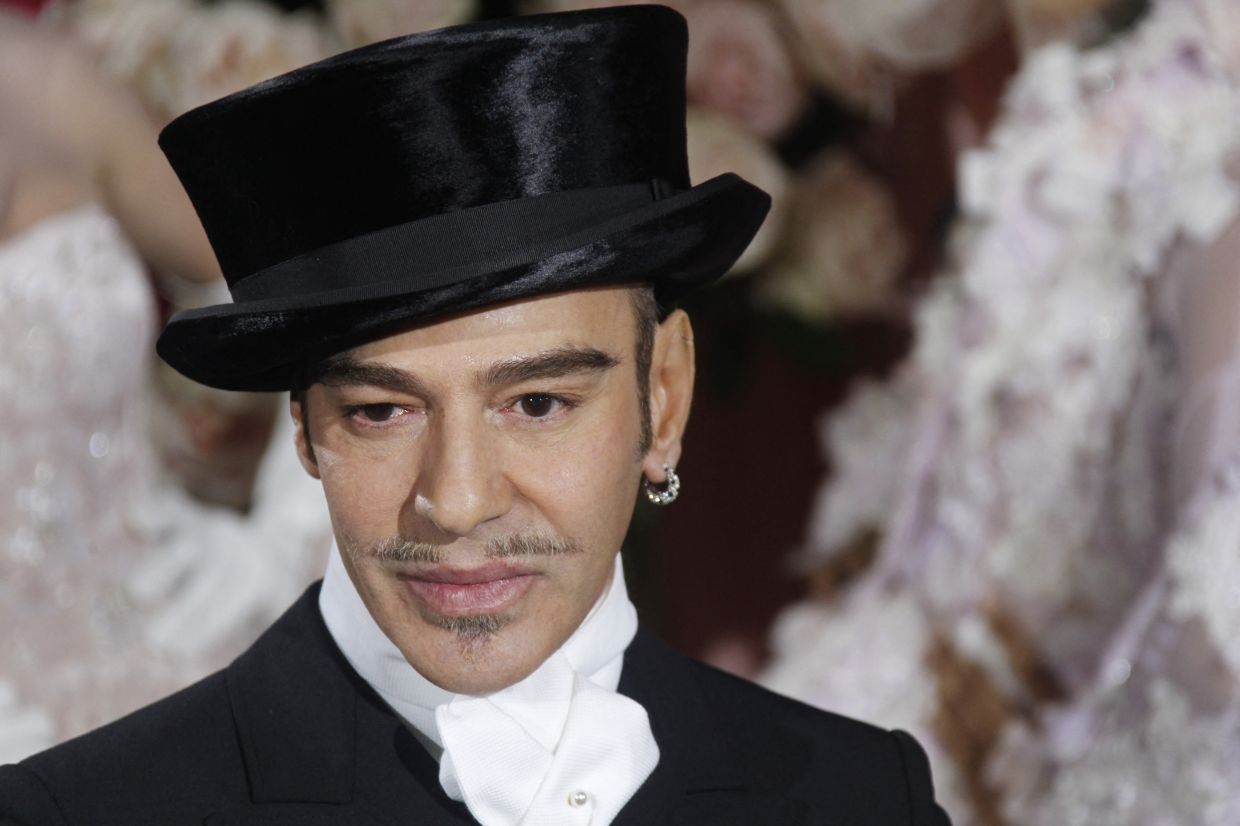
The Metropolitan Museum of Art has announced that British fashion designer John Galliano will be the subject of next year's Met Gala exhibition, marking a significant yet controversial decision that places his work at the centre of one of fashion's most scrutinised moments. The honour makes Galliano only the third living designer to receive a solo exhibition at the Costume Institute, joining an extraordinarily select group in an institution accustomed to celebrating fashion's most transformative figures. Yet this recognition arrives not simply as a celebration of his undeniable creative genius, but as a deliberate confrontation with both his achievements and the profound ethical breach that fractured his career and public standing.
Galliano's trajectory in fashion represents one of the industry's most dramatic arcs—ascending to the pinnacle of creative direction at Christian Dior for nearly fifteen years before a catastrophic fall resulting from his own words. Between 2010 and 2011, the designer made a series of public statements containing antisemitic and racist commentary that gained viral circulation online, ultimately leading to a conviction in a Paris court for public insults based on race, religion, ethnicity, and origin. The episode fundamentally altered not only his professional standing but also forced the fashion world to confront uncomfortable questions about separating artistic achievement from personal conduct—a tension that remains unresolved across numerous creative industries today.
Following his dismissal from both Christian Dior and his eponymous label, Galliano entered a period of public reckoning that included treatment for substance addiction and a deliberate effort to acknowledge and address the harm caused by his remarks. This rehabilitation phase, spanning several years of relative professional obscurity, culminated in his hiring at Parisian fashion house Maison Margiela in 2014, where he spent the subsequent decade demonstrating a capacity for creative reinvention while rebuilding professional credibility. The trajectory reflects broader cultural conversations about accountability, redemption, and whether—or how—individuals in positions of significant influence can meaningfully atone for serious transgressions.
The Metropolitan Museum's approach to this exhibition signals a notable evolution in how cultural institutions address complicated legacies. Rather than attempting to sanitise Galliano's history or compartmentalise his work from his conduct, the museum has explicitly committed to examining both dimensions simultaneously. In a statement released Friday, July 31, the institution declared that the exhibition would neither minimise his creative accomplishments nor avoid engaging with the problematic aspects of his personal history, specifically pledging to "consider how artistic achievement should be understood alongside ethical accountability."
This curatorial philosophy reflects practical consultation with relevant communities. The Metropolitan Museum confirmed that preparation for the exhibition included meetings between curator Andrew Bolton, Galliano himself, and Anna Wintour—editor-in-chief of Vogue—with Jewish community leaders in New York to understand their perspectives and concerns. Such engagement represents a departure from earlier curatorial practices where ethical considerations might have remained peripheral to aesthetic celebration. By centering these conversations, the museum acknowledges that exhibitions exist within communities and bear responsibility to those communities, particularly when addressing historical harm.
Andrew Bolton, the museum's primary fashion curator who oversees the institution's major fashion exhibitions, has framed the show as examining "how Galliano has remapped the world through fashion and how his conduct, its consequences, and changing cultural values have reshaped our understanding of his work." This formulation suggests that the exhibition will not merely present Galliano's designs as fixed aesthetic objects, but rather explore how historical context and evolving standards of accountability alter interpretation and reception—a fundamentally modern museological approach that acknowledges viewer subjectivity and changing ethical frameworks.
The exhibition's three-part structure embodies this commitment to comprehensive engagement with Galliano's legacy. The opening section, titled "Bearings," directly addresses what the museum terms the "rupture" created by his conduct—the antisemitic, racist, and anti-Asian remarks of 2010 and 2011, his dismissal from major fashion houses, his court conviction, and his subsequent treatment for substance addiction and public acknowledgment of his actions. By positioning this reckoning as the exhibition's foundation rather than a footnote, the curators establish that understanding Galliano's work in 2025 requires first confronting this historical breach and the consequences it generated.
The second section, "Horizons," shifts focus to the designer's creative sources and inspirations—examining how historical research, geographical study, artistic influences, storytelling, and performance traditions inform his design methodology. This section allows visitors to understand Galliano's intellectual and aesthetic preoccupations, the breadth of his references, and the sophistication of his creative vision. By dedicating exhibition space to these generative forces, the museum validates the intellectual rigour underlying his work while maintaining the broader context established in the preceding section.
The final section, "Atlas Of Transformation," concentrates on Galliano's technical mastery, his experimentation with materials and construction, and his contributions to fashion innovation. This organisation allows the exhibition to move progressively from confrontation through inspiration toward technical accomplishment, creating a narrative arc that neither erases nor obsesses over the scandal while demonstrating why Galliano merits inclusion within fashion's highest institutional recognition. For Malaysian fashion enthusiasts and industry observers, this exhibition model offers instructive guidance regarding how cultural institutions might address complicated legacies in an era demanding both artistic recognition and ethical accountability.
The May 2025 Met Gala itself will generate intense international attention, particularly given the exhibition's focus. The red carpet has historically served as fashion's most visible stage for provocative personal expression, and Galliano's attendance and presentation—should he participate—will inevitably provoke reflection on redemption, reinvention, and the fashion industry's capacity to move beyond scandal. The visibility of this exhibition within global fashion discourse suggests broader conversations within the industry regarding how creative achievement and personal conduct intersect, conversations increasingly relevant across Southeast Asia's rapidly expanding fashion and luxury sectors.
For cultural commentators and institutional leaders across the region, the Metropolitan Museum's approach to the Galliano exhibition demonstrates how major institutions can address ethically complicated figures without retreating into either uncritical celebration or complete condemnation. By insisting that artistic accomplishment must be understood "alongside ethical accountability," the museum establishes a framework applicable far beyond fashion—one that acknowledges human complexity while refusing to ignore genuine harm. This balanced methodology, tested through consultation with affected communities and embedded throughout the exhibition's structure, offers a potential model for how Southeast Asian cultural institutions might navigate their own complicated legacies and contemporary ethical questions.

