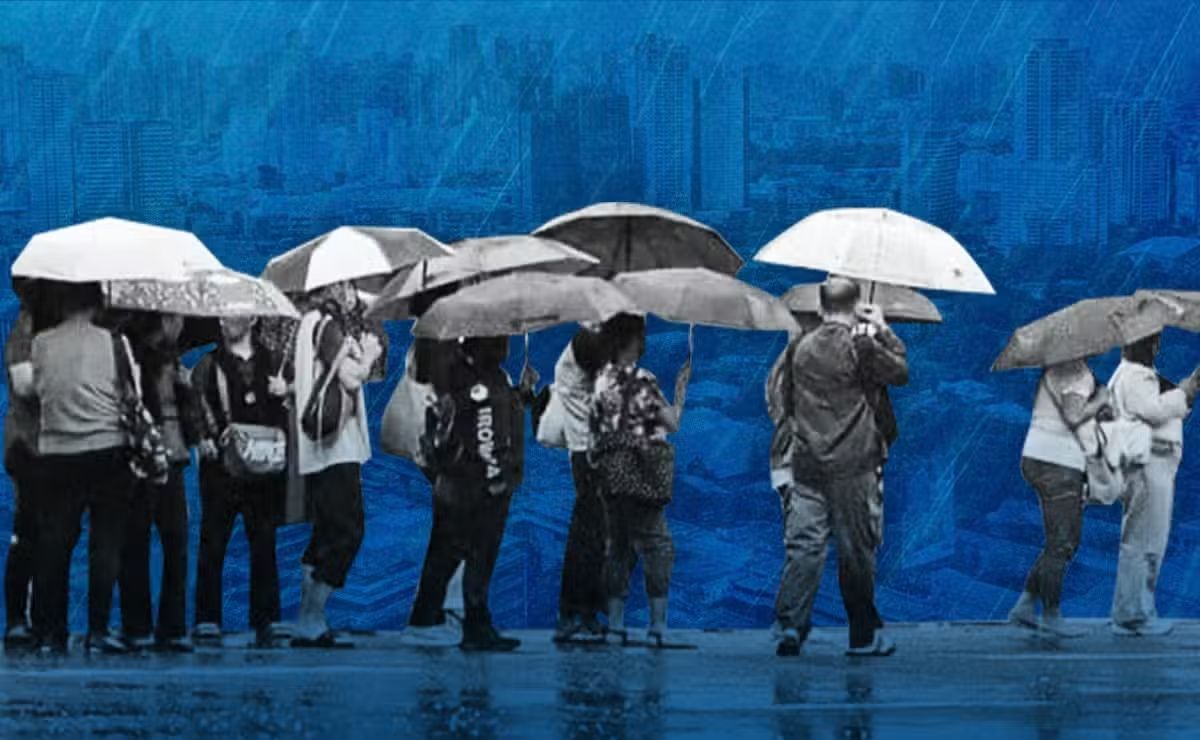
Metro Manila experienced a punishing weather system in early to mid-August that saturated the sprawling metropolitan region with water equivalent to roughly 193 Olympic swimming pools per square kilometre, prompting fresh scrutiny of the city's ability to handle extreme rainfall and the integrity of its drainage infrastructure. Between August 5 and 14, the combination of the southwest monsoon, locally known as Habagat, and successive tropical cyclones unleashed unprecedented volumes of rain that data scientists say reveal systemic weaknesses in how the capital protects residents from flooding. The episode has reignited debate about whether the billions allocated for flood defences are actually reaching ordinary Filipinos or disappearing into ghost projects and politically-connected contractors.
Dr Alicor Panao, an associate professor at the University of the Philippines working as a data scientist, conducted an analysis of rainfall measurements from 23 stations operated by the Philippine Atmospheric, Geophysical and Astronomical Services Administration across the metro area. His findings painted a picture of relentless precipitation that tested every aspect of the city's water management systems. Averaging 483.4 millimetres across all stations over the ten-day window, the rainfall represented a daily accumulation rate of roughly 48.3 millimetres, though distribution varied substantially depending on location, with some areas receiving nearly double the average while others remained relatively spared. The variation itself poses a challenge for infrastructure designed on generalised rainfall assumptions rather than accounting for extreme localised saturation.
What made this particular weather event especially striking was the concentration of the heaviest downpours into just two consecutive days, August 9 and 10. Pagasa's Airport weather station recorded a staggering 226.5 millimetres on August 9 alone, demonstrating the intensity with which moisture-laden air masses were releasing water over the capital. While this single-day reading fell short of the catastrophic 455 millimetres recorded during Tropical Storm Ondoy in 2009—itself a generational flood event that devastated the city—the cumulative effect of the sustained wet period creates different but equally serious flooding challenges. Historical records show that Ondoy's extreme set a mark surpassing the previous benchmark of 334 millimetres from June 1967, and over the decades such records have become alarmingly more frequent rather than rarer.
When one considers the sheer volume of water involved, the scale becomes almost difficult to visualise. Distributed evenly across Metro Manila's approximately 620 square kilometres, the average 483.4 millimetres translates into roughly 120,000 Olympic-sized swimming pools worth of water falling on the metropolitan area over just ten days. Certain locations bore disproportionately heavier loads—Sitio Wawa measured 708 millimetres, San Mateo-2 recorded 701 millimetres, and La Mesa Dam captured 645.5 millimetres during the same period. These variations underscore that Metro Manila's topography and weather patterns create microclimates where some neighbourhoods face dramatically greater flood risk than others, yet city planning and infrastructure investment often treats the region as a uniform whole.
Panao's core insight goes beyond simply documenting rainfall statistics. He emphasises that the real problem lies not in the unpredictability of nature but in how quickly successive storms prevent the city's drainage networks from functioning as intended. Major rivers, canal systems, and watershed areas require recovery time between major rainfall events to process accumulated water and return to normal capacity. When heavy downpours recur within days or even hours of one another, these systems become overwhelmed through no fault of their own. The drainage infrastructure essentially drowns in a situation where it never has opportunity to clear its channels, culverts, and retention basins before the next deluge arrives, turning functioning but finite systems into inadequate conduits.
This technical reality has profound policy implications for how Metro Manila should approach flood management going forward. Building additional structures, dams, levees, and pumping stations only addresses part of the challenge if those facilities lack proper engineering, construction quality, and ongoing maintenance. Panao points out that investigations have repeatedly uncovered evidence of ghost flood-control projects that consumed public funds without delivering actual protection, substandard facilities built with inferior materials or compromised designs, and overpriced contracts that enriched connected suppliers rather than the people supposedly benefiting from the infrastructure. Criminal cases have been filed against some of those responsible, though prosecution has often proceeded slowly and outcomes remain uncertain.
The corruption dimension transforms the flooding question from a purely technical challenge into a governance crisis with profound consequences for ordinary residents. When investigations uncover that contractors cut corners on materials, that projects were never completed despite payment, or that designs were fundamentally flawed, it becomes clear that the problem extends beyond engineering capacity. Allocating more budget to flood control without addressing the systems through which that money flows risks simply creating larger opportunities for theft and mismanagement. Families in flood-prone neighbourhoods remain vulnerable not primarily because the technology to protect them doesn't exist, but because the institutional mechanisms to actually deploy such technology have been compromised.
For regional observers, Metro Manila's experience carries sobering lessons about urbanisation and climate variability. As Southeast Asian cities swell into megapolises with populations exceeding 10 million, they concentrate both economic activity and human vulnerability in ways that make flood management increasingly critical. The combination of intensifying monsoons, tropical cyclones, and rising sea levels means that the frequency and severity of extreme rainfall events may increase rather than stabilise. Cities that fail to establish reliable, corruption-resistant governance of their infrastructure face compounding disaster risk over coming decades.
The August episode also highlights how technical solutions divorced from institutional capacity deliver limited real-world benefit. Engineers and data scientists can precisely measure rainfall, model drainage flows, and design theoretically optimal systems. Yet if construction oversight is inadequate, maintenance budgets are diverted, or politically-connected contractors deliver substandard work, the result is infrastructure that fails exactly when needed most. Metro Manila residents endure repeated inundations not because heavy rain is unpredictable or unmanageable, but because systems intended to manage it remain compromised by corruption and bureaucratic dysfunction that persist despite decades of flooding disasters and scandal.

