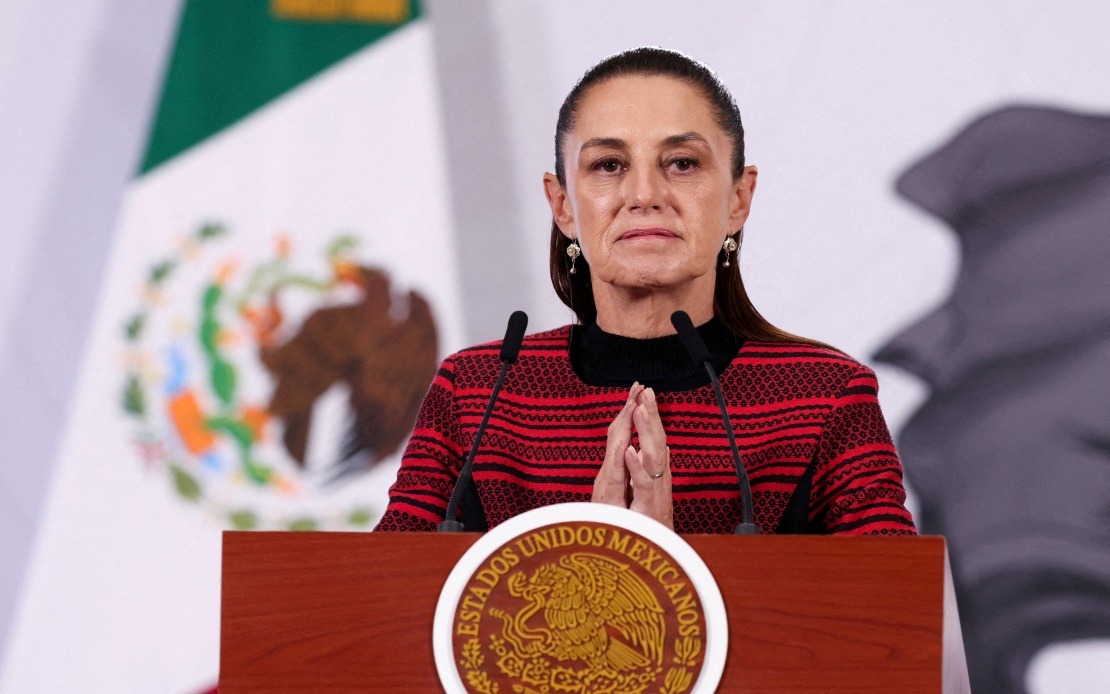
Mexican President Claudia Sheinbaum will attend the World Cup final at the invitation of United States President Donald Trump, a move that carries significant diplomatic undertones given the current tensions between the two neighbouring nations. The Mexican leader confirmed on Friday that Trump extended the invitation directly to her, with Canadian Prime Minister Mark Carney also expected to be present at the championship match between Argentina and Spain at East Rutherford near New York.
The decision represents an unexpected diplomatic overture. Just six weeks earlier, Sheinbaum had notably declined to attend the opening ceremony of the World Cup being held in her own country. Rather than viewing her absence as a snub, she reframed it as a gesture of principle by giving her ticket to an indigenous woman passionate about football, demonstrating her administration's commitment to grassroots inclusion and symbolic gestures toward marginalized communities.
Tensions between Mexico and the United States have remained elevated in recent months, centring on longstanding disputes over trade arrangements and cross-border security challenges. These issues have dominated bilateral discussions and created friction in the relationship between the two nations that share one of the world's most economically intertwined borders. The World Cup final invitation thus carries the weight of potential ice-breaking diplomacy at the highest levels.
Sheinbaum's direct personal relationship with Trump remains limited. Their solitary in-person meeting occurred in December during the World Cup draw ceremony held in Washington, meaning this World Cup final attendance would represent only their second face-to-face encounter as sitting leaders of their respective nations. The brevity of their personal acquaintance makes the significance of this invitation particularly noteworthy from a diplomatic perspective.
The Mexican government adjusted Sheinbaum's existing schedule in Quintana Roo state to accommodate her attendance at the final. Such rearrangements at the presidential level are rarely made casually, underscoring the importance placed on accepting Trump's invitation and the diplomatic message it sends regarding willingness to engage at important ceremonial moments.
Spain's royal family has committed significantly to the World Cup campaign, with King Felipe VI, Queen Letizia, Crown Princess Leonor, and Infanta Sofía all planning to attend the final to support their national team. The presence of multiple members of Spain's monarchy reflects the continental importance placed on the tournament and demonstrates how football finals serve as occasions for gathering political and royal figures across borders.
Argentina's approach contrasts markedly with Mexico's and Spain's enthusiasm. President Javier Milei has chosen not to watch the final from the stadium, citing superstitious beliefs. Argentina maintains strong cultural traditions around lucky rituals and omens, with many Argentines believing that presidential attendance at crucial matches can influence outcomes through mystical rather than practical means. This cultural consideration reflects how differently nations approach major sporting events through the lens of their distinct traditions and belief systems.
The World Cup tournament itself has become as much about geopolitical symbolism as athletic competition. For Malaysia and other Southeast Asian nations, the attendance patterns of world leaders at major sporting events demonstrate how sports diplomacy functions in the modern era. These visible manifestations of leadership presence at global spectacles communicate messages about bilateral relationships, domestic political priorities, and how nations position themselves within international hierarchies.
Sheinbaum's acceptance of Trump's invitation, despite friction between their governments, illustrates the complex calculus of modern diplomacy where ceremonial attendance serves functional diplomatic purposes. By appearing alongside Trump at this neutral ground—a sporting event rather than a formal diplomatic venue—both leaders potentially defuse tensions while maintaining their respective policy positions on trade and security matters.
The logistics and scheduling adjustments required to enable Sheinbaum's attendance demonstrate the serious nature of the diplomatic gesture from both sides. Presidential movements are rarely spontaneous or casually reorganized, so the willingness to reschedule her Quintana Roo activities signals that accepting Trump's invitation was deemed strategically valuable despite the short notice.
For Southeast Asian observers, this episode offers insights into how major powers navigate bilateral tensions through sporting diplomacy. The World Cup final becomes a platform where competing interests in trade policy and security can temporarily recede, allowing leaders to demonstrate openness to dialogue and engagement. Such moments, however brief, can establish atmospheres conducive to future negotiations on substantive policy disagreements.

