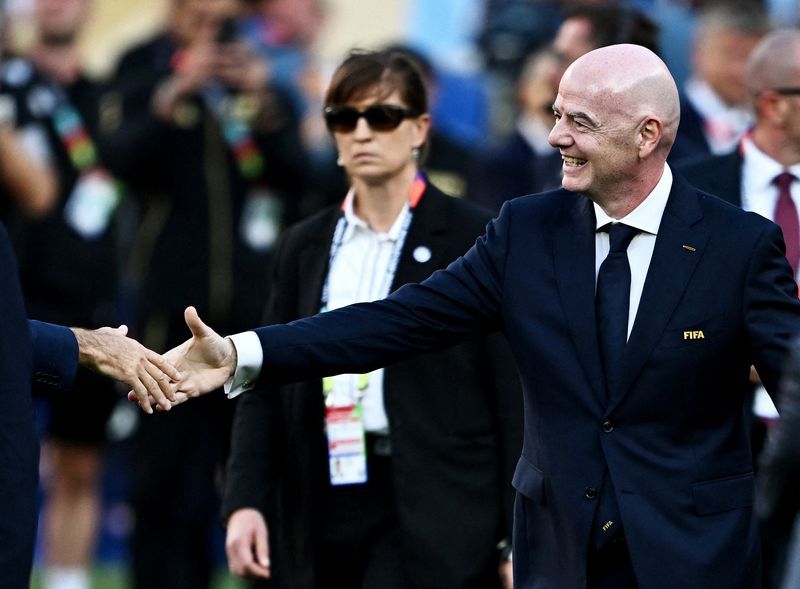
FIFA President Gianni Infantino's grip on power has become surprisingly resilient despite an international firestorm over his now-withdrawn plan to monetise portions of the World Cup's commercial future. The Mexican Football Federation and Argentina's football association have publicly declared their support for the Swiss administrator, signalling that divisions within world football's continental blocs run deeper than previously apparent and suggesting Infantino retains sufficient backing to weather the current storm.
Mexico's decision to support Infantino represents a significant fracture within CONCACAF, the regional confederation that oversees football across North America, Central America and the Caribbean. Earlier, CONCACAF had called for a "comprehensive reckoning" with Infantino's presidency, yet Mexico—which recently co-hosted the World Cup—has effectively rejected its own confederation's position. This split reflects broader fault lines in how different football nations view the governance crisis engulfing FIFA and suggests that Infantino's proposed electoral victory at the FIFA Congress scheduled for Morocco in March remains plausible despite turbulence that seemed insurmountable merely weeks ago.
The continental confederations reveal starkly divergent positions on Infantino's future. Africa's governing body CAF delivered unanimous backing for his leadership on Thursday, providing a crucial counterweight to opposition from Europe and Asia. UEFA, European football's governing body, has maintained its hard line, pledging to continue boycotting FIFA competitions. Similarly, Asia's confederation declared solidarity with UEFA and CONCACAF, effectively isolating Infantino from two of FIFA's largest regions by both membership and commercial revenue. Yet South America's CONMEBOL has adopted a more measured approach, insisting that any challenge to Infantino must proceed through a formal vote involving all 211 FIFA member associations rather than through extra-institutional pressure campaigns.
Argentina's backing carries particular symbolic weight given the nation's recent World Cup triumph and its status as a football superpower. The Argentine Football Association's letter to Infantino praised a decade of work "centred on the development of soccer worldwide" and commended what it described as institutional strengthening grounded in transparent governance principles. While acknowledging that the commercial rights proposal had generated confusion and admitting that procedural errors had occurred, Argentina's federation pivoted away from demands for Infantino's removal, instead advocating continued engagement under FIFA's existing leadership structure.
The controversy erupted following FIFA's proposed sale of commercial rights slices tied to future World Cups—an initiative that triggered shock and anger across the football world. The proposal breached expectations of consultation and democratic process that had become embedded within FIFA's governance framework over the past decade. Following a meeting in Rabat this week, FIFA issued an apology to member associations for the mistakes surrounding the initiative and pledged to review the institutional processes that had permitted such a proposal to advance without broader consensus. This mea culpa appears to have softened some resistance, though trust remains fragile.
Infantino's path to a fourth term in March now appears less predetermined than observers believed two months earlier. However, the absence of a credible rival candidate competing against him in the upcoming election substantially improves his prospects. While several nations including Croatia, England, and Albania have withdrawn their support, and players' union FIFPRO has denounced the proposal as an "abuse of presidential power," the fragmentation of opposition across geopolitical lines and the lack of unified alternative leadership have prevented a coordinated challenge to Infantino's reelection.
CROMEBOL's earlier statement emphasised concerns regarding "repeated unilateral actions taken without resorting to dialogue," highlighting tensions between Infantino's assertive executive style and confederations accustomed to consultative decision-making. The South American body stressed the importance of institutional reforms introduced over a decade ago specifically to enhance transparency and guard against the kind of secretive manoeuvring that characterised previous FIFA administrations under Sepp Blatter. This critique suggests that while opposition exists to Infantino's proposed actions, the underlying confidence in FIFA's modern governance architecture remains relatively intact—the problem, many confederations believe, lies with the individual rather than the system.
FIFA has maintained that all actions taken complied with its existing regulatory framework, contending that failures related to process and communication rather than substantive governance breaches. This technical defence appears to have resonated with confederations like CONMEBOL and Argentina, which prioritise institutional legitimacy and proper procedures above all else. For these football authorities, the path forward involves reform of internal processes and communication protocols rather than the dramatic rupture implied by forcing Infantino's resignation.
The Malaysian football community should note these developments carefully, as they illuminate fundamental questions about FIFA's governance that extend far beyond the immediate crisis. CONCACAF's internal divisions and the varied responses from regional confederations reflect competing visions of how world football should be administered. Whether FIFA operates through consensus-building and broad consultation or through concentrated executive authority will affect how major decisions—including future World Cup hosting rights, tournament formats, and commercial arrangements—are shaped. For Southeast Asian nations within AFC, the alignment with UEFA and CONCACAF positions signals strong regional preference for transparent, consultative processes, even as other parts of the world football pyramid respond differently.
Infantino's survival increasingly appears probable, yet the political damage inflicted by the commercial rights debacle has proven substantial and enduring. The March Congress will likely see him reelected, but his authority has been constrained, confederations have reasserted their institutional prerogatives, and the foundations of trust that had accumulated through his first decade have been noticeably eroded. The crisis has revealed that despite modernised governance frameworks and expanded transparency measures, FIFA remains vulnerable to executive overreach when checks and balances depend ultimately on the goodwill of powerful stakeholders rather than binding mechanisms that transcend political calculation.

