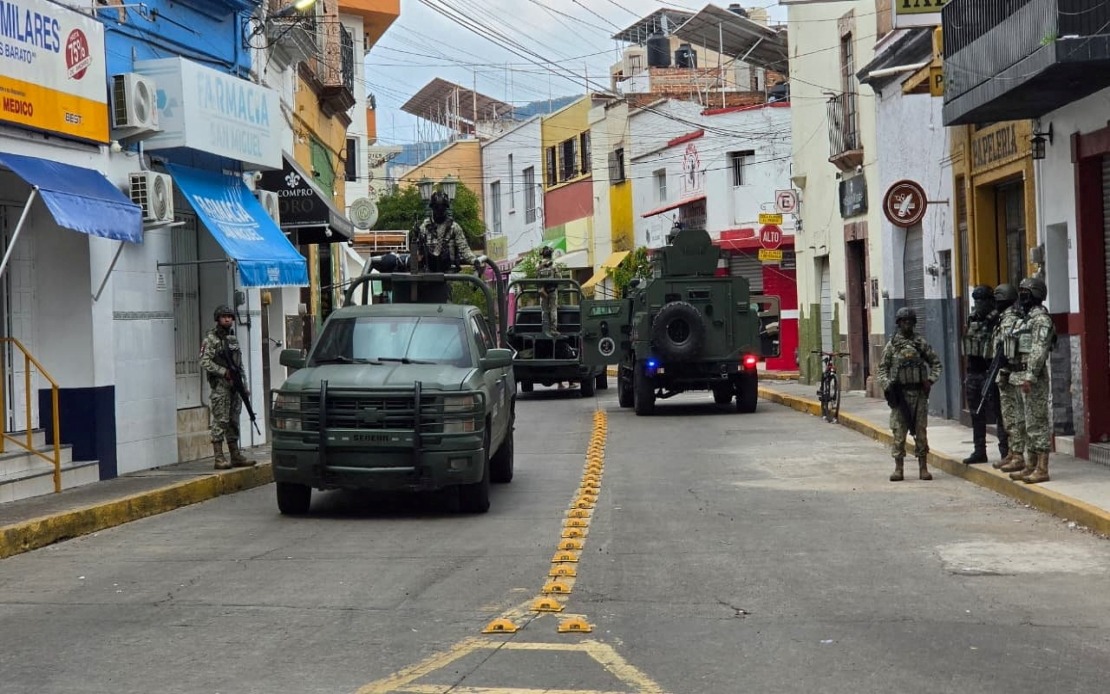
Mexico's Security Minister Omar Garcia announced on Thursday that authorities have arrested a suspected high-ranking enforcer within the Jalisco New Generation Cartel (CJNG), the individual accused of ordering the assassination of Uruapan Mayor Carlos Manzo. The arrest of Ramon Angel, known by the alias "El R1," culminated months of intelligence gathering and investigative work conducted through a coordinated operation involving police units, special forces, and military personnel. Garcia confirmed the development via the X social media platform, underscoring the significance of dismantling yet another layer of Mexico's organised crime hierarchy during an ongoing crackdown on cartel violence.
Manzo's murder on November 1, 2025, during Mexico's Day of the Dead celebrations sent shockwaves through the nation and catalysed widespread public outrage. The assassination of an elected municipal leader in broad daylight crystallised the deteriorating security situation in Mexico and became emblematic of the systemic challenge posed by drug trafficking organisations to democratic governance. The killing triggered a national investigation that has thus far resulted in 31 arrests spanning both criminal operatives and members of Manzo's own security apparatus, suggesting the penetration of local security structures by cartel interests.
Ramon Angel's position within the criminal underworld reflects the sophisticated operational structure maintained by major Mexican cartels. Identified as the principal commander of "Los Rs," one of the CJNG's most violent and active armed cells, Angel operated across multiple municipalities spanning Michoacan and Jalisco states. According to Garcia's statement, Los Rs maintained operations in Apatzingan, Uruapan, and Morelia in Michoacan, as well as extending into neighbouring Jalisco. The cell engaged in a diverse criminal portfolio encompassing extortion rackets, contract killings, and large-scale drug trafficking activities, positioning it as a significant revenue generator and enforcement mechanism for the parent organisation.
The assassination of Manzo represented a calculated act of political intimidation targeting a mayor elected on an explicit anti-cartel platform. During his tenure leading Uruapan, a municipality historically ravaged by intense turf wars between rival criminal organisations and government security forces, Manzo campaigned on promises to eliminate cartel influence from his jurisdiction. His murder thus functioned as both retaliation against perceived institutional resistance and a demonstration of the cartel's capacity to neutralise political opponents regardless of official position. This pattern of targeting elected officials has become increasingly prevalent in Michoacan, one of Mexico's most violence-affected states and a historic stronghold for organised crime networks.
The Jalisco New Generation Cartel represents one of Mexico's most formidable criminal organisations, commanding extensive resources and maintaining operational presence across multiple states. The CJNG has engaged in brutal turf wars with competitors whilst simultaneously extending its influence through infiltration of government institutions at local and state levels. The apprehension of mid-level commanders like Ramon Angel forms part of Mexico's broader strategy of decapitating cartel leadership structures, though such arrests often prove temporary setbacks rather than sustainable solutions to deeply embedded criminal networks.
The wave of public demonstrations following Manzo's killing underscored societal frustration with persistent violence and the apparent vulnerability of elected officials to assassination. Citizens across Mexico organised protests demanding stronger security measures and more effective government action against organised crime. The political symbolism of Manzo's death extended beyond his individual case, representing the broader struggle between state authority and criminal organisations vying for territorial and institutional control. His assassination became a rallying point for civil society movements questioning the government's capacity to protect public servants and ensure democratic processes.
Michoacan's position as a focal point of cartel violence reflects both geographical proximity to major drug trafficking routes and the historical entrenchment of criminal organisations within regional power structures. The state has witnessed decades of competition between multiple cartels, most recently dominated by the CJNG and its rivals. Security forces operate in an environment where cartel presence permeates municipal and state government, complicating law enforcement efforts and rendering many officials vulnerable to corruption or coercion. Uruapan specifically has endured repeated cycles of intense violence, making Manzo's election on an anti-crime platform both politically significant and extraordinarily dangerous.
The coordinated nature of the operation resulting in Angel's arrest, involving multiple security agencies and armed forces, reflects Mexico's commitment to sustained enforcement operations against high-value cartel targets. Such operations require extensive intelligence infrastructure, inter-agency coordination, and resources that Mexico has progressively developed over recent years. However, the cyclical pattern of arrests and continued violence suggests that whilst tactical successes against individual commanders yield meaningful disruptions, they fail to address underlying structural vulnerabilities enabling cartel operations. The simultaneous arrest of 31 individuals connected to Manzo's murder indicates the investigation uncovered an extended network of conspirators spanning criminal and official sectors.
For Southeast Asian observers, Mexico's struggle with organised crime and cartel violence offers sobering lessons regarding the challenges posed by entrenched criminal networks to democratic institutions. The ability of cartels to target elected officials, corrupt security personnel, and overwhelm local law enforcement capacity demonstrates how transnational criminal organisations can fundamentally undermine state capacity and citizen security. The case of Ramon Angel and Los Rs exemplifies the sophisticated hierarchical structures through which modern criminal enterprises operate, organisational models that regional governments must understand and counter through multi-faceted approaches extending beyond arrest and incarceration. Mexico's ongoing battle against the CJNG and allied organisations underscores the necessity of sustained, coordinated international cooperation in combating transnational organised crime threatening democratic governance across multiple nations.

