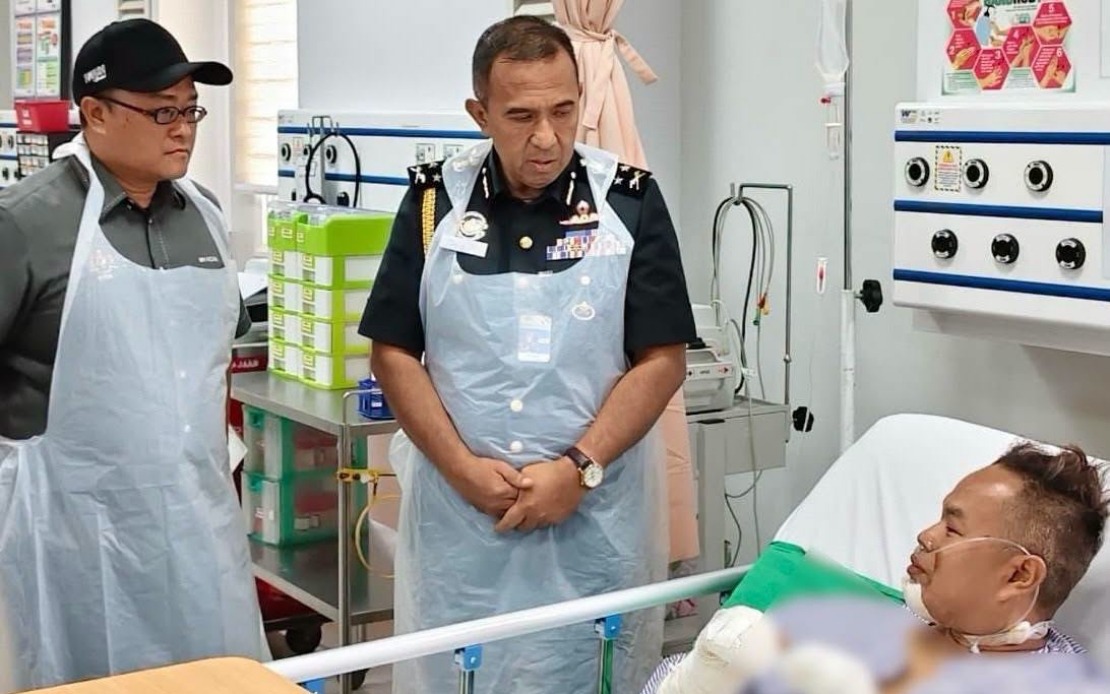
Two enforcement personnel from the Domestic Trade and Cost of Living Ministry (KPDN) were injured during field operations targeting illegal liquefied petroleum gas diversion schemes in Selangor, according to Minister Datuk Armizan Mohd Ali. The incidents occurred as part of Ops Tiris 4.0, a comprehensive nationwide initiative designed to intercept and prevent the unlawful decanting of subsidised LPG, which represents a significant drain on government resources and diverts essential energy supplies from legitimate consumers.
Assistant Enforcement Officer Mohammad Fauzi Baharuddin was the more seriously injured of the two personnel, sustaining injuries that have required ongoing medical treatment. His colleague, Enforcement Assistant R. Yoghanath, experienced minor injuries and was discharged following initial medical evaluation. Armizan publicly conveyed his prayers for Mohammad Fauzi's recovery and offered his well-wishes for Yoghanath's full healing, acknowledging the emotional strain such incidents place on the officers and their families.
The minister's public statement served a dual purpose: extending personal sympathy to the affected officers while simultaneously drawing attention to the inherent occupational hazards that KPDN enforcement teams encounter during their routine duties. Armizan emphasised that the injuries underscore the unpredictable and occasionally dangerous nature of field enforcement work, where officers confront situations that may escalate beyond their control. This acknowledgment represents an important recognition of workplace risks that often receive limited public attention, despite the critical role these personnel play in protecting consumer interests and maintaining public order.
Ops Tiris 4.0 forms part of a broader government strategy to combat the systematic theft of subsidised fuel through illegal decanting operations. These activities represent a serious economic leakage, as diverted LPG enters black markets or is sold at inflated prices, undermining the government's social welfare objectives. The operation demonstrates the ministry's commitment to maintaining the integrity of subsidy programmes, which remain crucial for lower-income Malaysian households. By targeting the decanting infrastructure and networks that facilitate these illegal activities, enforcement teams work to ensure subsidised resources reach their intended beneficiaries.
The incidents in Selangor highlight the enforcement challenges present across Malaysia's energy sector, where entrepreneurial criminal networks constantly devise methods to circumvent regulatory oversight. These operations require sustained field presence and direct confrontation with individuals who may resist enforcement action. The risks faced by KPDN officers parallel those encountered by other enforcement agencies operating in similar operational environments, yet these hazards frequently operate outside public consciousness until injuries or more serious incidents force wider recognition.
Armizan's statement extended beyond mere sympathy to function as a morale-building message for the broader KPDN enforcement community. By publicly commending the courage and sacrifice of enforcement personnel, the minister reinforced organisational values and acknowledged the personal costs incurred when officers leave their families to undertake dangerous work. This type of ministerial recognition proves particularly meaningful in enforcement hierarchies, where frontline personnel often operate with limited public visibility or acknowledgment despite shouldering substantial occupational risks.
The Selangor incidents occur against a backdrop of persistent subsidy diversion challenges that have attracted increasing government attention. As inflation pressures mount and household budgets tighten across the region, the integrity of fuel subsidy programmes becomes even more critical to social stability. Illegal LPG decanting represents not merely criminal activity but a form of economic parasitism that diverts resources intended for vulnerable populations toward illicit profit-making. Each successful enforcement operation disrupts established diversion networks and reinforces market integrity, albeit temporarily until new schemes emerge.
From a broader Southeast Asian perspective, Malaysia's experience with subsidy protection reflects challenges common across the region. Multiple ASEAN nations grapple with similar fuel diversion schemes, and best practices developed through operations like Tiris 4.0 potentially offer value to neighbouring governments facing comparable pressures. The development of enforcement protocols and inter-agency coordination mechanisms to combat subsidy fraud represents institutional knowledge that regional economies increasingly recognise as strategically important.
Minister Armizan's explicit prayers for the affected officers' recovery and his broader invocation of divine protection for all enforcement personnel reflected the deeply spiritual dimensions of public discourse in Malaysia. Such expressions resonate with Malaysian audiences regardless of the officers' individual religious backgrounds, serving as a unifying gesture that transcends sectarian boundaries. This rhetorical approach acknowledges the inherent uncertainties of enforcement work and reinforces the notion that officer safety represents a collective national concern rather than merely an occupational health matter.
Looking forward, the incidents raise questions about whether existing occupational safety protocols and field support mechanisms adequately protect KPDN personnel. Enhanced training, better equipment, and improved backup procedures could reduce injury risks, though complete elimination of such hazards remains impossible given the confrontational nature of enforcement work. The ministry may face pressure to evaluate its operational procedures and ensure that field teams receive appropriate support systems before, during, and after potentially dangerous interventions.
The commitment to Ops Tiris 4.0 and similar initiatives demonstrates that Malaysia's government recognises subsidy fraud as a persistent challenge requiring sustained enforcement attention. However, such operations only succeed when enforcement personnel possess adequate training, resources, and organisational support. Minister Armizan's public acknowledgment of the risks faced by these officers represents a first step toward ensuring that their contributions receive appropriate recognition, potentially encouraging recruitment and retention of personnel willing to accept the considerable occupational dangers inherent in subsidy protection work.

