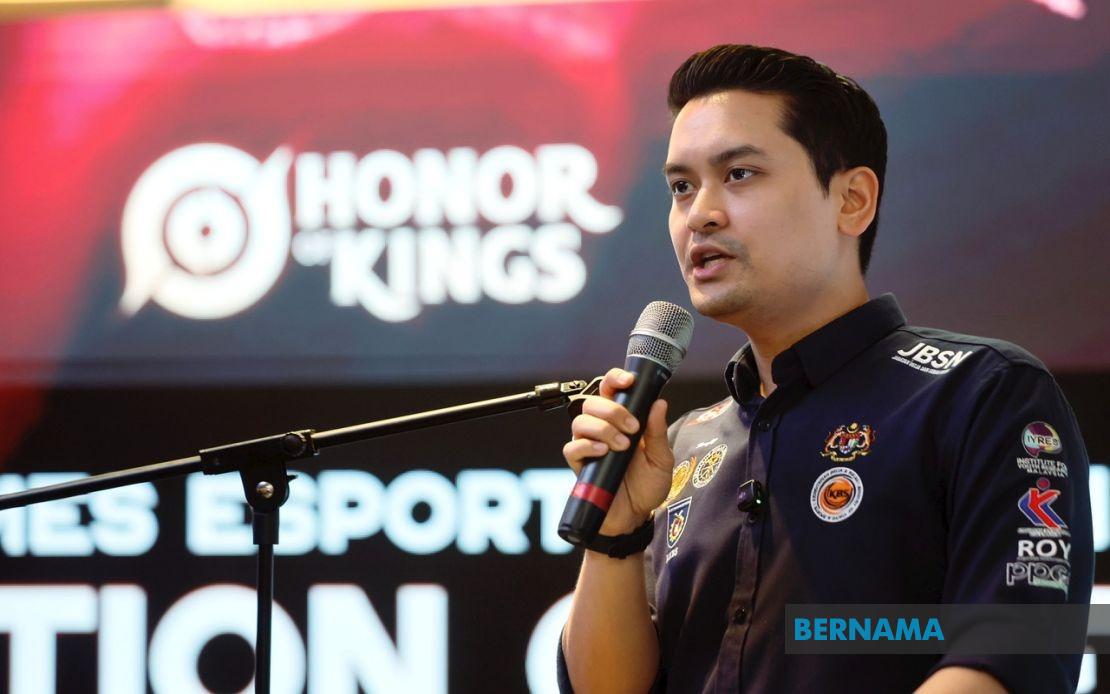
Malaysia's Youth and Sports Minister Dr Mohammed Taufiq Johari has moved to reassure the cycling community that mounting concerns raised by track cycling technical director John Beasley are receiving serious attention at the ministerial level. Speaking at the Honour of Kings Asian Games Qualifier in Kuala Lumpur on June 16, Taufiq emphasised that the government remains committed to resolving the issues without allowing them to derail the sport's competitive trajectory during a critical year for Malaysian cycling.
Beasley has become the focal point of an internal governance crisis within Malaysian cycling, with reports indicating his potential early departure from a post he was contracted to hold until January 31 next year. The British technical director has grown increasingly frustrated with several operational impediments, ranging from alleged political meddling in sporting decisions to structural inefficiencies that hamper grassroots development. These grievances have raised uncomfortable questions about how national sports bodies balance administrative oversight with athletic autonomy—a persistent challenge across Southeast Asian sporting organisations.
To demonstrate concrete action, the National Sports Council convened a comprehensive town hall session on June 8 that brought together all relevant parties under one roof. The gathering included representatives from the Malaysian National Cycling Federation, state cycling associations, coaching staff, and Beasley himself. This inclusive approach signals a departure from top-down decision-making, instead seeking consensus-based solutions that address systemic problems rather than merely symptoms. The session specifically tackled athlete selection protocols and the contentious issue of state associations releasing competitors for national championships—a recurring friction point that has disrupted national team preparation cycles.
Taufiq stressed that these discussions represent only the beginning of a broader institutional reform process. The ministry intends to hold follow-up meetings with Beasley and MNCF leadership to cement agreements and establish clear operating parameters going forward. The minister's language suggests acknowledgment that previous arrangements may have been inadequately defined, leaving room for misunderstanding and conflict between technical expertise and administrative authority. This recognition carries weight because Malaysian cycling has previously suffered from leadership transitions and coordination problems that weakened international competitiveness.
Critically, Beasley has signalled his willingness to remain at his post through the conclusion of 2024's marquee events, including the Commonwealth Games and the Asian Games. This commitment provides crucial stability during preparation phases when technical continuity directly translates into athlete performance gains. His assurance that athletes will not experience disruption in their training regimens or competition preparation offers immediate reassurance to competitors who have invested months in qualification attempts and skill refinement under his direction.
The underlying tensions illuminated by Beasley's complaints reflect deeper institutional challenges facing Malaysian sports administration. The allegation of political interference particularly resonates across the region, where the intersection of government authority and sporting governance remains contested terrain. State associations retaining control over athlete release decisions can inadvertently prioritise local considerations over national imperatives, fragmenting team coherence and diluting preparation quality. Addressing these dynamics requires recalibrating power-sharing arrangements without diminishing state bodies' legitimate roles.
Taufiq's commitment to providing an inclusive platform for stakeholder dialogue represents a philosophical pivot toward participatory governance. By explicitly rejecting unilateral decision-making, he acknowledges that sustainable solutions emerge when coaches, administrators, athletes, and federation leaders jointly diagnose problems and craft responses. This approach demands more time and political capital than directive authority, but generates buy-in that persists beyond individual disputes. For Malaysian cycling, which must compete at elite international levels while building sustainable grassroots pipelines, such institutional maturity carries strategic importance.
The minister's emphasis on long-term structural improvements across governance and grassroots development suggests recognition that Beasley's complaints symptomatise broader systemic deficiencies. Addressing athlete selection alone would be insufficient if underlying federation management, resource allocation, and coach development frameworks remain dysfunctional. Malaysian cycling's recent performance gains have largely depended on foreign technical expertise, making retention of experienced directors like Beasley commercially and strategically vital. The financial and reputational costs of losing such figures prematurely extend far beyond immediate competition calendars.
For Malaysian readers and broader Southeast Asian observers, this episode underscores the delicate balance required in modern sports administration. Technical directors imported to elevate athletic standards inevitably encounter administrative cultures and political constraints that differ markedly from their home federations. Successfully integrating such expertise demands institutional flexibility and genuine power-sharing rather than nominal consultation. Conversely, external technical staff must understand local contexts and invest in relationships beyond their immediate coaching remits.
The timing of these negotiations proves particularly sensitive given that 2024 represents a showcase year for Malaysian sporting ambitions. Performance outcomes at Commonwealth Games and Asian Games will significantly influence perceptions of administrative effectiveness and athletic trajectory. Should coordination failures or governance disputes undermine these campaigns, the reputational damage would extend well beyond cycling into public confidence in sports leadership more broadly. Conversely, demonstrating institutional problem-solving capacity during this high-stakes period could catalyse broader administrative reforms benefiting other sports.
Moving forward, the resolution framework being constructed will likely influence how other Malaysian sports federations approach similar tensions between foreign technical expertise and domestic administrative authority. Should the cycling model successfully balance accountability, athlete welfare, and technical autonomy, it could become a template for sports organisations across the region seeking similar expertise without surrendering institutional integrity. The ministry's openness to dialogue and structured problem-solving suggests willingness to evolve beyond traditional hierarchical approaches that have occasionally marginalised coaching perspectives in national sports planning.