The Malaysian Maritime Enforcement Agency (MMEA) has delivered substantial enforcement results during the first six months of 2024, recording RM2.29 billion in asset seizures and apprehending 516 individuals across various maritime offences. These figures underscore the agency's heightened operational tempo in safeguarding Malaysia's territorial waters and preventing cross-border criminal activity, a critical priority given the country's extensive coastline and strategic maritime position in Southeast Asia.
MMEA director-general Maritime Admiral Datuk Mohd Rosli Abdullah attributed these achievements to the agency's unwavering dedication toward protecting national sovereignty and upholding maritime law. Speaking at a community engagement event in Kuantan on July 16, he highlighted how integrated enforcement strategies and sustained operational commitment have yielded measurable success in disrupting illicit trading networks and protecting state revenue. The seizures reflect a comprehensive approach that addresses multiple forms of maritime transgression, from resource smuggling to tax evasion schemes.
The composition of seized assets reveals the diverse nature of maritime contraband moving through Malaysian waters. Local vessels accounted for the largest share, valued at RM2.11 billion, followed by narcotics worth RM86.06 million. Foreign fishing vessels, representing illegal incursions into protected waters, totalled RM66 million in confiscated assets. Smuggled cigarettes valued at RM25.16 million highlight the persistent problem of controlled goods being diverted out of Malaysia to evade excise duties and circumvent taxation mechanisms. Additional seizures included prawns worth RM5.2 million and diesel fuel totalling RM3.33 million, indicating enforcement activities spanning agricultural products, fuel smuggling, and broader economic crime.
The agency's operational focus extends beyond asset recovery toward systematic prevention of economic leakage and tax avoidance. Mohd Rosli emphasised MMEA's commitment to preventing smuggling of subsidised and price-controlled commodities, a particular vulnerability given Malaysia's economic model and neighbouring countries' price differentials. By disrupting these illicit supply chains, the agency protects both government revenue and legitimate domestic commerce, factors of increasing importance as Malaysia navigates economic pressures and inflation.
A significant recent operation exemplifies this enforcement capability. On June 23, MMEA personnel intercepted a cigarette smuggling vessel in Tawau, Sabah, seizing contraband and the vessel itself, with combined asset value estimated at RM64 million. This operation demonstrates the agency's capacity to conduct sophisticated, coordinated interventions in remote maritime zones, combining intelligence work with tactical execution. Such high-value seizures generate deterrent effects across smuggling networks and signal sustained enforcement presence in peripheral maritime regions prone to illicit activity.
MMEA's integrated approach involves collaboration with multiple enforcement agencies through coordinated operations such as Ops Tiris, a multi-agency initiative designed to combat cross-border crime and maintain maritime security. This collaborative framework reflects recognition that maritime threats transcend single-agency capability and require coordinated intelligence sharing, resource deployment, and operational planning. For Malaysian policymakers and regional observers, such integration signifies an evolving security architecture increasingly responsive to complex, transnational maritime challenges.
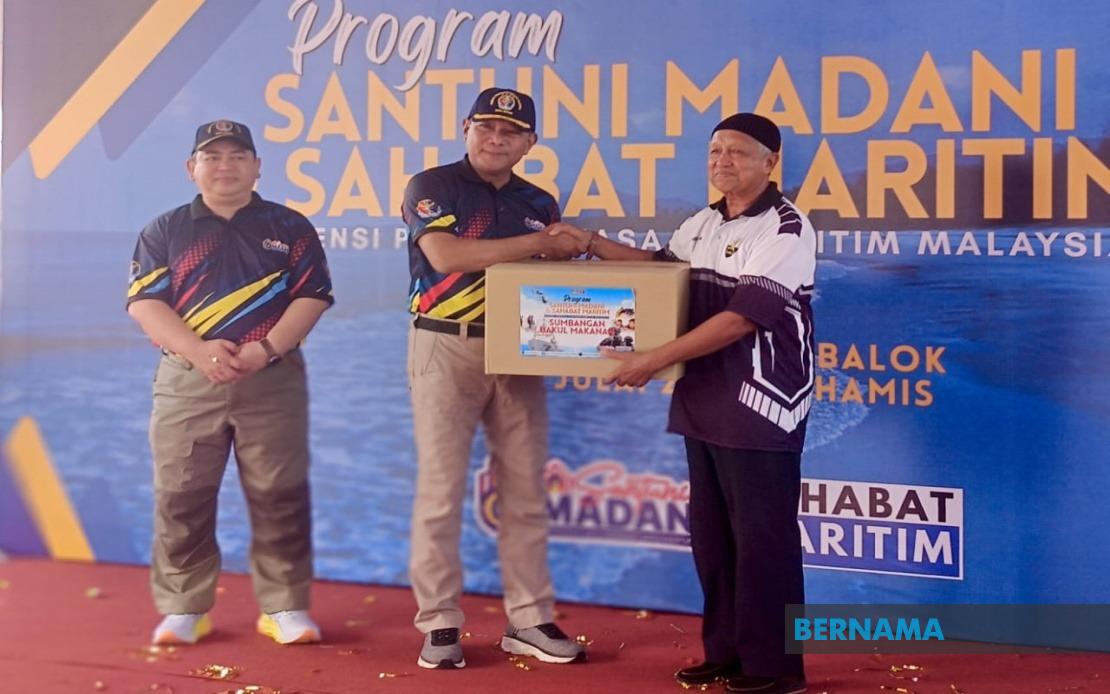
Beyond enforcement outcomes, MMEA has prioritised community engagement and awareness building through initiatives such as the Santuni MADANI and Sahabat Maritim programmes. These activities, conducted at coastal recreational areas like Pantai Rekreasi Balok, serve dual purposes: educating fishing communities and coastal residents about maritime safety regulations while strengthening institutional relationships with local populations. Such engagement proves essential in maritime enforcement, where community cooperation and intelligence provision often prove decisive in disrupting smuggling networks and preventing illegal fishing incursions.
The agency's operational mandate encompasses search and rescue, maritime crime prevention, and security assurance alongside traditional enforcement functions. This expanded scope reflects the multifaceted nature of contemporary maritime governance, where public safety, resource protection, and security concerns intersect. MMEA's commitment to balancing these responsibilities while maintaining operational effectiveness positions the agency as a cornerstone of Malaysia's maritime infrastructure and regional stability mechanisms.
For Southeast Asian context, Malaysia's maritime enforcement capacity carries regional significance given the shared challenges of piracy, smuggling networks, and illegal fishing affecting multiple countries. MMEA's operational success contributes to broader regional maritime security architecture and provides demonstrable evidence of enforcement capability relevant to bilateral and multilateral cooperation frameworks. The agency's achievements may inform discussions around regional capacity building and information sharing initiatives within ASEAN and broader Indo-Pacific security arrangements.
Looking forward, MMEA's trajectory suggests intensifying enforcement operations and enhanced inter-agency coordination will remain priorities. The RM2.29 billion seizure figure, if sustained or exceeded in subsequent half-years, would represent significant progress toward comprehensive maritime law enforcement. However, persistent challenges including sophisticated smuggling networks, resource constraints in remote waters, and evolving contraband methods suggest MMEA faces continuing operational demands requiring sustained political support and budgetary allocation.

