Prime Minister Narendra Modi and Indonesia's President Prabowo Subianto convened in Jakarta on Tuesday to forge closer strategic partnerships, underscoring the growing importance both nations place on their relationship amid an increasingly complex global landscape. The two leaders met at the Merdeka palace following an elaborate ceremonial welcome that demonstrated Indonesia's commitment to the engagement—a signal of how New Delhi and Jakarta view their bilateral connection as critical to shaping the region's future. This encounter represents Modi's second presidential visit to the archipelago since assuming office, building upon momentum established when Prabowo attended India's Republic Day celebrations as guest of honour the previous year.
The scope of conversations between the two leaders encompasses several interconnected strategic dimensions that reflect shared concerns across the region. Defence and security cooperation will anchor discussions, alongside parallel tracks addressing commercial ties, agricultural stability, energy procurement and the sourcing of minerals deemed critical to modern economies. Capacity development initiatives spanning healthcare and educational sectors round out an agenda designed to deepen institutional connections beyond government-to-government engagement. Indonesia's Foreign Minister Sugiono confirmed that eight formal agreements alongside multiple memorandums of understanding will materialise from this visit, cementing commitments across multiple domains.
Modi's three-day sojourn in Southeast Asia's largest economy commenced Monday afternoon when his aircraft touched down in Jakarta, escorted ceremoniously through Indonesian airspace by three military fighter jets—a gesture laden with symbolic weight regarding Jakarta's assessment of the bilateral partnership's significance. Prabowo's personal greeting at Halim Perdanakusuma Air Force Base rather than delegation of the task to subordinates conveyed presidential-level priority afforded to the Indian leader's visit. This inaugural stop before travels to Australia and New Zealand positions Indonesia as the cornerstone of Modi's broader Indo-Pacific engagement strategy, reflecting New Delhi's understanding that Indonesia's regional influence and geographic positioning make it essential to India's strategic architecture in the Indian and Pacific ocean corridors.
Defence procurement emerges as a particularly substantive component of bilateral discussions, with Indonesian interest in acquiring India's BrahMos supersonic cruise missile system advancing to advanced negotiation stages. This technological dimension of the relationship carries implications extending beyond hardware acquisition, encompassing broader frameworks for maritime security cooperation across shared waters and strategic chokepoints. Both nations maintain vested interests in ensuring freedom of navigation through critical shipping lanes connecting the Indian Ocean to Pacific approaches, making coordinated security arrangements mutually advantageous as geopolitical competition intensifies in these waters.
Beyond conventional military considerations, both governments are positioning themselves as alternative power centres within the Global South, a framing explicitly articulated by Indian Ambassador to Indonesia Sandeep Chakravorty in pre-visit remarks to journalists. The ambassador's observation that closer alignment between two of Asia's most influential democracies conveys a collective message about solidarity among developing nations reflects an emerging diplomatic narrative where India and Indonesia jointly assert agency in responding to shifting international dynamics. This positioning carries particular resonance given both nations' participation in the Group of 20 and BRICS frameworks, platforms through which they influence global economic and political trajectories.
Technological infrastructure represents an increasingly significant dimension of the partnership. A planned launch of the Indonesia Open Network, a digital commerce initiative modelled on India's sophisticated digital public infrastructure ecosystem, demonstrates how bilateral cooperation extends into emerging domains reshaping economic activity. This technology transfer dynamic allows Indonesia to leverage India's pioneering work in building inclusive digital systems while creating pathways for Indian companies and expertise to deepen penetration into one of Southeast Asia's largest markets. Such initiatives reflect recognition that contemporary great power competition increasingly unfolds through technological dominance and digital ecosystem development rather than solely through traditional military or trade mechanisms.
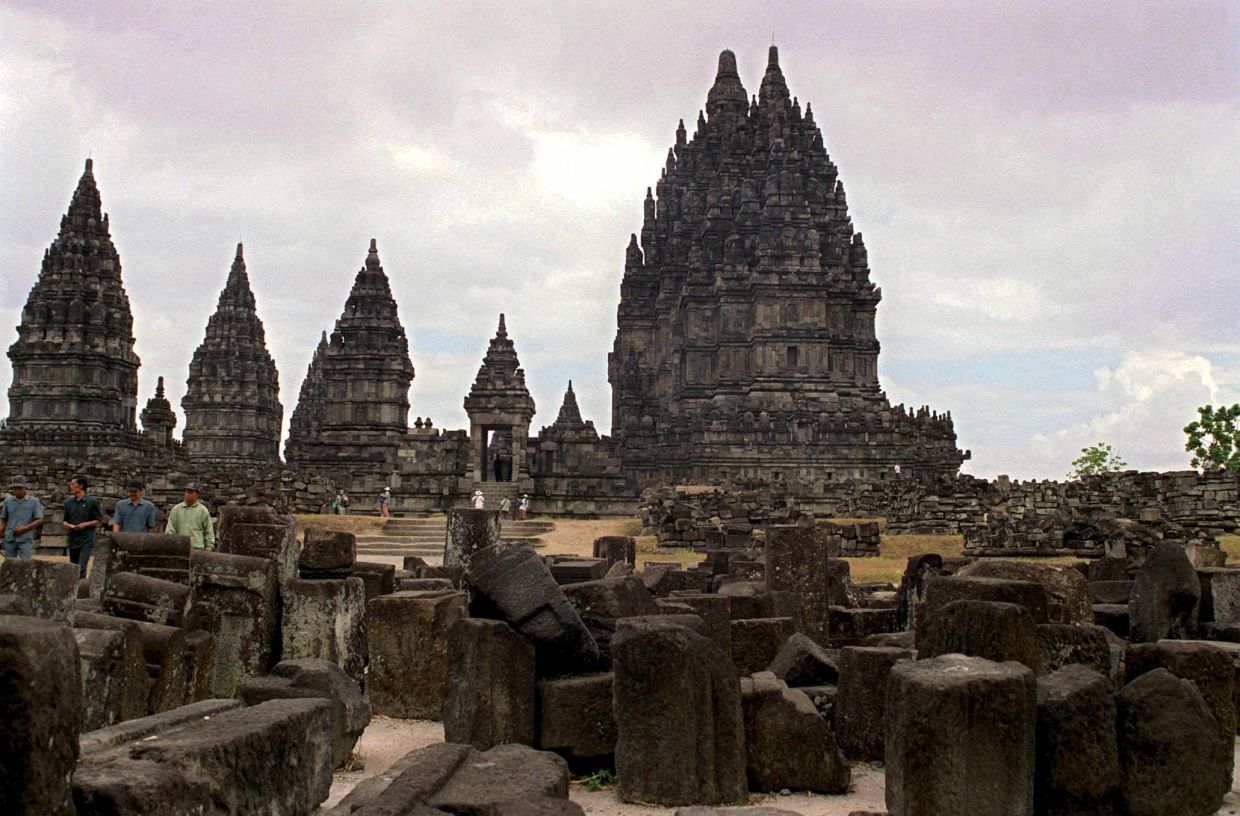
Cultural and heritage dimensions supplement the more overtly strategic components of the Modi-Prabowo engagement. Sugiono indicated that Modi would travel Wednesday to Yogyakarta, where an announcement regarding Indian-supported restoration efforts at the Prambanan Hindu temple—one of Indonesia's most significant cultural landmarks—is anticipated. This project, which emerged from commitments made during Prabowo's New Delhi visit, illustrates how nations operationalise shared civilisational histories and cultural ties as binding agents strengthening contemporary political relationships. Such initiatives carry domestic political value, appealing to constituencies within both nations who value cultural continuity and cross-civilisational respect.
Modi's schedule includes addressing Indonesia's Parliament, a platform affording him opportunity to articulate shared democratic values and coordinate messaging regarding the bilateral relationship to Indonesian lawmakers and the broader public. This parliamentary engagement elevates the visit beyond executive-level discussions into the realm of legislative and popular diplomacy, embedding the relationship across Indonesian political institutions. Subsequent engagement with Indonesia's Indian diaspora community further broadens the visit's scope, acknowledging how transnational populations maintain emotional and practical connections between countries, serving as constituencies with vested interests in strong bilateral relations.
The timing of Modi's visit arrives amid a period when traditional economic globalisation faces mounting pressures from geopolitical fragmentation, trade tensions and protectionist impulses across major economies. Within this environment, India and Indonesia's emphasis on strengthening mutual ties and building alternative frameworks for economic cooperation and security arrangements reflects pragmatic adaptation to a restructuring international order. Both nations recognise that regional powers must develop robust bilateral and multilateral arrangements capable of functioning amid reduced reliance on Western-dominated institutions and markets.
Food security and energy security emerged as explicit priorities within the bilateral agenda, concerns reflecting both nations' vulnerabilities to supply chain disruptions and commodity price volatility. Indonesia's resource wealth in energy commodities positions it as a crucial supplier to India's expanding economy, while India's agricultural capacity and expertise offer Indonesia insurance against potential food supply disruptions. These complementary economic profiles create natural foundations for deepened trade arrangements and strategic commodity partnerships insulating both nations from external shocks.
The relationship between India and Indonesia transcends bilateral commercial or security interests, instead functioning as a linchpin stabilising the entire Indo-Pacific region. Both nations possess sufficient scale, democratic legitimacy, and geopolitical influence to shape regional outcomes, meaning their alignment or discord reverberates throughout Southeast Asia, South Asia and into the broader Pacific sphere. Modi's visit underscores commitment to maintaining strategic coherence with Jakarta, essential given China's expanding influence throughout the region and the imperative for like-minded democracies to coordinate approaches to emerging challenges.
Looking forward, the agreements and understandings emerging from this visit will likely establish institutional frameworks enabling sustained engagement across multiple governmental agencies and sectors. Defence cooperation mechanisms will provide regular forums for military coordination. Trade and investment agreements will reduce commercial friction. Educational and health capacity-building initiatives will foster people-to-people connections transcending governmental structures. Collectively, these elements construct relationships resilient against shifting political winds, ensuring that bilateral partnerships weather domestic political transitions and personality changes among leadership.
Modi's departure to Australia on Wednesday after the Yogyakarta cultural announcement continues his regional engagement arc, positioning India as an active Indo-Pacific power cultivating relationships with major regional players. His three-nation visit sequence—Indonesia, Australia, New Zealand—signals consistent Indian prioritisation of democratic partners capable of contributing to regional stability and prosperity. For Indonesian observers, Modi's choice to commence his Indo-Pacific tour in Jakarta rather than elsewhere affirms that New Delhi views the Indonesian relationship as foundational to its broader regional strategy, a recognition of Jakarta's irreplaceable position in Asian geopolitics.

