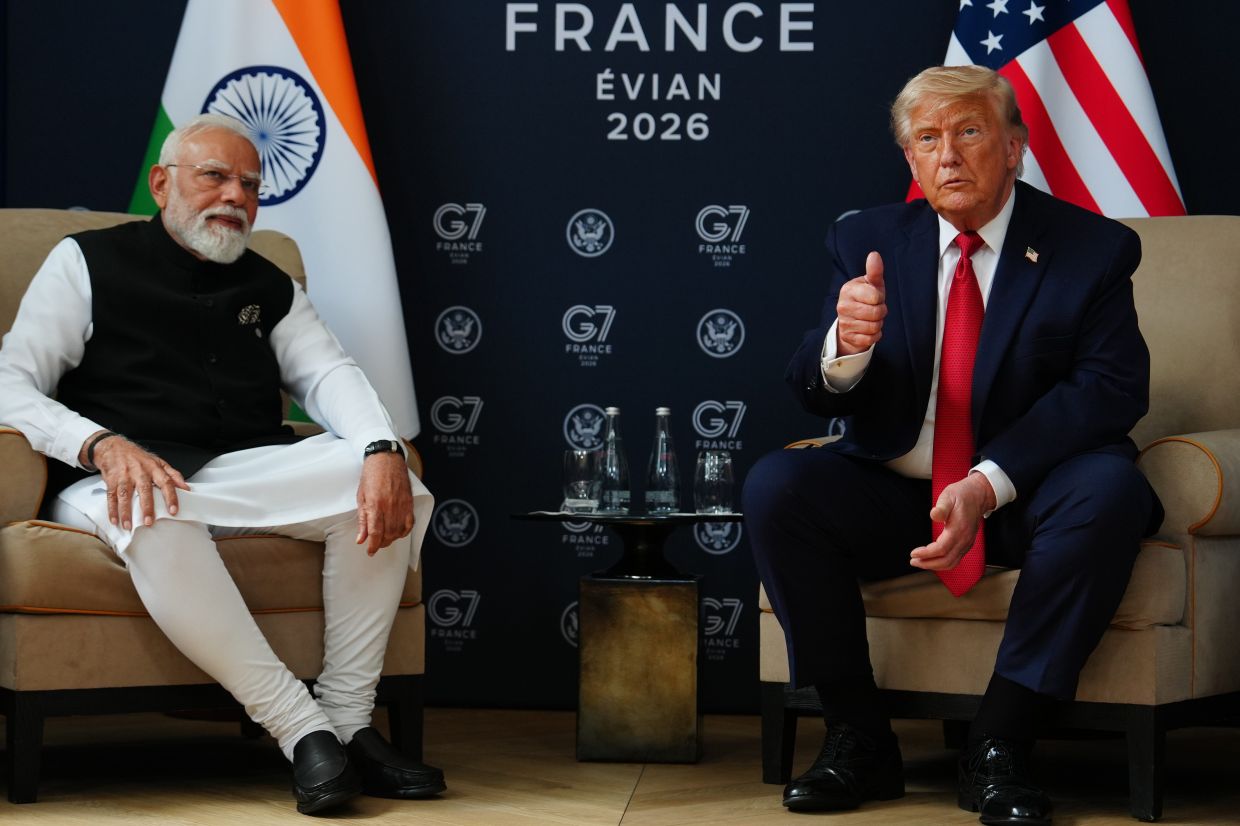
Indian Prime Minister Narendra Modi has signalled substantial momentum in protracted trade negotiations with the United States, declaring that discussions have achieved "significant progress" during his meeting with President Donald Trump on the margins of the G7 summit in Evian, France. The diplomatic encounter, which took place on Wednesday and represented their first in-person discussion since February 2025, yielded statements from New Delhi's foreign ministry emphasising the leaders' collective satisfaction with how negotiations toward an interim bilateral trade agreement have progressed. Trump subsequently told assembled reporters that the two nations stood on the precipice of a deal, remarking that they were "very close" to resolving outstanding issues.
The American president's characteristically colourful assessment of Modi, whom he described as "the most beautiful looking man" while simultaneously noting his formidable negotiating prowess, reflected the generally positive tenor of discussions between Washington and New Delhi. Trump's observation that Modi was "like an angel, but actually he's a killer" underscored the competitive yet cooperative nature of the bilateral relationship, where both nations pursue their economic interests with determination whilst maintaining strategic alignment in the Indo-Pacific region.
The two governments have established an ambitious framework for deepening commercial ties, having set a target of expanding bilateral trade to USD500 billion by 2030—a figure that would represent a dramatic expansion from current levels and reflect the growing strategic importance both nations place on their economic partnership. Multiple rounds of negotiation have focused on resolving contentious issues surrounding market access and tariff structures, areas where divergent interests have historically complicated discussions. The latest round of talks will be advanced by Jamieson Greer, the US Trade Representative, who is scheduled to visit India next week to continue deliberations on outstanding matters.
Progress has been uneven, however, and recent developments have complicated the negotiating landscape. Earlier momentum achieved in February, when both sides reached an initial understanding for a trade framework, subsequently stalled following the United States Supreme Court's striking down of Trump's sweeping tariff measures. In response, the Trump administration initiated investigations into alleged unfair trade practices conducted by multiple nations, including India, whilst simultaneously imposing a blanket 10 percent tariff regime that affected numerous trading partners. These enforcement actions introduced uncertainty into ongoing negotiations and slowed what had been constructive bilateral engagement.
Indian Commerce Minister Piyush Goyal provided an encouraging assessment in early June, declaring that the countries had completed approximately "99 per cent" of the initial component of a comprehensive trade arrangement. Such specificity suggested that outstanding disagreements represented relatively narrow technical and commercial issues rather than fundamental strategic incompatibility. The directive issued by Modi and Trump for officials to accelerate work toward achieving a "commercially meaningful agreement at the earliest" reinforced their commitment to bridging remaining gaps and delivering tangible results to their respective business communities and constituencies.
Beyond the trade agenda, the bilateral dialogue addressed security and humanitarian concerns stemming from regional conflicts. Modi raised the issue of safety for Indian seafarers engaged in maritime commerce, particularly given the volatile situation in the Middle East where an American military operation on June 10 resulted in the deaths of three Indian sailors aboard a commercial vessel off Oman's coast. The incident underscored the vulnerabilities faced by Indian nationals working in regions affected by geopolitical tensions and highlighted the importance of coordinated safety protocols, particularly as tensions surrounding Iran and the implementation of Iran-US agreements continued to shape regional dynamics.
India has borne significant economic consequences from Middle Eastern instability, experiencing disruptions to critical energy imports that have reverberated through the broader economy. Iran's actions regarding the Strait of Hormuz, one of the world's most strategically vital waterways through which enormous quantities of oil and liquefied natural gas transit daily, have constrained supply flows and influenced global energy pricing. The closure or restrictions on this chokepoint have particular implications for energy-dependent economies throughout Asia, with India requiring substantial hydrocarbon imports to fuel its expanding industrial base and burgeoning electricity demand.
Modi's warnings at the G7 summit reflected India's vulnerability to externally-driven supply chain disruptions, particularly across energy, fertiliser, and food sectors where global trade remains essential. The Indian premier cautioned that ramifications of Middle Eastern conflicts would persist for an extended period, with developing nations in the Global South disproportionately affected by elevated commodity prices, reduced availabilities, and inflationary pressures. This framing positioned India within a broader coalition of developing economies advocating for peaceful resolution of regional conflicts and for consideration of downstream economic consequences borne by nations without direct involvement in hostilities.
The convergence of trade negotiations with security and humanitarian diplomacy reflects the multifaceted nature of modern US-India relations, where economic partnership cannot be isolated from regional security dynamics and energy security considerations. Both Washington and New Delhi recognise that comprehensive bilateral engagement requires addressing interconnected challenges spanning commerce, defence cooperation, and regional stability. The momentum evident in trade discussions, combined with constructive dialogue on security matters, suggests that both governments view their relationship as sufficiently important to warrant sustained diplomatic investment despite periodic complications.
For Malaysia and other Southeast Asian nations, the trajectory of US-India trade negotiations carries significance beyond bilateral South Asian dynamics. A successful comprehensive trade arrangement between Washington and New Delhi could reshape regional commercial architecture, potentially influencing trade patterns and investment flows throughout Asia. India's deepening economic engagement with the United States reflects its strategic positioning as a counterweight to Chinese influence, a dynamic that reverberates through regional geopolitics and investment decisions by multinational corporations evaluating supply chain restructuring. The emphasis both leaders placed on achieving results suggests determination to demonstrate tangible progress to their domestic constituencies and international observers monitoring broader US-Asia economic strategy.