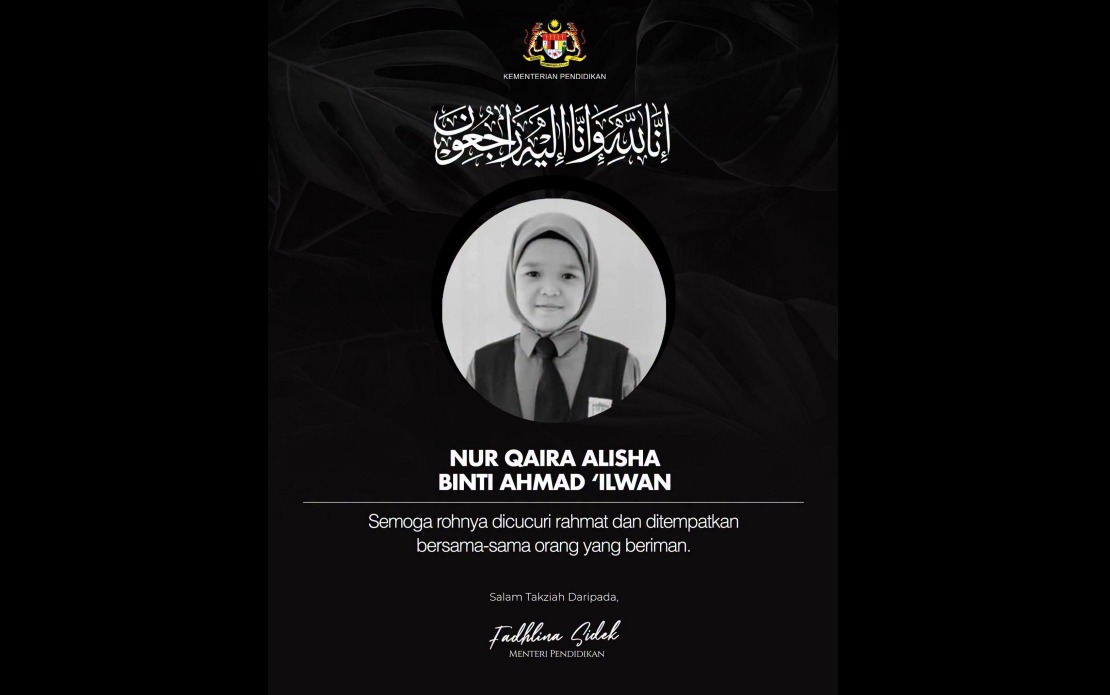
Education Minister Datuk Seri Fadhlina Sidek has instructed the Ministry of Education's Integrity Unit to pursue further investigation into a formal complaint submitted by the family of nine-year-old Nur Qaira Alisha Ahmad Ilwan, whose death in April has raised serious questions about duty of care in Malaysian schools. The minister's directive comes after the Kedah State Education Department already conducted preliminary inquiries, and signals that the matter will now receive heightened scrutiny at the federal level. Fadhlina emphasised that any subsequent action must adhere strictly to established regulations and be guided by fairness towards all stakeholders involved.
The case has captured public attention because of its tragic circumstances and the apparent disconnect between documented medical guidance and school practices. Nur Qaira had lived with a serious cardiac condition since infancy—diagnosed when she was just three months old—which fundamentally constrained her physical capabilities and required careful medical oversight throughout her schooling. Her condition was so significant that the school had formally exempted her from participation in routine sports activities, a decision documented through medical correspondence sent to the institution.
Yet according to her parents' account, during the annual sports house selection event held on April 15, a teacher directed Nur Qaira to compete in a running race despite the school's documented awareness of her medical exemption. The decision to have her participate in strenuous physical activity appears particularly troubling given that the school possessed explicit medical evidence of her unsuitability for such exertion. Within nine days of the sports event, Nur Qaira's condition deteriorated sharply. She was hospitalised at Sultanah Bahiyah Hospital on April 24 presenting with acute symptoms including severe vomiting and notable facial swelling.
Medical examination revealed that her condition had progressed to heart failure, specifically attributed to decompensated dilated cardiomyopathy—a life-threatening complication of her underlying cardiac disease. The progression from participation in the running event to hospitalisation and subsequent diagnosis suggests a direct causal relationship that warrants thorough investigation. Despite aggressive medical intervention, her condition proved irreversible, and Nur Qaira died while under hospital care. The proximity between the physical exertion and her clinical deterioration has prompted legitimate questions about whether proper protocols were followed at the school.
Fadhlina's statement on the matter, posted via Facebook, emphasised the Education Ministry's commitment to student safety and welfare as fundamental institutional priorities. She stressed that the ministry recognises its responsibility to protect pupils and acknowledge the gravity of any incident affecting a student's wellbeing. The minister also extended formal condolences to Nur Qaira's parents and extended family, offering prayers that they find solace, patience, and emotional strength as they navigate their profound loss. Such compassionate acknowledgment from the ministry's top leadership appears intended to signal that the family's grief is taken seriously at the highest administrative level.
The case raises critical systemic questions about how Malaysian schools manage students with documented medical conditions and whether current protocols adequately protect vulnerable pupils. Schools receive medical exemption letters specifically to ensure that children with health constraints are not exposed to activities that could trigger serious complications. The apparent discrepancy between having received such documentation and subsequently instructing the pupil to participate in demanding physical activity suggests either a failure in communication protocols, inadequate training of teaching staff regarding medical accommodations, or possibly negligent disregard for established safeguards.
For Malaysian parents—particularly those with children managing chronic health conditions—this tragedy underscores the importance of maintaining detailed medical documentation at their child's school and potentially establishing direct lines of communication with relevant staff members. Many schools employ medical exemption systems, but as Nur Qaira's case demonstrates, having such systems in place does not automatically guarantee their consistent application. Parents may now feel compelled to seek additional assurances beyond written exemption letters, such as explicit conversations with teachers and administrators about specific activities their child should avoid.
The involvement of the MOE's Integrity Unit signals that the investigation will examine not only the immediate circumstances surrounding April 15 but potentially broader questions about institutional responsibility and accountability. Integrity units within government agencies typically focus on matters involving professional conduct, adherence to regulations, and potential breaches of duty. Such investigations can lead to disciplinary actions against staff members, institutional policy reviews, or recommendations for systemic improvements to prevent similar incidents. The family of Nur Qaira and the broader Malaysian public will likely scrutinise whether the investigation produces meaningful findings and whether recommendations are implemented to strengthen protections for other vulnerable students.
This incident arrives amid broader discussions in Malaysia about student welfare, school safety, and the duties schools owe to pupils under their supervision. Education institutions operate in loco parentis—acting as guardians during school hours—which carries significant legal and ethical obligations. When a school possesses explicit medical information suggesting a child should not participate in particular activities, choosing to have that child participate in those activities represents a potential breach of that guardianship obligation. Whether intentional negligence, administrative oversight, or miscommunication, the consequences have proven devastating for Nur Qaira's family and carry implications for how the education system approaches medical accommodation going forward.

