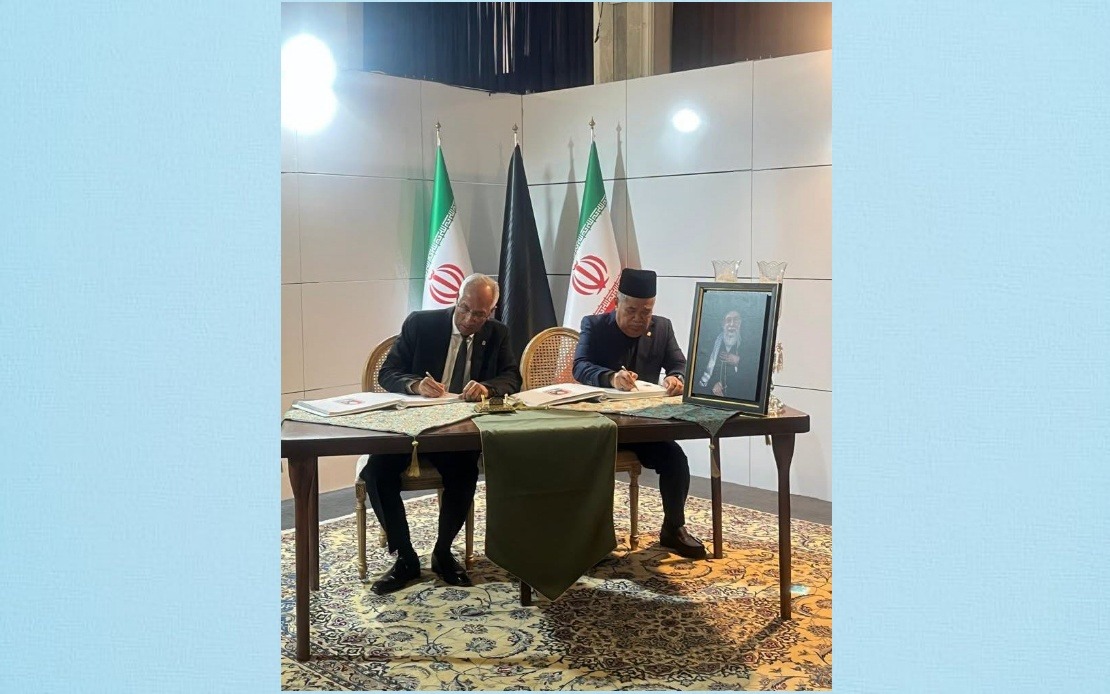
Malaysia's Minister of Agriculture and Food Security Datuk Seri Mohamad Sabu headed an official government delegation to Tehran this week to participate in mourning ceremonies for Ali Khamenei, the former Supreme Leader of Iran whose death marked a significant moment in Middle Eastern geopolitics. The minister's presence at the Grand Mosalla, one of Iran's most important religious venues, underscores the diplomatic importance Malaysia attaches to its relationship with the Islamic Republic, and reflects broader Southeast Asian engagement with Iranian affairs during a period of regional transition.
Khamenei's passing in late February following what Iranian officials characterized as a joint military operation by the United States and Israel sent shockwaves through the Muslim world and triggered an extended period of national mourning in Iran. The decision to hold formal tribute ceremonies more than one hundred days after his death reflects the complexity of state funeral arrangements in Iran and the significance of bringing together international delegations from across the Islamic world. The extended timeline allowed various nations to coordinate their participation and demonstrate solidarity with the Islamic Republic during this transitional period.
The ceremonial proceedings themselves unfolded across multiple sacred locations within Iran, beginning in the capital Tehran before moving through historically significant cities. From Tehran, the processions were scheduled to proceed to Qom, a major centre of Shia Islamic learning and pilgrimage, before continuing to Najaf and Karbala in Iraq, both of which hold immense spiritual significance in Shia tradition. The eventual destination was the Imam Reza Shrine in Mashhad, located in northeastern Iran, where Khamenei's final burial was scheduled for July 9, marking the culmination of the nationwide mourning period.
Upon arrival in the Iranian capital, Mohamad was formally received by Mohammad Bagher Ghalibaf, Speaker of the Iranian Parliament, and Abbas Araghchi, Iran's Foreign Minister. These high-level receptions demonstrated Iran's appreciation for Malaysia's representation and the diplomatic weight attached to the Malaysian delegation's attendance. The involvement of such senior Iranian officials in welcoming the Malaysian party signals the importance both nations place on their bilateral relations and Malaysia's standing within the broader Islamic world.
The minister used the occasion to offer prayers for the deceased, reflecting the religious dimensions of the state visit alongside its diplomatic character. In a Facebook post documenting the event, Mohamad expressed wishes that divine mercy would be bestowed upon Khamenei and that his sins would be forgiven, invoking traditional Islamic supplications for the deceased. These remarks underscored not merely the official nature of Malaysia's attendance but the genuine spiritual recognition Malaysia's leadership offers to the Iranian people during their period of collective grief.
Malaysia's participation in these ceremonies holds particular significance given the country's positioning as a moderate Muslim-majority nation that maintains diplomatic relations across diverse geopolitical lines. By dispatching the Agriculture Minister as the head of delegation, Malaysia demonstrated respectful engagement without sending the highest-ranking officials, a calibrated diplomatic approach that acknowledges Iran's importance while maintaining Malaysia's traditional balancing act between various international actors. The Malaysian government's decision to participate reflects the longstanding ties between Kuala Lumpur and Tehran, ties that encompass trade, cultural exchange, and shared Islamic heritage.
The timing of these ceremonies in early July coincided with ongoing regional developments and international diplomatic engagements. Iran's succession process and the consolidation of new leadership represented a critical juncture for the Islamic Republic's domestic and foreign policy direction. Malaysia's presence, alongside delegations from other nations, contributed to the international dimension of this transition and offered an opportunity for Malaysian officials to engage with senior Iranian counterparts at a moment when policy directions were being established.
Khamenei's leadership had spanned several decades and encompassed periods of significant tension between Iran and Western powers, as well as evolving relationships with regional states. His death marked the end of an era in Iranian politics and prompted reassessment of the nation's trajectory across various domains including nuclear diplomacy, regional security, and economic development. For Malaysia and other Southeast Asian nations, these developments held implications for their own engagement strategies with Tehran and their roles in broader multilateral forums addressing Middle Eastern affairs.
The extended mourning ceremonies across multiple locations within Iran and Iraq reflected the transnational nature of Shia Islam and Khamenei's significance within that religious and political framework. The inclusion of Iraqi holy cities within the ceremonial circuit acknowledged Iran's deep connections to Iraq and the shared Shia heritage linking both nations. Malaysian participation in these processions and observances demonstrated the inclusive nature of grief and commemoration within the Islamic world, where sectarian and national boundaries are often transcended by shared spiritual bonds.
The logistics of coordinating international delegations across multiple countries during an extended mourning period presented practical challenges but also opportunities for bilateral engagement. Malaysian officials present in Iran would have had chances to conduct discussions with Iranian government representatives, discussing matters of mutual concern ranging from economic cooperation to regional security issues. Such state visits, even when centred on solemn occasions, typically incorporate diplomatic discussions that advance national interests and strengthen bilateral frameworks.

