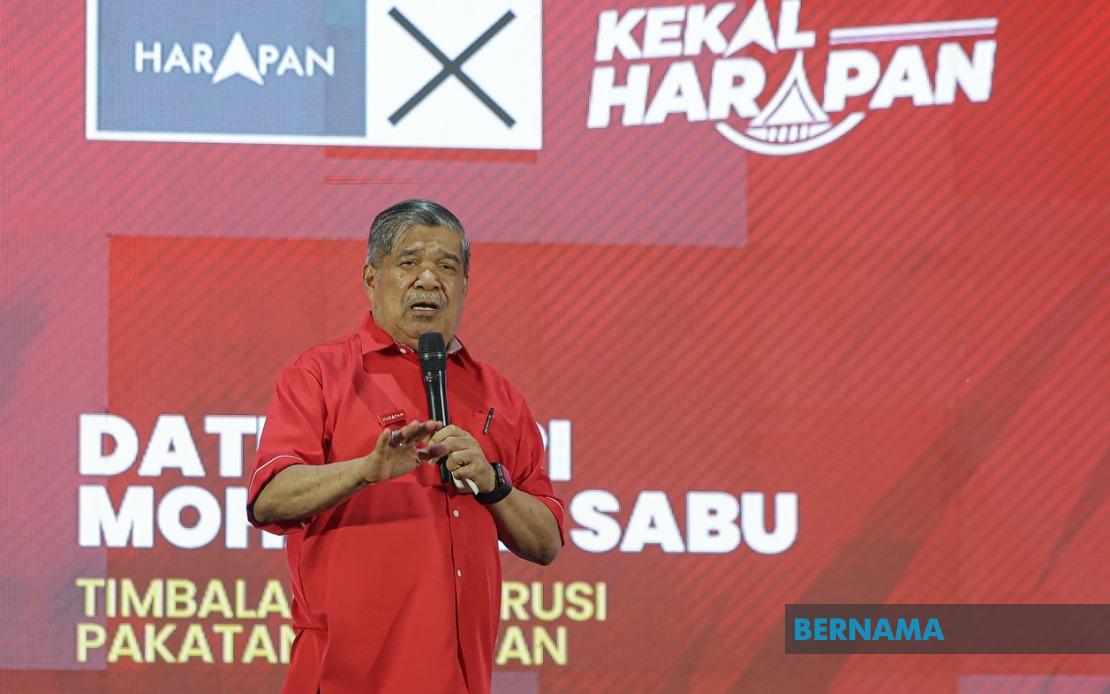
Datuk Seri Mohamad Sabu, the president of Amanah, has issued a forceful appeal to voters in Negeri Sembilan to resist the growing trend of what he terms 'marriage-divorce' politics, a practice he contends threatens the foundations of Malaysia's democratic system. Speaking in Seremban on July 22, the seasoned political figure expressed deep concern about the pattern of parties switching allegiances and forming tactical coalitions purely to secure electoral advantage, arguing that such behaviour corrodes public trust and destabilises the nation's political landscape.
At the heart of Mohamad Sabu's critique lies a fundamental concern about political opportunism. The practice he describes involves parties abandoning long-held commitments to ideology and principle in favour of expedient alliances that exist solely to win elections or secure ministerial positions. This phenomenon, he suggests, has become sufficiently entrenched in Malaysia's political culture that voters must now actively guard against it by scrutinising the records and motivations of parties seeking their support. His remarks underscore a growing frustration within progressive political circles about the cyclical nature of coalition-building in Malaysian politics, where pragmatism often trumps principle.
To illustrate his argument, Mohamad Sabu traced a specific party's political trajectory over recent years, highlighting what he characterised as a bewildering sequence of reversals and realignments. He recounted how certain politicians first aligned themselves with Barisan Nasional, subsequently withdrew to join Pakatan Rakyat, then divorced that coalition before returning to UMNO-BN. Following a brief tenure within that arrangement, they moved again to Bersatu, only to part ways once more. The current attempts to court fresh political partners, he suggested, represent merely the latest chapter in an exhausting saga of political musical chairs that serves no purpose beyond the accumulation of power by those involved.
The Amanah president's warning carries particular resonance given Malaysia's recent political volatility. The period since the 2018 general election has witnessed unprecedented flux in coalition arrangements, with several governments rising and falling as parties recalculated their strategic interests. This instability has had measurable consequences for policy continuity and public confidence in institutions. Mohamad Sabu's intervention frames the ongoing debate not merely as a matter of tactical political manoeuvring but as a structural threat to Malaysia's ability to pursue coherent long-term development and governance objectives.
From a Malaysian governance perspective, the phenomenon Mohamad Sabu identifies points to weaknesses in institutional safeguards and party discipline that have traditionally underpinned democratic systems in the region. Unlike Westminster-style systems where party-hopping carries greater electoral consequences through constituency-based accountability, Malaysia's mixed electoral architecture has sometimes enabled politicians to maintain power despite switching allegiances. This asymmetry creates perverse incentives that reward opportunism over consistency. Voters in Negeri Sembilan and elsewhere thus face the burden of enforcing accountability through the ballot box, a responsibility that requires sophisticated political judgement.
The implications of this trend extend beyond the immediate question of Negeri Sembilan politics. If parties can successfully accumulate and maintain power through coalition engineering divorced from ideological coherence, the entire project of holding elected officials accountable to a consistent platform becomes compromised. Voters cannot reliably predict what policies their elected representatives will pursue or what principles will guide their decisions. This uncertainty introduces a form of political risk that damages the social contract between citizens and their representatives, creating cynicism about democratic processes themselves.
Modern Malaysian politics increasingly demands that voters distinguish between parties that maintain structural consistency in their policies and values across electoral cycles and those that treat political positioning as entirely malleable. This represents a significant shift from the era when major coalitions dominated the landscape almost unchallenged. The fragmentation of the political system has created opportunities for smaller parties and ambitious politicians to exercise disproportionate influence through targeted coalition membership. Mohamad Sabu's intervention effectively calls for a form of voter discipline that would penalise this kind of behaviour through electoral rejection.
For Southeast Asian observers, the Malaysian experience illuminates broader questions about how emerging democracies can institutionalise commitment to consistent principles in their political systems. The region contains numerous examples of parties and politicians that have engaged in strategic repositioning to maintain relevance and power. Whether voters in individual nations choose to penalise this behaviour through electoral sanctions remains a critical factor in determining whether systems evolve toward greater stability and accountability or continue cycling through periods of acute instability.
The Amanah president's appeal ultimately reflects a conviction that Malaysian voters possess both the capacity and responsibility to reshape political incentives through their electoral choices. By consciously rejecting parties that demonstrate serial commitment changes, voters can signal to the broader political class that power acquired through coalition opportunism cannot be sustainably maintained. Whether this message resonates sufficiently to alter political behaviour in the coming electoral cycle remains to be seen, but the urgency with which Mohamad Sabu has framed the issue suggests that reformist political actors view the consolidation of damaging practices as an increasingly acute threat.

