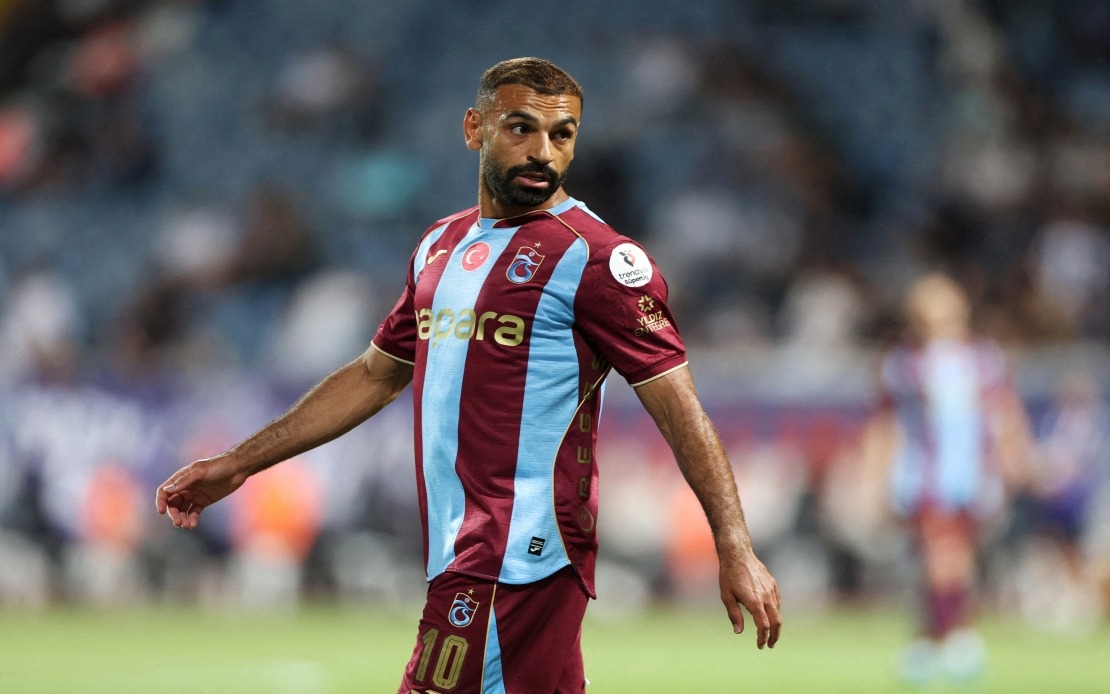
Mohamed Salah's move to Turkish football club Trabzonspor has generated an unexpected commercial surge across Cairo's centuries-old Khan el-Khalili bazaar, with retailers reporting strong demand for the Egyptian superstar's claret-and-blue jersey barely two weeks after he completed his transfer. The rapid appearance of Salah's No. 10 Trabzonspor shirt in shop windows alongside his Egypt national team colours reflects the immediate resonance of the transfer among local football enthusiasts and casual supporters alike.
The iconic bazaar, long established as one of Cairo's premier destinations for tourists and shoppers, has become an unlikely epicentre for celebrating Salah's latest career move. Vendors across the market are stocking the Turkish club's jersey, responding to what appears to be genuine grassroots enthusiasm rather than speculative inventory decisions. The merchandise, priced between 400 and 500 Egyptian pounds—equivalent to roughly $8 to $10—represents an accessible price point that has facilitated brisk sales among Egypt's football-mad population.
What distinguishes this commercial phenomenon from typical player merchandise cycles is the cultural commentary layered beneath the retail activity. Local shopkeepers express genuine warmth toward Salah's destination, with traders consciously articulating why they welcome his presence in Turkey rather than viewing it as merely another international transfer. One vendor, Salah Abdulmecid, articulated a perspective rooted in perceived cultural affinity, emphasizing shared traditions and religious commitment between Turkish and Egyptian societies. This framing suggests that Salah's transfer has become invested with meanings extending beyond football itself.
The enthusiasm has manifested across social media channels as well, with supporters from Egypt and throughout the Arab world sharing footage of Salah's welcome reception in Turkey. These digital expressions of pride in his achievement indicate that his transition resonates emotionally beyond commercial concerns. The transfer appears to have captured popular imagination partly because it represents recognition of Egyptian talent by a major European football league, affirming pride in national sporting prowess while simultaneously opening new chapters in his professional trajectory.
The timing of retail saturation—occurring within just fourteen days of the transfer announcement—speaks to the logistical efficiency of Cairo's informal trading networks and the depth of popular interest. Traditional retail models would typically require weeks of ordering and distribution to achieve such rapid market penetration. This acceleration suggests that demand emerged swiftly enough to motivate quick commercial responses from multiple vendors simultaneously, indicating genuine rather than manufactured enthusiasm.
Egyptian sociologist Said Sadik has offered a broader geopolitical interpretation of this commercial phenomenon, characterizing Salah as a contemporary "soft power" figure facilitating strengthening connections between Egypt and Turkey. Sadik's analysis suggests that individual athletes can transcend their sports contexts to become symbolic bridges between nations and cultures. The appearance of Salah's name during formal diplomatic discussions between Turkish Foreign Minister Hakan Fidan and Egyptian counterpart Badr Abdelatty during the former's August visit to Cairo reinforces this perspective, indicating that even high-level officials recognize Salah's cultural significance beyond athletics.
Sadik further emphasized that Egyptians across demographic boundaries engage with Salah's career achievements, including segments of the population that do not regularly consume football content. This unusual breadth of interest elevates his status beyond that of a typical athlete, positioning him as a figure whose accomplishments generate national pride and international recognition. When individuals who typically ignore sports news make conscious efforts to follow a player's career developments, that individual has achieved a form of cultural penetration that transcends their primary professional domain.
The reception Salah received upon arriving in Turkey apparently reinforced these dynamics, with public enthusiasm in his destination country demonstrating that appreciation for his talent and character extends across borders and beyond football circles. The warmth of his Turkish welcome has apparently circulated through Egyptian society via social media and word-of-mouth networks, creating a feedback loop that enhances perceptions of his status and validates support for his career choice. This positive reception abroad appears to have legitimized the transfer domestically, converting what might otherwise have been viewed as departure into something closer to a celebrated mission.
Khan el-Khalili's role as the retail nexus for Salah merchandise carries particular significance given its historical prominence and its recent association with high-level international diplomacy. The bazaar's recent hosting of both Egyptian President Abdel Fattah el-Sisi and French President Emmanuel Macron established it as a symbolic space of national importance. The subsequent emergence of Trabzonspor jerseys in its shop windows thus positions football merchandise within a broader context of national pride and international engagement, rendering commercial transactions into something approaching cultural statements.
For Malaysian and Southeast Asian observers, Salah's transfer and its commercial aftermath offer instructive lessons about the intersection of sports, commerce, and national identity. The rapid retail response demonstrates how individual athlete achievements can catalyze economic activity while simultaneously reflecting deeper currents of international relations and cultural affinity. In a region where football commands passionate attention and major player transfers generate enormous interest, the Khan el-Khalili phenomenon illustrates how sporting movements can trigger commercial opportunities while expressing profound national sentiments about talent, pride, and belonging.

