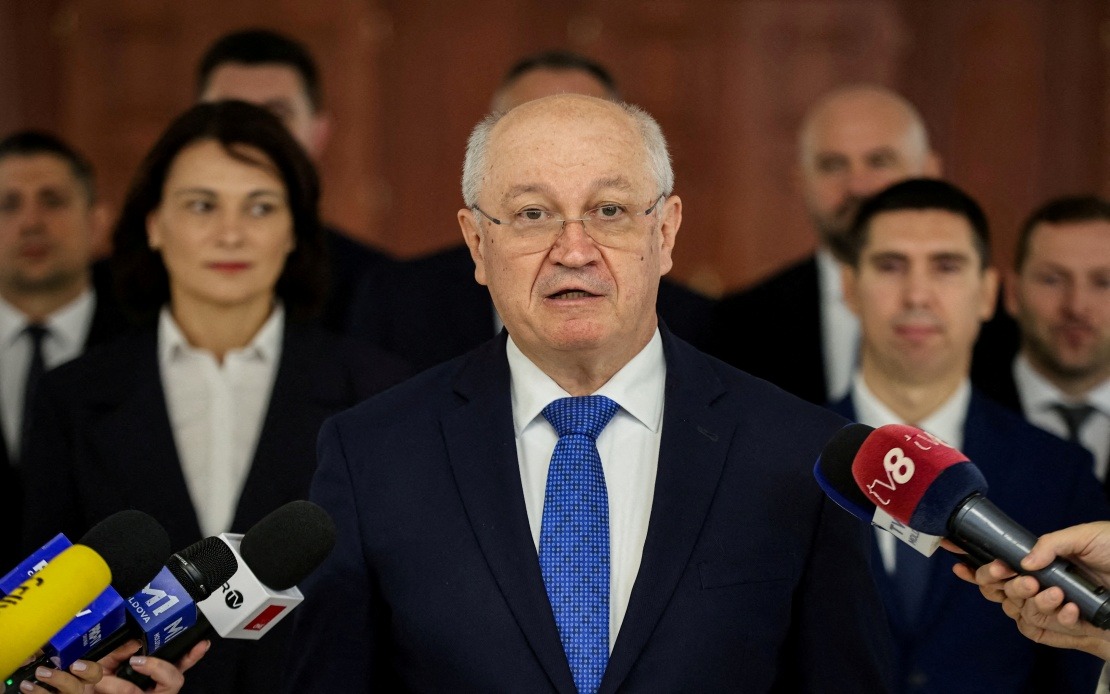
Moldova entered a period of political uncertainty on Friday when Prime Minister Alexandru Munteanu announced he would be stepping down from his position, marking a significant development in the small Eastern European nation's governance. The resignation comes after Munteanu served approximately eight months in the premiership, having assumed office in November 2025. His decision was communicated through a statement posted on social media platform X, signalling the relatively sudden nature of his departure from one of Moldova's most senior political offices.
Munteanu's departure announcement was notably spare on the specifics that typically accompany high-level political resignations. Rather than providing detailed policy disagreements or pointing to particular legislative failures, the outgoing prime minister offered a more philosophical explanation for his exit. He stated simply that he had reached a point where continuing to execute his responsibilities would require him to compromise fundamental aspects of his personal worldview. The phrasing suggested an internal conflict between what his role demanded and what his own ethical framework would permit.
The invocation of "principles and convictions" as the rationale for resignation opens considerable room for interpretation among observers of Moldovan politics. Such language typically indicates either deep ideological rifts with governing partners or parliamentary colleagues, or possibly disagreements over the direction and substance of government policy. Without more explicit elaboration from Munteanu himself, political analysts must look to recent developments in Moldova to understand what specific issues may have precipitated his decision to leave office.
Moldova, a nation of roughly 3.5 million people wedged between European Union member Romania and Russia, has been navigating a complex geopolitical position while undertaking significant domestic reforms. The country has been pursuing closer integration with European institutions while managing Russian pressure and internal political divisions. Prime ministers in such a context face constant tension between advancing reform agendas that satisfy European partners and maintaining stability in a society with deep internal fractures and external pressures.
The timing of Munteanu's resignation carries implications for Moldova's broader reform trajectory and European integration efforts. An early departure from the premiership can disrupt the implementation of key policies and create vacuums that other political forces may seek to exploit. In Moldova's fractious political environment, such moments can become inflection points where the balance of power shifts or where previously marginalised political actors gain influence.
Munteanu's brief tenure as prime minister means that Moldova will need to navigate a transition relatively soon after his predecessor's own period in office. The frequency of leadership changes at the executive level can undermine long-term planning and the sustained effort typically required to implement significant reforms. For a country attempting to deepen its Western orientation while managing internal divisions and external pressures, such disruptions present measurable challenges to coherent governance.
The resignation also reflects broader challenges facing political leadership in post-Soviet states navigating the transition toward liberal democratic institutions and market economies. Prime ministers in these contexts often find themselves caught between competing pressures: from Brussels and other Western capitals demanding specific governance and reform standards, from domestic constituencies with varying visions for their nation's future, and from those seeking to preserve traditional power structures or maintain alignment with Moscow. The personal toll of such positions can be substantial, and departures citing principle and conviction may reflect genuine ethical conflicts rather than mere political manoeuvring.
Moldova's situation carries relevance for Southeast Asian observers monitoring democratic transitions and governance challenges in smaller nations attempting to balance great power competition and domestic reform. Like several regional states, Moldova must maintain working relationships with multiple powerful external actors while pursuing internal institutional development. The fragility of leadership in such circumstances, evidenced by Munteanu's relatively swift exit, underscores the difficulty of consolidating democratic gains in strategically contested territories.
The succession process that must now unfold in Moldova will itself be revealing. Whether parliamentary parties coalesce around a figure who can pursue similar reform trajectories, or whether Munteanu's departure allows a reversal of recent policy directions, will signal much about the current balance of power within Moldova's political system and among its external backers. His replacement will inherit both the unfinished work of his administration and the underlying tensions that contributed to his exit.
Munteanu's decision to step down without elaborate recriminations or detailed justifications stands in contrast to some other high-profile political resignations that feature extended explanations. This restraint may itself constitute a statement—perhaps indicating a desire to depart with dignity, or possibly reflecting awareness that explicit allegations might become subject to political contestation. Regardless of his motivations, his resignation marks a notable moment in Moldova's ongoing political evolution as the nation continues its complex navigation between competing visions of its future.

