Singapore's government-backed funding scheme for community projects has generated substantial interest, with over 200 applications received since its launch in April 2026. The SG Partnerships Fund, a S$50 million initiative announced by Prime Minister Lawrence Wong during his Budget speech in February, represents a significant expansion of state support for ground-up social enterprises and non-profit activities. Officials unveiled the programme's newest tier during a community exchange event at Common Ground Civic Centre in Bedok North on July 4, signalling the government's commitment to enabling citizen-led solutions to social challenges.
The funding architecture operates across three distinct grant tiers, each designed to accommodate projects at different stages of development and scale. The seed tier, which has proven most popular among applicants, distributes grants of up to S$5,000 to individuals, grassroots groups, and newly registered organisations testing pilot initiatives within their neighbourhoods. The sprout tier supports established organisations seeking sector-wide impact with grants reaching S$50,000, while the newly introduced scale tier—launched in July—provides up to S$1 million for mature organisations aiming to generate transformative change across entire sectors. This graduated approach reflects deliberate policy thinking about how innovation emerges from the ground up, rather than imposing top-down solutions.
Singapore Government Partnerships Office (SGPO) director Hasliza Ahmad attributed the overwhelming response to the seed tier's accessibility. She noted that the smallest grant category has attracted the most interest precisely because it lowers barriers to participation, encouraging individuals and small groups to act without expecting transformative financial resources. Her observation challenges conventional assumptions about funding efficiency—that larger grants necessarily drive greater impact. Instead, the SGPO's experience suggests that removing psychological and bureaucratic obstacles to application can mobilise latent community energy more effectively than concentrating resources on fewer, larger projects. The office provides more than money; it offers mentorship, network connections, and guidance to ensure recipients deploy funds strategically.
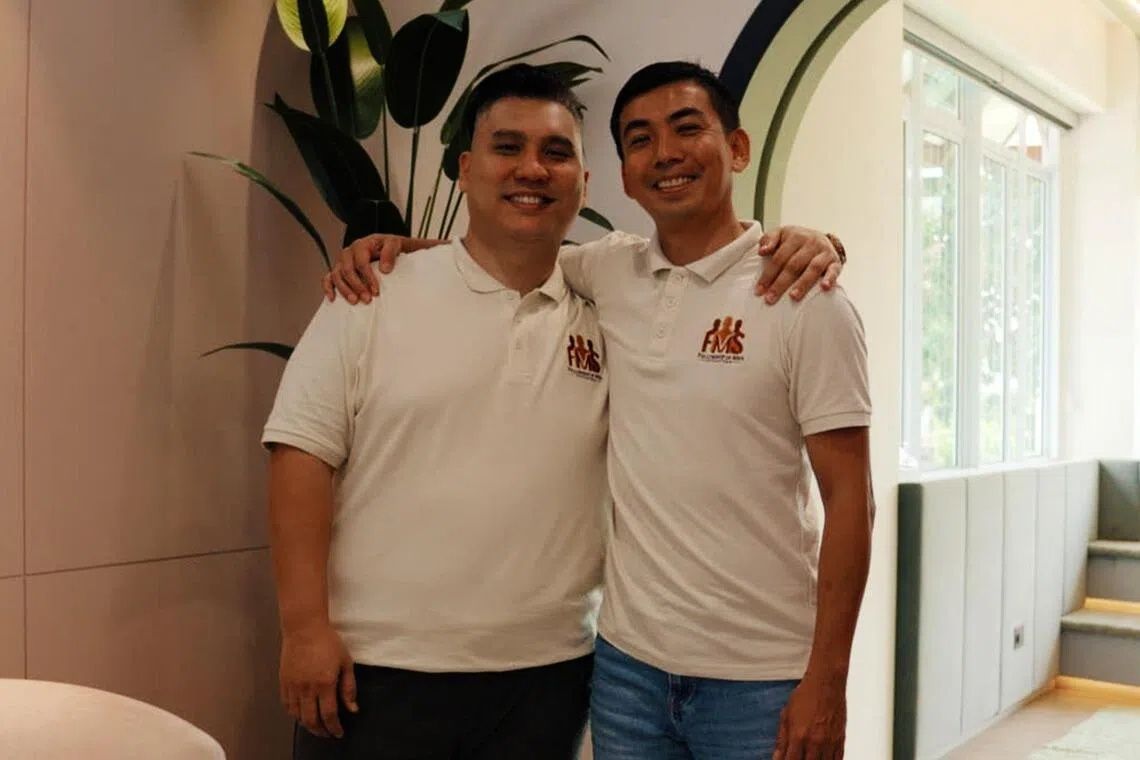
Fellowship for Men Singapore exemplifies how modest funding catalyses meaningful work. Co-founders Ben Ang and Ismail Didih Ibrahim, who met five years earlier at a family service centre while working with men experiencing violence and aggression issues, pivoted toward prevention-focused interventions. Rather than managing crises reactively, they recognised that encouraging men to seek help proactively would produce better outcomes. Both abandoned full-time employment to establish their non-profit in January 2026, designing programmes that combine practical activities with guided conversations—deliberately accessible entry points for men hesitant about professional counselling. The S$5,000 seed grant funded a three-hour community engagement session at a professional kitchen in Geylang, enabling 24 men and their families to cook together while discussing masculinity, emotional health, and help-seeking behaviour. Without the grant, such programming would have occurred in Ang's home kitchen at personal expense, severely limiting reach and professional quality.
Ang's vision extends beyond immediate participants. He envisions transforming understanding of masculinity itself—moving beyond provider and protector archetypes toward recognition of men as multidimensional human beings entitled to emotional vulnerability. This reframing matters particularly in Southeast Asia, where traditional gender expectations remain culturally potent. The initiative's success in mobilising men to engage authentically with emotional topics could influence broader regional conversations about mental health, masculinity, and help-seeking norms. Ang and Didih plan to apply for larger grants, aiming to scale their movement and reach substantially more men across Singapore.
Little Wishes, established by 21-year-old LASALLE College of the Arts student Loke Wai Yee alongside 12 peers, demonstrates how young people leverage small grants to address systemic gaps. During Singapore's annual angel tree season, disadvantaged children display Christmas wish lists on trees in shopping malls. Loke observed that this programme reached only specific geographic areas and excluded lower-budget donors intimidated by expensive gift items. Her team created an online platform enabling donors to select gifts within their financial capacity while connecting with vetted child beneficiaries. The S$5,000 seed grant enabled hiring a professional web designer—work the volunteers could not have completed independently—resulting in a user-friendly site launching in August.
Loke's account illuminates crucial support beyond financial grants. The SGPO connected Little Wishes with social service agencies, identified complementary funding sources, and provided ongoing mentorship. This ecosystem approach—combining modest seed capital with institutional navigation assistance—proves more valuable for novice organisers than grants alone. Young initiatives often fail not from lack of funding but from navigating regulatory environments, finding trustworthy service partners, and learning professional standards. The SGPO effectively functions as an incubator, reducing transaction costs and enabling volunteers to concentrate on mission rather than logistics. Little Wishes currently serves 80 beneficiaries, with potential for substantial expansion as the platform gains traction.
The tiered structure reflects sophisticated understanding of how social innovation actually develops. Seed funding tests ideas cheaply before committing substantial resources; sprout tier funding rewards successful pilots by enabling modest expansion; scale tier funding supports proven models seeking sector-wide transformation. This progression allows government to learn from ground-level practitioners rather than imposing predetermined solutions. It also distributes risk—many seed projects will underperform, but the aggregate portfolio likely generates stronger outcomes than betting heavily on fewer initiatives selected through centralised evaluation.
For Malaysia and other Southeast Asian nations observing Singapore's social investment approach, the SG Partnerships Fund offers instructive lessons. Community-driven solutions often address hyperlocal problems more effectively than government programmes, particularly in densely diverse societies. However, grassroots initiatives typically lack institutional knowledge, professional networks, and startup capital. By providing tiered, accessible funding coupled with mentorship infrastructure, Singapore enables latent community expertise to translate into tangible social impact. The overwhelming application rate—over 200 projects competing for funding—suggests substantial unmet demand for mechanisms supporting citizen-led problem-solving.
The fund also reflects strategic thinking about social cohesion amid rapid urbanisation. Enabling neighbours to collaborate on community challenges strengthens social bonds and generates social capital beyond the immediate project deliverables. Men participating in Fellowship for Men Singapore's cooking sessions develop peer networks around vulnerable topics; Little Wishes volunteers learn project management and partnership-building while helping disadvantaged children; both initiatives create communities of practice around shared values. This preventive social infrastructure may prove more valuable than any single completed project, generating resilience and civic participation that benefits societies across generations.
Singapore's approach also emphasises professional standards for grassroots work. The SGPO guides recipients toward best practices, ensures accountability, and connects initiatives with established service organisations. This matters particularly for sensitive areas like masculinity and mental health, where well-intentioned amateurs could cause harm without proper frameworks. By professionalising community work while maintaining grassroots authenticity, Singapore navigates between two pitfalls—either adequately funded government services lacking community trust, or community-driven efforts lacking professional rigour. The SG Partnerships Fund positioning reflects this balanced philosophy.

