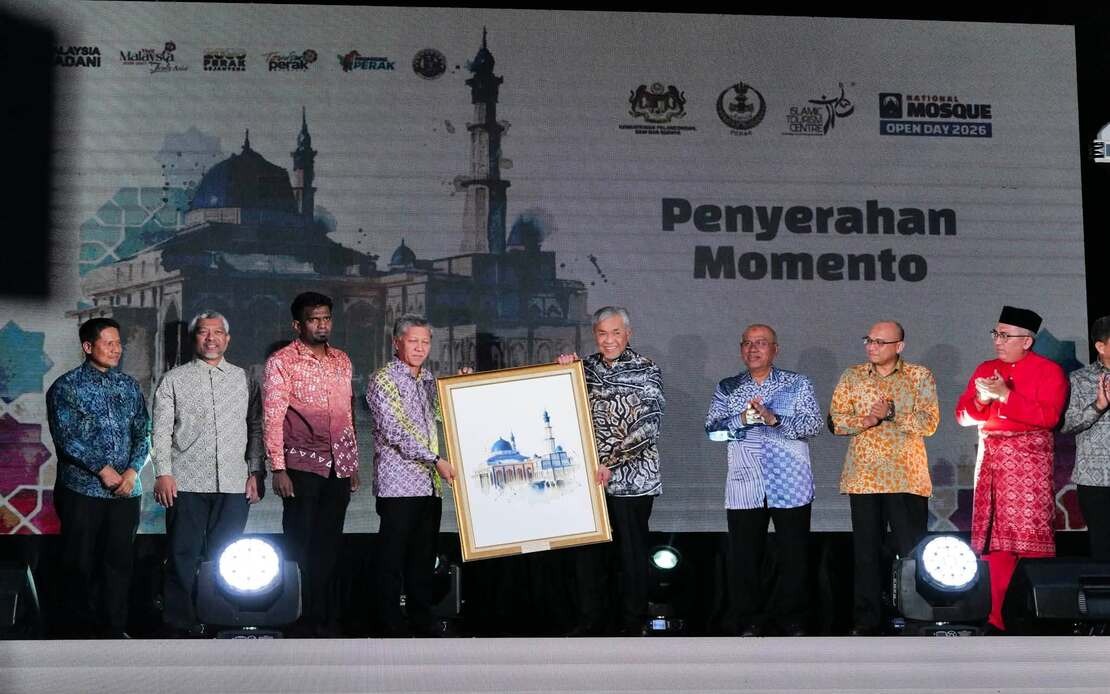
Deputy Prime Minister Datuk Seri Dr Ahmad Zahid Hamidi has outlined a vision for Malaysia's mosques to assume a dual role as both places of worship and anchors within the country's tourism infrastructure. Speaking at the National Mosque Open Day 2026 in Bagan Datuk on August 15, Ahmad Zahid emphasised that religious institutions should leverage their architectural grandeur, historical significance, and cultural value to attract international and domestic visitors while continuing to serve their primary spiritual purposes.
The proposal reflects a growing recognition among Malaysian policymakers that the nation's Islamic heritage represents an untapped economic asset. By positioning mosques as gateways to understanding Malaysia's Islamic civilisation, history, and values, the government aims to create enriched travel experiences that extend beyond conventional sightseeing. Ahmad Zahid stressed that when tourists visit Malaysian mosques, they should depart with more than photographs; they should carry memories of the nation's hospitality, the warmth of its people, and the tolerant brand of Islam practised within the country. This experiential tourism model could differentiate Malaysia from competing destinations in Southeast Asia and the wider Muslim-majority world.
The National Mosque Open Day initiative exemplifies this integrated approach. By organising such events, mosques create sanctified spaces where individuals of varying backgrounds, faiths, and ages can interact with Islamic institutions in peaceful, welcoming settings. Ahmad Zahid argued that these programmes are instrumental in cultivating mutual respect and deepening appreciation for mosques as custodians of the nation's cultural and spiritual heritage. More broadly, they demonstrate Islam's inherent inclusivity and Malaysia's commitment to religious pluralism, messages increasingly important in an era of global tensions and misconceptions about Muslim societies.
Opening mosque doors to non-Muslim visitors and interfaith groups simultaneously addresses a strategic objective: correcting misconceptions about Islam and Muslims. Ahmad Zahid contended that through genuine hospitality, meaningful interaction, and transparent sharing of Islamic teachings, Malaysian institutions can exemplify the faith's foundational principles of compassion, wisdom, and benevolence. This grassroots approach to soft power—allowing people to experience Islam directly rather than through media filters—potentially carries greater persuasive weight than top-down government messaging.
The government's commitment to this vision became concrete with the designation of Masjid Tuminah Hamidi in Bagan Datuk as Malaysia's 98th Tourism Mosque. The facility, completed in 2023 as a waqf (endowment) honouring Ahmad Zahid's parents, was selected by the Islamic Tourism Centre (ITC) based on its distinctive architectural design and integrated gallery functioning as an Islamic knowledge centre. This recognition illustrates how mosques combining religious functionality with cultural and educational infrastructure can serve as model institutions within the emerging ecosystem.
The scale of the initiative is substantial. Malaysia currently operates 6,851 mosques, according to ITC Director-General Mohammad Faisal Abu Suaib Khan, representing enormous potential for expansion. The ITC's stated goal is to increase the number of designated Tourism Mosques by identifying institutions with distinctive features, compelling histories, or architectural significance that merit promotion as Islamic tourism products. This systematic approach suggests serious governmental intent to develop a coordinated, quality-assured network rather than ad hoc individual efforts.
Coordinating this expansion requires institutional collaboration spanning multiple agencies. The ITC is partnering with the Department of Islamic Development Malaysia (JAKIM) and state-level Islamic religious departments to establish standardised guidelines and facilitate mosque participation. This multi-layered governance structure acknowledges that religious institutions operate within complex hierarchies and require input from established authorities to ensure cultural sensitivity and religious appropriateness. The standardisation effort also protects visitor experiences and maintains consistent quality across the Tourism Mosque network.
Supporting infrastructure initiatives strengthen the broader ecosystem. The ITC's Muslim-Friendly Tourism and Hospitality Assurance and Recognition (MFAR) programme and Muslim-Friendly Tourist Guides (MFTG) scheme establish credentials and training standards for service providers engaging with Muslim and non-Muslim visitors. These programmes operationalise the concept of "Muslim-Friendly, not Muslim-Only"—a positioning that reassures both Muslim and non-Muslim travellers while signalling Malaysia's inclusive approach to religious tourism. The distinction is crucial for market positioning; it avoids the appearance of exclusivity while clearly communicating religious and cultural authenticity.
For Malaysian tourism authorities, this strategy addresses a sector increasingly seeking differentiation. Islamic tourism represents a significant global market, with Muslim travellers seeking destinations respecting halal requirements, prayer facilities, and cultural understanding. Simultaneously, non-Muslim international visitors increasingly seek authentic cultural experiences and spiritual insights. Mosques serving both constituencies, when properly managed and promoted, satisfy these dual demands. This alignment of visitor preferences with Malaysian assets creates a compelling commercial case alongside the religious and cultural rationale.
The implications extend beyond tourism economics. Successfully integrating mosques into the tourism ecosystem could reinforce Malaysia's positioning as a moderate Muslim-majority democracy navigating religious pluralism successfully. At a time when global discourse emphasises religious tensions, demonstrating peaceful interfaith engagement through tangible institutional initiatives carries symbolic weight. It provides concrete evidence supporting Malaysia's soft power narrative and offers a model potentially relevant to other Muslim-majority nations balancing tradition with modernity and inclusion with authenticity.
Challenges remain in execution. Ensuring that religious sanctity is preserved while accommodating visitors, training staff to manage interfaith interactions sensitively, and balancing commercial tourism interests with spiritual purposes require careful planning. Different mosques serving different communities may face distinct challenges and opportunities. The ITC's coordination role becomes critical in developing nuanced guidelines reflecting this diversity rather than imposing uniform standards unsuitable for varied contexts.
Ultimately, Ahmad Zahid's vision represents a strategic decision to mobilise Malaysia's religious infrastructure as a development asset. Rather than viewing tourism and religion as separate domains, the approach synthesises them, positioning mosques as institutions advancing simultaneously religious, cultural, diplomatic, and economic objectives. As the initiative expands from the current 98 Tourism Mosques, its success in delivering genuine intercultural understanding while respecting religious integrity will determine whether this model becomes a template for other Muslim-majority nations or remains a distinctly Malaysian experiment.

