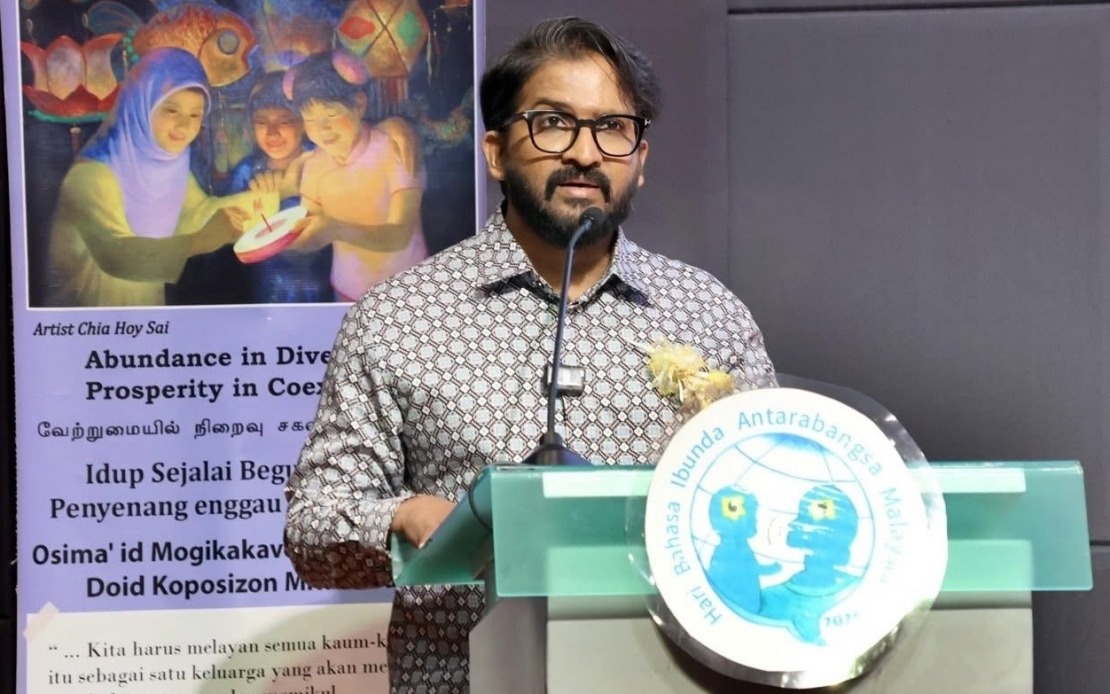
Deputy National Unity Minister R. Yuneswaran has made a forceful case for prioritising mother-tongue education as a strategic tool for promoting social cohesion and countering polarising content that dominates Malaysian social media. Speaking on June 21, Yuneswaran contended that deepening proficiency in one's heritage language provides a foundation for mutual respect and intercultural appreciation, thereby helping to curtail inflammatory discussions surrounding race, religion and royalty—the so-called 3R issues that have become increasingly prevalent online.
The minister's intervention reflects growing concern among policymakers about the toxic trajectory of social discourse in Malaysia. Daily instances of 3R-related disputes ripple across Facebook, Twitter and other platforms, each incident seemingly more divisive than the last. Rather than attributing this phenomenon solely to bad faith actors or inflammatory rhetoric, Yuneswaran advanced a more nuanced diagnosis: a fundamental deficit in mutual comprehension of one another's histories, languages and cultural foundations. This framing reorients the debate away from censorship or policing speech toward addressing the underlying epistemic gaps that allow misunderstanding to flourish.
Central to Yuneswaran's argument is a reconceptualisation of language itself. He emphasised that linguistic communication transcends the mere exchange of words, functioning instead as a vessel for identity, heritage and the values systems that bind communities together. This understanding aligns with contemporary scholarship in sociolinguistics, which recognises that language encodes cultural memory and shapes how speakers perceive the world around them. By this logic, erosion of mother-tongue competency represents not merely a loss of vocabulary but a gradual severance from the cultural narratives and historical consciousness that language preserves.
Malaysia's extraordinary linguistic landscape, encompassing approximately 130 languages, provides both an illustration and a validation of Yuneswaran's position. Rather than viewing this diversity as a source of fragmentation or administrative burden, the minister advocates treating it as a wellspring of national strength. This reframing is significant for a multicultural nation where anxieties about linguistic competition have historically surfaced during policy debates. By positioning multilingualism as constitutive of Malaysian identity rather than a threat to it, Yuneswaran offers a counternarrative to zero-sum framings that pit Bahasa Malaysia against ethnic languages.
A particularly striking element of his commentary is the personal testimony woven through his remarks. As an Indian Malaysian educated across both Chinese and national school systems, Yuneswaran drew upon his own trajectory to demonstrate that proficiency in one's mother tongue and mastery of the national language are not mutually exclusive pursuits. Rather, he suggested, competence in one's heritage language actually facilitates deeper engagement with other languages and cultures. This lived experience serves as a powerful riposte to arguments that emphasise mother-tongue education undermines national integration or creates parallel educational streams.
Yuneswaran's statement also positions language and cultural literacy as integral to the agenda outlined in the 13th Malaysia Plan, under which the National Unity Ministry bears responsibility for consolidating nation-building efforts. This institutional framing elevates the discussion beyond rhetorical aspiration toward concrete policy orientation. The ministry, under this mandate, is tasked with constructing a social fabric bound by mutual comprehension, respect and a genuine curiosity about one another's backgrounds. Language mastery becomes, in this formulation, a practical instrument of statecraft.
The mechanism through which mother-tongue education combats 3R polarisation operates on multiple registers. First, linguistic fluency provides access to cultural and historical knowledge embedded in one's own heritage, reducing susceptibility to simplistic or distorted characterisations of one's own community circulated online. Second, the cognitive discipline required to master a language's grammar, idiom and nuance cultivates intellectual habits that transfer to cross-cultural encounters. Third, individuals confident in their cultural grounding may feel less threatened by the cultural expressions of others, reducing defensive or antagonistic responses to unfamiliar practices or beliefs.
For Southeast Asian observers, Yuneswaran's intervention carries particular resonance given the region's own struggles with linguistic preservation amid globalisation and standardisation pressures. Nations like Indonesia, Thailand and Vietnam have grappled with the tension between promoting national languages and maintaining ethnic or minority language vitality. Malaysia's approach—framed not as a retreat into parochialism but as deepening of multicultural citizenship—offers a potential model for how countries in the region might approach these questions.
The timing of this statement also warrants consideration. As digital platforms increasingly become the primary arena for political and social discourse, and as algorithms amplify sensationalist and divisive content, policymakers face mounting pressure to respond. Yuneswaran's emphasis on education rather than regulation reflects a recognition that durable social peace cannot be engineered through control of information flows alone. Instead, building populations equipped with historical knowledge, linguistic sophistication and cultural empathy addresses the demand-side of inflammatory content—reducing both its appeal and its capacity to wound.
The challenge ahead lies in translating this conceptual framework into tangible educational policy and resource allocation. Strengthening mother-tongue instruction requires investment in teacher training, curriculum development and materials production across dozens of language communities. It demands coordination between federal and state education authorities and engagement with community institutions that preserve linguistic and cultural knowledge. Whether the National Unity Ministry can mobilise the necessary institutional support and budgetary resources to realise Yuneswaran's vision remains an open question.
Nonetheless, his intervention signals an important shift in how Malaysian policymakers are approaching social cohesion. Rather than treating cultural and linguistic diversity as a problem to be managed or minimised, this perspective embraces it as a foundation upon which stronger national unity can be constructed. If implemented with genuine commitment, such an approach could yield not only reduced 3R tensions but also a richer, more intellectually engaged citizenry capable of navigating Malaysia's inherent pluralism with greater wisdom and compassion.
%22%2F%3E%3C%2Fpattern%3E%3C%2Fdefs%3E%3Crect%20width%3D%22100%25%22%20height%3D%22100%25%22%20fill%3D%22url(%23ph1pb81g)%22%2F%3E%3Crect%20width%3D%22100%25%22%20height%3D%22100%25%22%20fill%3D%22url(%23ph1pb81p)%22%2F%3E%3Ctext%20x%3D%2250%25%22%20y%3D%2250%25%22%20text-anchor%3D%22middle%22%20dominant-baseline%3D%22central%22%20fill%3D%22rgba(255%2C255%2C255%2C0.95)%22%20font-family%3D%22Georgia%2C%20'Times%20New%20Roman'%2C%20serif%22%20font-weight%3D%22700%22%20font-size%3D%22272%22%20letter-spacing%3D%22-0.02em%22%3EMITRA%3C%2Ftext%3E%3C%2Fsvg%3E)
%22%2F%3E%3C%2Fpattern%3E%3C%2Fdefs%3E%3Crect%20width%3D%22100%25%22%20height%3D%22100%25%22%20fill%3D%22url(%23ph3khjrg)%22%2F%3E%3Crect%20width%3D%22100%25%22%20height%3D%22100%25%22%20fill%3D%22url(%23ph3khjrp)%22%2F%3E%3Ctext%20x%3D%2250%25%22%20y%3D%2250%25%22%20text-anchor%3D%22middle%22%20dominant-baseline%3D%22central%22%20fill%3D%22rgba(255%2C255%2C255%2C0.95)%22%20font-family%3D%22Georgia%2C%20'Times%20New%20Roman'%2C%20serif%22%20font-weight%3D%22700%22%20font-size%3D%22320%22%20letter-spacing%3D%22-0.02em%22%3ERim%3C%2Ftext%3E%3C%2Fsvg%3E)
%22%2F%3E%3C%2Fpattern%3E%3C%2Fdefs%3E%3Crect%20width%3D%22100%25%22%20height%3D%22100%25%22%20fill%3D%22url(%23ph3tt8dg)%22%2F%3E%3Crect%20width%3D%22100%25%22%20height%3D%22100%25%22%20fill%3D%22url(%23ph3tt8dp)%22%2F%3E%3Ctext%20x%3D%2250%25%22%20y%3D%2250%25%22%20text-anchor%3D%22middle%22%20dominant-baseline%3D%22central%22%20fill%3D%22rgba(255%2C255%2C255%2C0.95)%22%20font-family%3D%22Georgia%2C%20'Times%20New%20Roman'%2C%20serif%22%20font-weight%3D%22700%22%20font-size%3D%22226%22%20letter-spacing%3D%22-0.02em%22%3EDiesel%3C%2Ftext%3E%3C%2Fsvg%3E)