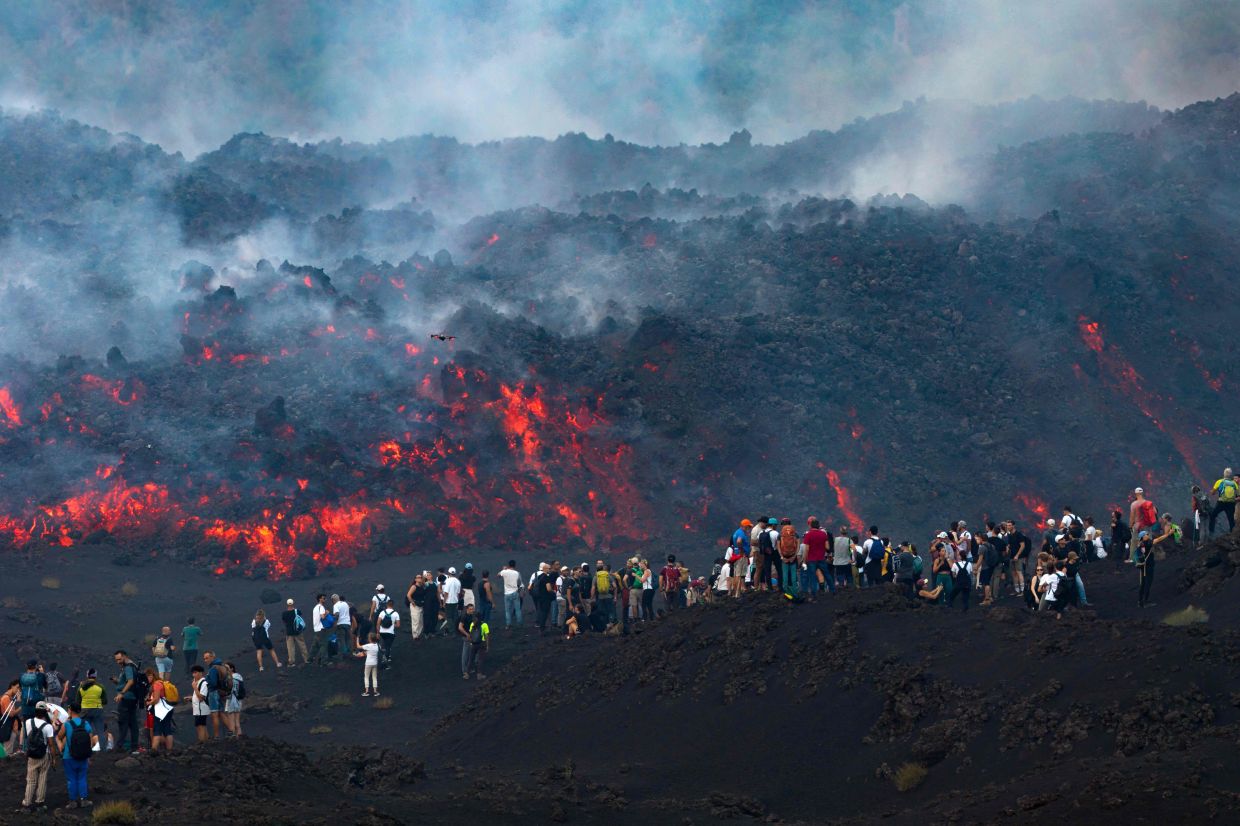
The dramatic spectacle of molten lava cascading down Mount Etna's slopes has triggered an unexpected tourism surge across Sicily, transforming Europe's most active volcano into an impromptu attraction that is straining local infrastructure and safety protocols. The sustained eruption, which has persisted for several days with visible ash and lava flows, has captivated global audiences and driven an unprecedented wave of visitors seeking to witness the raw power of geological forces firsthand.
Mounting Etna stands as Europe's tallest active volcano and has established itself as a natural wonder that continues to reshape the Sicilian landscape. The current eruption cycle has proven particularly photogenic, with breathtaking images of incandescent lava rivers spreading across social media platforms and inspiring travel decisions across continents. This visibility has created what local observers characterize as a "touristic eruption"—an event that combines genuine geological significance with spectacular visual appeal that draws crowds seeking memorable experiences.
The economic consequences are already evident in Sicily's aviation sector. Catania International Airport, which serves eastern Sicily and functions as the primary gateway for tourists visiting the island, has repeatedly suspended flight operations as volcanic ash has accumulated on runways and reduced visibility. Since Saturday alone, Italian media reports indicate that hundreds of flights have been cancelled, disrupting travel plans for thousands of passengers. This airport handled approximately 12 million passengers in 2024, underscoring the scale of disruption that the eruption has triggered across the tourism and transport sectors.
Guide Etna, one of the leading tour operators organizing nighttime excursions to observe the eruption, exemplifies the dramatic shift in demand. Company manager Daniele Perricelli, aged 41, reports that his operation typically handles a few dozen visitors on routine evenings during peak summer season. However, since the eruption intensified, the company has been receiving approximately 300 daily inquiries—a threefold surge that reflects the magnetic appeal of witnessing active lava flows in relative safety. Perricelli attributes this attraction to the combination of genuine danger perception, spectacular natural beauty, and the opportunity to experience a phenomenon that most people will never encounter again.
Yet this enthusiasm has created significant operational and safety challenges. Perricelli estimates that between 1,500 and 2,000 independent climbers ascend the volcano each evening, creating congestion on established footpaths and hiking routes that were never designed to accommodate such volumes. The situation has grown sufficiently concerning that he has publicly appealed to local authorities to implement stricter oversight and enforcement of safety protocols. In one telling observation, he noted that some climbers arrived in inappropriate footwear such as flip-flops, demonstrating insufficient preparation for the challenging terrain and hazardous conditions.
Ernesto Maria Magri, another experienced guide operating in the region, has noted that even local residents have joined the rush to observe the lava flows, often gathering in unorganized groups that lack proper safety awareness. This domestic enthusiasm compounds the challenge faced by professional guides attempting to manage visitor flows and maintain reasonable safety standards. The combination of international tourists seeking once-in-a-lifetime experiences and local residents drawn by curiosity has created a perfect storm of overcrowding that extends beyond what existing infrastructure can comfortably accommodate.
Current regulations establish a framework where independent climbers may ascend to approximately 2,400 meters altitude without professional guidance, though reaching higher elevations requires accompaniment by certified guides. This threshold was presumably established based on historical visitor volumes and safety assessments conducted during non-eruption periods. However, the current surge has rendered these assumptions obsolete, as thousands of visitors now operate at and near the regulatory boundary simultaneously, creating conditions where a single incident could trigger cascading failures.
High-profile incidents have already generated controversy and social media criticism. Italian television presenter Diletta Leotta came under scrutiny for sharing photographs apparently taken in proximity to actively glowing lava, raising questions about judgment and influencer responsibility. However, professional guides note that in lower-altitude zones where lava has begun cooling, it is technically possible to approach within several meters of the volcanic flow with proper precautions. This technical feasibility becomes problematic when inexperienced climbers, emboldened by social media examples, attempt similar approaches without the requisite knowledge.
Italy's civil protection agency has maintained a yellow alert status for Mount Etna, representing the second level on a four-tier warning scale that progresses from green through yellow, orange, and red. This classification reflects the agency's assessment that frequent eruptions and potential explosions remain possible, warranting public awareness but not necessarily triggering severe movement restrictions. The yellow alert designation represents a delicate balance between acknowledging genuine hazards and permitting economic activity—a balance that feels increasingly precarious given current visitor volumes.
For Malaysia and Southeast Asian travelers considering Mount Etna visits, the convergence of spectacular natural phenomena with operational disruptions presents both opportunity and risk. The global nature of tourism means that decisions made by visitors anywhere affect destination management and safety outcomes that ripple across international boundaries. The Etna situation illustrates how natural events can overwhelm established safety frameworks, particularly when social media amplification transforms localized geological events into international attractions attracting far greater visitor volumes than infrastructure was designed to accommodate.
The fundamental tension emerging from Mount Etna's eruption reflects broader challenges facing popular natural attractions worldwide. Guides, authorities, and residents must navigate the competing demands of sustainable tourism, visitor safety, local quality of life, and economic opportunity. Without more aggressive management interventions, the current enthusiasm risks transforming a natural wonder into a genuine public safety crisis. The coming weeks will reveal whether Italian authorities can implement enhanced protocols before overcrowding produces incidents that will ultimately restrict access more severely than current preventive measures would require.

