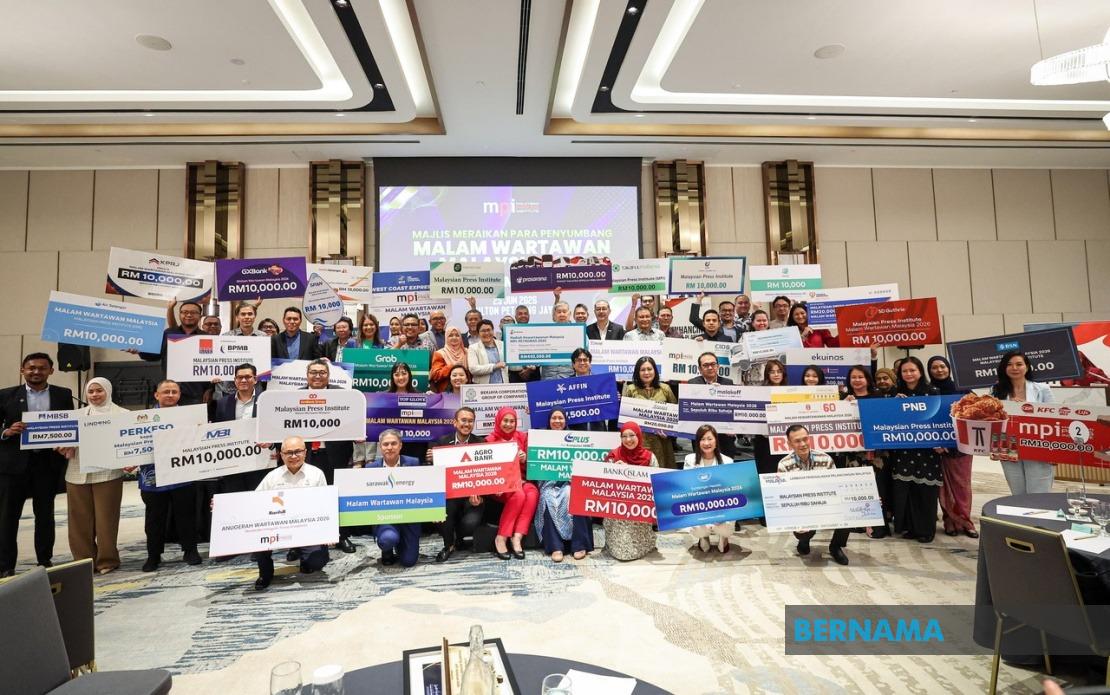
The Malaysian Press Institute has mobilised over RM1 million in financial backing for Malaysia Press Night 2026, underscoring sustained corporate confidence in the country's journalism sector even as media organisations navigate rapid technological and commercial shifts. The institute announced at a Contributors' Appreciation Ceremony in Kuala Lumpur that the fundraising campaign had yielded RM1.037 million from a combination of direct contributions and major sponsorships, signalling robust support for an event that has become the industry's premier gathering.
Breaking down the funding composition reveals a diversified support base critical to the event's success. Sixty organisations contributed RM587,000 collectively, demonstrating broad-based engagement from media companies, technology firms, advertising agencies and other stakeholders invested in journalism's future. The remainder—RM450,000—came from PETRONAS, the national oil company that has maintained continuity as primary sponsor of the associated journalism awards since 1994. This three-decade partnership underscores how major Malaysian corporations have embedded media recognition into their broader corporate social responsibility frameworks.
Dr Ainol Amriz Ismail, chief executive of the Malaysian Press Institute, framed the financial commitment as reflecting deeper institutional values beyond the transactional. He emphasised that the support demonstrated shared resolve to uphold professional standards, ethical conduct and public trust in journalism—qualities that have grown increasingly valuable as misinformation and unverified claims proliferate across digital platforms. His remarks resonated with mounting concerns across Southeast Asia about declining media literacy and the erosion of institutional trust in news sources, making industry-wide efforts to reinforce journalistic integrity particularly timely.
The event's anticipated prominence received further elevation with confirmation that Prime Minister Datuk Seri Anwar Ibrahim would attend on July 17. The prime ministerial presence signals government recognition of journalism's role in democratic governance and national development. Such high-level endorsements carry symbolic weight in Malaysian society, potentially encouraging younger professionals to pursue media careers while reassuring established practitioners that their work maintains relevance at the highest policy levels. The timing also matters—occurring amid broader debates about media freedom, digital regulation and the balance between national security and press independence that have characterised recent Southeast Asian governance conversations.
The Malaysian Press Institute, through its leadership team including President Datuk Yong Soo Heong and Deputy President Farrah Naz Abd Karim, has positioned the annual press night as more than ceremonial occasion. The gathering serves as platform for recognising outstanding journalistic work, convening industry leaders, and discussing sectoral challenges and opportunities. The presence of BERNAMA's chief executive Datin Paduka Nur-ul Afida Kamaludin at the appreciation ceremony reflected state media's institutional stake in industry advancement, while PETRONAS's continued backing through Jalina Joheng highlighted energy sector engagement with media development.
The fundraising effort also enabled the institute to feature its third edition journalism forum, which brought together prominent industry voices for substantive discussion. The panellist lineup—including Malaysian Journalism Icon Datuk A. Kadir Jasin, respected media figure with decades of editorial experience—indicated serious intellectual engagement with sectoral issues. Inclusion of Karangkraf Group chief executive officer Firdaus Hussamuddin, TV AlHijrah's Namanzee Harris and Vanakkam Malaysia's Thiaga Rajan Muthusamy provided representation across different media segments: print, broadcast and multicultural publications respectively. This diversity suggested forum discussions likely encompassed business sustainability, audience engagement, journalistic standards and the intersection of traditional and digital media—issues confronting newsrooms across Malaysia and the region.
Dr Ainol Amriz's emphasis on MPI's broader developmental mission highlighted institutional contributions beyond the annual event. The institute has positioned itself as driver of professional development programmes and industry training initiatives that benefit Malaysia's media community. In an era when many newsrooms operate with reduced resources and training budgets, such centralised capability-building becomes critical infrastructure for maintaining professional standards. This institutional role mirrors functions performed by press associations across Southeast Asia, though the Malaysian body's direct access to corporate sponsorship and government engagement provides comparative advantages in resource availability.
The contributions framework also reflects evolving expectations about corporate social responsibility in Malaysia's media ecosystem. Companies investing in journalism awards and industry development increasingly view such expenditures as strategic investments in information quality that affects their own operating environment and reputation management. PETRONAS's sustained commitment since 1994 illustrates how anchor sponsorships can provide stability enabling consistent recognition of excellence. The additional sixty organisations joining this year's fundraising suggest widening corporate recognition that healthy media industries benefit broader business environments through improved information flows, enhanced accountability and strengthened institutional trust.
For Malaysian journalism specifically, the funding success arrives amid ongoing sector transitions. Newsroom employment remains under pressure from digital disruption and advertising migration, yet the financial backing for press industry events indicates stakeholder commitment to sustaining professional journalism. The scale of fundraising—exceeding RM1 million—demonstrates that despite economic headwinds, Malaysian business and government bodies recognise journalism's value proposition sufficiently to invest materially in its recognition and development. This contrasts with patterns in some regional markets where journalism industry events have contracted due to reduced sponsorship availability.
Looking forward, the Malaysia Press Night 2026 positioning itself as celebration of professional achievement while simultaneously serving as forum for industry conversation suggests organisers understand modern journalism requires both celebration of excellence and frank examination of challenges. The diversity of participants—from establishment figures like A. Kadir Jasin to leaders of emerging multicultural media platforms—indicates the industry is wrestling with questions of inclusion, representation and reaching diverse Malaysian audiences. These conversations carry relevance beyond Malaysia, as Southeast Asian newsrooms generally confront similar pressures regarding audience fragmentation and content localisation.

