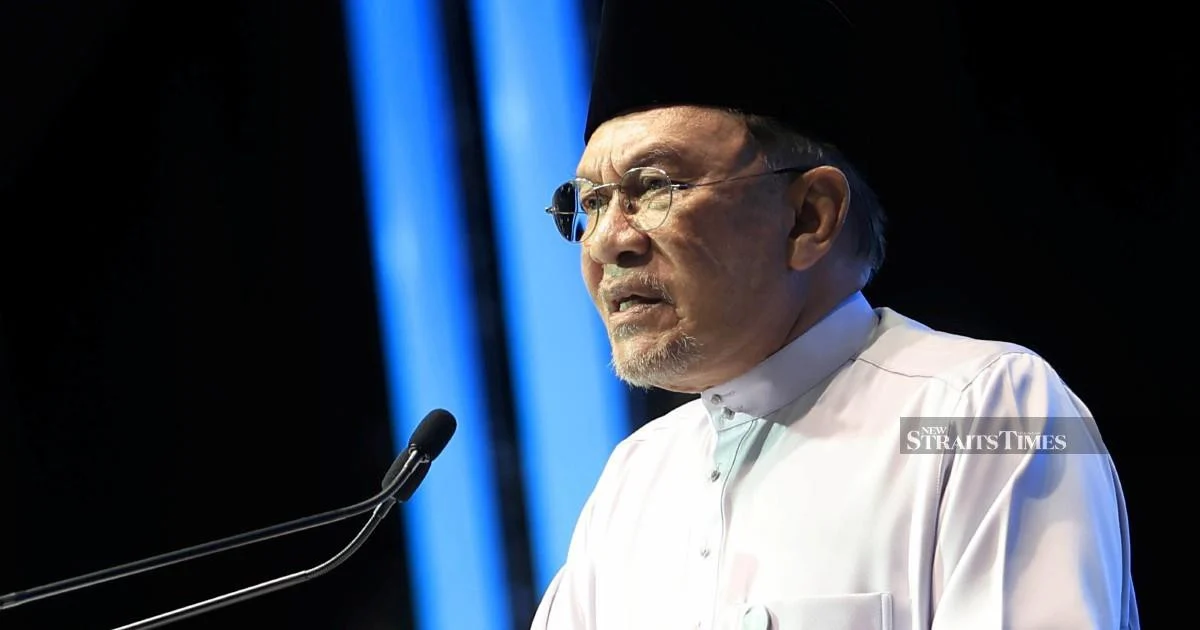
The Muar district office has moved swiftly to dismiss reports that Prime Minister Datuk Seri Anwar Ibrahim encountered obstacles in accessing the Penghulu Mukim Sungai Balang Complex for a community engagement initiative during the previous month. The formal denial, issued directly from the district administration, comes as questions linger about how government facilities are being utilised during the electoral cycle in Johor.
The clarification addresses what had become a contentious issue in Muar, one of the state's key constituencies where political activity has intensified considerably. Community groups and residents had raised concerns about the availability and accessibility of public venues for political gatherings, particularly those organised by federal-level politicians. The Penghulu Mukim Sungai Balang Complex, a state-owned facility intended for public use, became a focal point of this debate when word circulated that the Prime Minister's team faced difficulties securing it for their planned engagement with constituents.
Such incidents carry particular significance in Malaysia's political landscape, where the management of government resources during election periods has frequently drawn scrutiny from both ruling parties and opposition groups. The distinction between administrative neutrality and perceived partisan conduct remains a sensitive issue, especially in states where electoral competition is fierce. The Muar district office's public statement appears designed to reassure all stakeholders that government facilities continue to operate impartially, regardless of the user's political affiliation or position.
The timing of the denial is noteworthy given that Johor has been in political flux, with various developments reshaping the state's electoral dynamics. Muar, as a parliamentary seat with substantial influence over regional outcomes, naturally attracts high-level political attention from Kuala Lumpur. When the Prime Minister or his representatives seek to engage with voters in such constituencies, the accessibility of adequate venues becomes both a practical necessity and a symbolic matter of governmental fairness.
Questions about facility access often reflect deeper concerns about institutional impartiality during election seasons. In Malaysia's federal structure, where state-level and national-level politics frequently intersect, the conduct of local government officials comes under heightened examination. Any perception that public infrastructure is being withheld from particular political figures or parties can fuel broader allegations of administrative bias, complicating efforts to maintain public confidence in government institutions.
The Penghulu Mukim Sungai Balang Complex serves as a venue for various community activities and gatherings, making its availability during electoral periods a matter of public interest. Government complexes in Malaysia are theoretically open for legitimate community purposes across the political spectrum, though tensions sometimes emerge about scheduling, allocation, and permissions. The district office's intervention in publicly addressing this issue suggests that the matter had gained sufficient prominence to warrant an official response.
From Muar's perspective, the clarification may help reset expectations among political actors and constituents alike. The district, situated in the southern part of Johor and encompassing several important urban and rural areas, has seen considerable political engagement from federal-level figures across different parties. Ensuring that public facilities remain accessible for legitimate purposes contributes to a more competitive political environment where incumbents and challengers can both reach constituents effectively.
The broader implications for Johor's political scene are also worth considering. State-level relations with federal authorities have evolved in recent years, reflecting shifts in party alignments and coalition dynamics. When questions arise about access to government resources, they occasionally signal underlying tensions between different layers of administration or different political coalitions. The district office's denial, therefore, serves not only to address the immediate allegation but also to affirm the principle that administrative processes function independently of political pressure.
For Malaysians following state politics closely, such controversies highlight the continuing importance of institutional oversight and transparency. The fact that an official statement was deemed necessary demonstrates how vigilant the public has become about potential misuse of government machinery. While the denial itself attempts to settle the matter, it also underscores why these questions continue to arise—there remains public concern about ensuring that resources meant for everyone are allocated fairly during periods of intense political competition.
Moving forward, the Muar district office will likely maintain heightened awareness of facility-access issues to prevent similar allegations from arising. This kind of administrative attentiveness to public perception, though sometimes viewed as burdensome, ultimately serves to protect institutional credibility. For political actors seeking to campaign or engage constituents, the explicit clarification provides reassurance that official channels remain available for legitimate community purposes, which should facilitate smoother coordination between political operatives and local administration throughout the electoral cycle.

